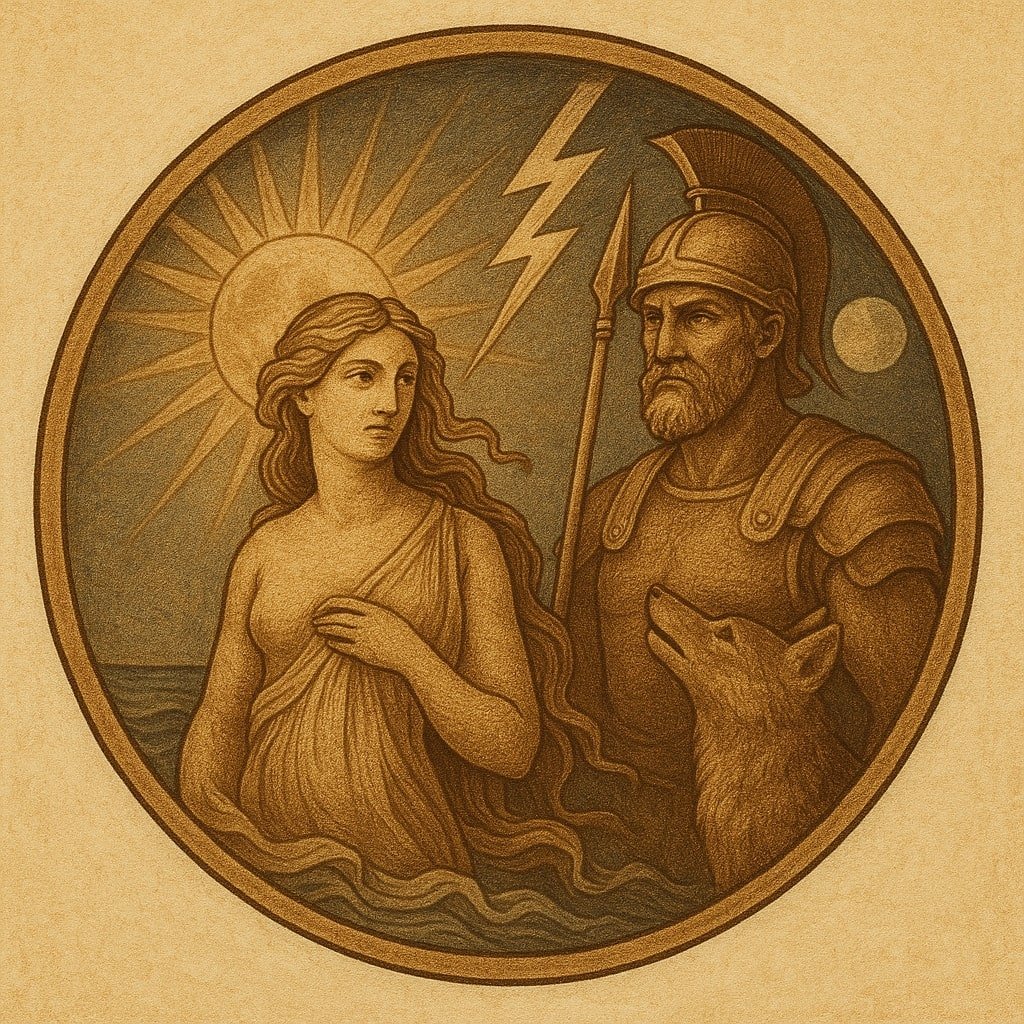
IE Budget 2026 Criticism Through Portellian Thoughts
A National Position Paper on Fiscal Sovereignty, Economic Discipline, and Civilisational Permanence
_________________________________________________________________________
Copyright & Terms of Use Notice
© [2025] Portellian Thoughts. All rights reserved.
This website/page and all its contents — including but not limited to articles, essays, reports, analyses, theoretical frameworks, Portellian Originals (formulas, models, indices, metrics, and scoreboards), visual diagrams, and all terminology unique to the Portellian School — are the intellectual property of Portellian Thoughts and are protected under the Copyright Act (Cap. 415, Laws of Malta) and applicable international copyright treaties.
No part of this content may be reproduced, copied, distributed, translated, adapted, stored in a retrieval system, transmitted in any form, or otherwise utilised without the prior written permission of Portellian Thoughts [TerrencePortelliTTPTBlog.com].
The unauthorised taking, reproduction, or adaptation of ideas, concepts, frameworks, or articles, whether in whole or in part, without proper citation and acknowledgement, is strictly prohibited. Any such use constitutes an infringement of intellectual property rights and may result in legal action under Cap. 415 and relevant international law.
Terms of Use: By accessing or using this website/page, its reports, or any Portellian materials, you agree that all intellectual property rights belong exclusively to Portellian Thoughts. You further agree not to copy, redistribute, commercialise, or otherwise exploit any Portellian content without explicit prior consent.
Portellian Thoughts reserves the exclusive right to define, publish, and adapt the Portellian doctrine, models, and frameworks.
_________________________________________________________________________
Portellian Thoughts Position Paper
Portellian Thoughts is first and foremost an intellectual and civilisational framework. It is born out of independent research, personal reflection, and philosophical synthesis, not out of partisan negotiation. This Position Paper applies Portellian models and systems to the Diskors tal-Budget 2026 and, in doing so, has been endorsed and utilised by Imperium Europa as an analytical and strategic reference. That use, however, does not convert this work into mere party propaganda, nor does it dissolve the distinction between authorial thought and political implementation.
The responsibility for how any political party, movement, candidate, or organisation chooses to interpret, adopt, or operationalise the ideas contained herein rests entirely with them. Portellian Thoughts provides principles, doctrines, and models; it does not micromanage programmes, campaigns, or tactics. Where a party’s practical actions deviate from the moral, economic, or civilisational standards articulated in this document, such deviations cannot be attributed to Portellian theory but to those who chose expediency over coherence.
This paper is not legal, financial, or investment advice. It is an act of philosophical, economic, and geopolitical diagnosis and proposal. It offers an alternative architecture of sovereignty grounded in gold, family, form, and Mediterranean–Maltese civilisational continuity. It must be read as a framework for national transformation, not as a technical manual for short-term electoral gain. Any attempt to instrumentalise isolated passages while ignoring the totality of the doctrine is a misreading and a misuse.
Portellian Thoughts stands as an obligation to truth before it stands as an instrument of any party. Imperium Europa, in choosing to align itself with these models, does so under its own name, its own responsibility, and its own accountability to history. The author retains full intellectual authorship and moral ownership of the Portellian system as a body of thought, distinct from—and prior to—any contemporary political vehicle.
Those who read this work are invited to judge both Budget 2026 and all future policies, including those proposed by parties invoking Portellian doctrine, by the same unforgiving measure: Do they strengthen Malta’s sovereignty in money, energy, food, demography, education, defence, and form? Do they fortify the continuity of our civilisation, or do they dress new forms of dependency in patriotic language?
If they fail this test, then no slogan, logo, or party colour can redeem them. They must be re-written in gold, not in ink.
________________________________________________________________________________
Executive Summary
The executive summary of this work cannot be anything less than a verdict on a crossroads. Malta, through the Diskors tal-Budget 2026, has made a declaration—whether consciously or not—about what it wishes to be: a managed periphery of a collapsing post-liberal empire, or a sovereign Mediterranean Republic capable of enduring on its own terms. Everything that follows in this thesis revolves around that single, brutal alternative: sovereignty or servitude. There is no third way. Neutrality under dependency is a fable for children.
Budget 2026 presents itself as a roadmap to prosperity, security, modernisation, and social inclusion. It proclaims record EU funding, resilient growth, digital transition, green transformation, security spending and social investment. Yet once we move beyond the ceremonial grammar and the bookkeeping, what emerges is a consistent pattern: every major lever of Malta’s destiny—money, energy, food, infrastructure, technology, security, education, demography—is quietly placed under external influence, fiat illusion, or technocratic administration. The Budget does not build sovereignty; it manages dependency. It congratulates itself for integrating Malta into mechanisms that Malta did not design, cannot control, and is not allowed to fundamentally question. In short: it governs statistics, not a civilisation.
At the monetary and fiscal level, the entire Budget rests on a fiat superstructure that Malta neither issues nor steers. The Euro, shaped by ECB policy and Eurozone interests, subjects Malta to imported inflation, credit cycles, and financial fragility that are politically exogenous. We borrow in a money we do not mint, at rates we do not set, under conditions we do not define. Growth is fuelled by debt, FDI, and subsidies rather than productive power. As Mises and Hayek long warned, such a system does not simply misallocate capital; it infantilises nations. A people that cannot govern its own currency cannot govern its own future. Here, the Portellian Gold Doctrine intervenes with full severity: sovereignty demands a Maltese Gold Lira, 100% reserve, constitutionally protected, so that every promise has a weight, every expenditure a substance, every Budget line an anchor in reality. Gold becomes not just an economic choice, but a moral veto against lies.
This monetary truth unfolds into a wider doctrine of constraint. Budget 2026 fetishises flexibility, resilience, and adaptability, as if the highest glory of a small nation were to be infinitely pliable before external pressures. Portellian Thought inverts this. Constraint is not limitation; it is strategic power. To limit debt, to limit bureaucracy, to limit external dependencies is to become ungovernable by others. Constraint in money forces political honesty. Constraint in energy and food blocks blackmail. Constraint in institutions, scale, and architecture prevents gigantism from hollowing the soul. A small state has only one realistic path to sovereignty: to become a stone that will not move, no matter how strong the currents of empires above it.
From this base, the critique moves across the Budget’s entire social and strategic architecture. In social policy, the Budget extends the reach of the redistributive state while quietly dissolving the natural pillars of continuity. Families are treated as welfare clients rather than sovereign micro-republics. Demography is never addressed as a civilisational question, only as a labour-market variable. Migration is discussed in terms of skills and flows, not in terms of belonging, memory, and duty. The Portellian response is unapologetic: family is not a lifestyle choice; it is the primary institution of sovereignty. Land, housing, taxation, labour law, and education must be reoriented so that Maltese families can form, endure, and inherit. A people that will not reproduce itself on its own soil has already voted for its own erasure.
Nowhere is the contrast sharper than in education. Budget 2026 celebrates digital classrooms, inclusive frameworks, internationalisation, and global citizenship competencies. It treats Maltese children as inputs for external markets and bureaucratic ideals. Fichte warned, long ago, that a nation that teaches its youth according to foreign ends has surrendered its future. The Portellian educational model returns to the Humboldtian–British spine: Bildung and classical formation united with moral discipline, hierarchy, and civic honour. Knowledge is not training; it is inheritance. The school is not a content-delivery system; it is a forge of sovereignty. Teachers are not clerks; they form a Magisterium Civile, a guild-like order of custodians of truth, evaluated by their capacity to instil duty, wonder, and endurance rather than digital compliance. Here, education ceases to be a sector and becomes again what it always was for sovereign nations: the first ministry of defence.
The same structural flaw repeats across infrastructure, energy, and land. Budget 2026 equates development with construction and concrete, with EU-funded corridors, housing blocks, and logistics projects tailored to external flows. It reduces roads, ports, and towers to instruments of throughput, not embodiments of form. Under Portellian Thought, infrastructure is not merely capital stock; it is the material memory of a civilisation. Bridges, harbours, streets, hospitals and schools must be built for centuries, in materials and forms that express Maltese identity and Mediterranean permanence, not imported aesthetic vapidity. Ports, grids, telecoms, and data cables are recognised as strategic armament. They must be Maltese-owned, gold-financed, constitutionally shielded from foreign capture. Only then can Malta declare itself autonomous in a geoeconomic age where interdependence is routinely weaponised.
Energy, food, and health are treated in the Budget as managerial challenges solvable through subsidies, regulation, and compliance with EU green and health frameworks. Portellianism treats them as civilisational front lines. Energy policy is not about hitting Brussels’ targets; it is about ensuring that no one can turn the lights off in Malta without paying a catastrophic price. That demands a doctrine of strategic permanence: electromagnetic generators, marine-current and salt-gradient power, distributed hydrogen, and human-scale grids governed by local guilds. Food is not a logistics problem; it is biotic sovereignty. Families must have access to soil; farmers must be elevated to philosophers of continuity; seed lines, stocks of grain and salt must be held in reserve alongside gold. Health is not only hospital capacity; it is the biological resilience of the nation. Biomedical research, biotech, enhancement, and public health measures must be domestically anchored, ethically constrained, and protected from globalist biopolitics that reduce bodies to datasets.
Perhaps the darkest horizon of Budget 2026 lies in its digital strategy. The Digital Identity, Digital Wallet, centralised data infrastructure, and move towards a cashless ecosystem are presented as inevitable progress. In reality, they are the architecture of programmable obedience. When money is digital and identity is unified, every act of economic life can be approved, tracked, or frozen by whoever holds the keys, whether in Valletta, Brussels, Frankfurt, or beyond. Fiat stripped morality from money; full digitality threatens to strip physical reality from exchange itself. The Portellian answer is to combine the Gold Lira with a doctrine of digital constraint. A dual-circulation system preserves the right to transact in physical gold and anonymous cash; data federalism decentralises records; digital identity becomes optional and domestically encrypted; citizens own their data as inheritable property; and all critical infrastructure runs on national code under constitutional firewalls. Technologies are reinterpreted under Technological Chivalry: machines serve man, never govern him; AI is limited by human conscience and civilisational form; innovation is judged by permanence and proportion, not speed or ubiquity.
In defence and security, Budget 2026 prides itself on interoperability, EU and NATO-aligned frameworks, Frontex cooperation, and upgrades in enforcement capacity. It purchases equipment and buys a place in other people’s doctrines. But as Luttwak reminds us, small states survive by asymmetry, not imitation. The Portellian doctrine of the Invisible Fortress asserts that Malta’s first line of defence is not a frigate, a patrol boat, or a drone; it is the incorruptibility of its money, the autonomy of its grids, the discipline of its people, and the integrity of its production and research systems. Malta must become a Sea-State and an Arcadian stone in the Mediterranean: neutral, indispensable, unblackmailable. This requires a Mediterranean Defence Compact and energy-security architecture oriented south and east, not merely north and west; a nationalised R,I,I,&D structure that binds research, improvisation, innovation, and development into a strategic machine; and a network of defence guilds capable of designing, building, and maintaining what we need without begging for licences and spare parts from foreign empires.
Over all this stands the question of political form. Budget 2026 is the financial liturgy of a managerial state: large, ever-expanding, addicted to EU money and consultancy jargon, yet spiritually hollow. It speaks of leadership and good governance, yet reproduces a caste of short-term administrators cycling between ministries, authorities, and agencies without ever bearing long-term responsibility for the fate of the nation. Portellian constitutional doctrine proposes a Republic of Continuity: a small Council of Magistrates bound by oath to the long-term survival of the Maltese nation and Mediterranean civilisation, operating under a Gold Constitution that forbids the debasement of money and the sale of sovereignty. The State is restored to its rightful place: below the Nation and below Civilisation. Law and institutions are judged not by current fashions but by their contribution to endurance. Politics becomes once more a priesthood of order, not a career in distribution.
All of this culminates in a Mediterranean Renaissance. The thesis insists that civilisation ultimately lives and dies in form—how we build, how we sing, how we process light, stone, proportion, and ritual. A state that builds ugliness is confessing its lack of belief in its own future. Budget 2026 is completely mute on beauty, form, and the sacred. It speaks the language of hubs, clusters, and creative industries, but never that of temples, academies of form, or civilisational arts. The Portellian Republic declares that aesthetics are not cosmetic; they are strategic. Streets, harbours, villages, universities, and public buildings must be reimagined as visible theology of permanence. The Mediterranean, from Valletta to Alexandria, from Palermo to Piraeus, must rediscover itself not as a tourist basin but as a living axis of form and spirit.
Thus, the executive judgment of this work is unmistakable. Budget 2026, taken as a whole, is an instrument of managed servitude. It is polite, well-structured, and fatal. It extends Malta’s life as a provincial outpost of a post-liberal imperial machinery that is itself entering crisis. It offers stability without dignity, security without sovereignty, comfort without continuity. Portellian Thought, by contrast, sketches the skeleton and the soul of an alternative order: a gold-anchored, Mediterranean, Right-Nationalist-Libertarian Republic of Continuity, where constraint becomes power, form becomes defence, and sovereignty becomes not an aspiration but a daily discipline.
Everything therefore reduces to a choice that can no longer be deferred. Either Malta continues to drift as a demographic, fiscal, and digital zone within a foreign system, or Malta takes the terrifying, exhilarating step of refounding itself as a small but unbreakable civilisation-state. Either the next Budgets remain liturgies of dependency, or a future Budget becomes the first financial act of a Gold Republic. Either the Maltese remain consumers of other people’s futures, or they become again what their ancestors once were: builders of their own eternity.
Sovereignty or servitude. Gold or fiat. Continuity or dissolution.
The rest is detail.
________________________________________________________________________________
Table of Content
- Fiscal Sovereignty and the Constitution of Money
- The Family as Fiscal Architecture
- Labour, Property, and the Human-Scale Economy
- Sovereignty of Industry and Productive Independence
- Digital Identity and the Architecture of Control
- Education, Discipline, and the Formation of Citizens
- National Health and the Sanctity of the Body
- National Infrastructure and Civilisational Permanence
- Economic Statecraft and the Sovereign Market
- Digital Sovereignty, Surveillance, and the Ethical State
- The Education System as the Forge of Sovereignty
- Health, Biotech, and the Doctrine of the Living State
- Energy, Resources, and the Doctrine of Strategic Permanence
- Resource Geoeconomics and the Doctrine of Economic Warfare
- Maritime Sovereignty and the Doctrine of the Sea-State
- Food, Agriculture, and the Doctrine of Biotic Sovereignty
- Digital Sovereignty and the Doctrine of Human Autonomy
- National Security and the Doctrine of the Invisible Fortress
- The Nationalised R,I,I,&D Program for Strategic Deterrence and Autonomy
- The Gold Constitution and the Portellian Republic
- The Mediterranean Renaissance: Civilisational Rebirth through Order, Beauty, and Form
- The Republic of Continuity: Political Reformation and Institutional Permanence
- Strategic Constraint as Civilisational Defence
- Technological Chivalry and the Digital Commonwealth
- The Arcadian Defence and the Ethos of the New Mediterranean
- Sovereignty or Servitude: The Portellian Final Verdict
________________________________________________________________________________
1. Fiscal Sovereignty and the Constitution of Money
The cornerstone of national independence is the right to define one’s own measure of value. The Budget 2026 confirms, once again, that Malta’s measure of value is defined elsewhere – Brussels, Basel, and Frankfurt. To outsource one’s monetary unit is to outsource one’s destiny; to borrow another’s coin is to inherit another’s crisis. This dependency is not merely technical, it is a civilisational one.
The government’s fiscal projections boast a deficit reduction to 2.8% of GDP and a forecasted debt-to-GDP ratio of 54%, which the Maltese government is presenting as success (Government of Malta, 2025, p. 17). However, these figures exist within a framework of foreign-controlled money supply, foreign-controlled interest rates, fractional-reserve banking, and credit expansion that no Maltese authority can restrain, or even tame. In Misesian terms, Malta operates within a “consumption illusion”: a prosperity of appearance built on the corrosion of value, apparent prosperity financed by the unseen erosion of money’s purchasing power (Mises, 1949).
Under such a regime, the Maltese worker does not earn in money, but in delay; his labour is stored in a melting vessel. The government celebrates growth in figures that are measured in someone else’s measure, and thus, it becomes proud of its own servitude.
Under the Portellian Gold Doctrine, fiscal sovereignty begins with convertibility. The Maltese Treasury must introduce the Maltese Gold Lira (MGL) as a parallel savings and settlement currency, backed 100% by domestic vault reserves. Convertibility is not nostalgia; it is verification. It ties political speech to physical weight. Huerta de Soto (2006) demonstrates that fiduciary media and credit cycles inevitably lead to systemic crises; only a 100% reserve standard can prevent moral hazard and restore monetary discipline.
A 100% gold-backed Lira would constitute not simply a monetary instrument but a constitutional act: a covenant between labour and permanence. It would immunise the nation from external manipulation, embedding credibility in matter rather than decree (Portelli, 2025a).
A flat-tax system, set at 15% across local income and localised industrial brackets, would align taxation with production rather than redistribution. Bastiat (1850) and Hoppe (1993) both argue that taxation should serve the protection of property, not its erosion. This structural simplicity removes bureaucratic distortion and channels national energy back to production, crafts, skilled work, and saving. It restores taxation as moral contribution, not political bribery.
The Budget 2026, however, expands public employment and subsidy channels, deepening dependency on state consumption. It extends the culture of inflationary spending disguised as compassion: prosperity can be printed, and through printing, you get yourself “out of crises”. This is the Keynesian fallacy reborn – the illusion that liquidity is life. Hayek warns that this is the road to serfdom disguised as “security” (Hayek, 1944). The state that prints in the name of compassion robs in the name of care.
Gold, on the other hand, imposes constraint, which is the most powerful weapon of small nations (Portelli, 2025a). Constraint limits overreach, disciplines governance, and immunises the economy from external coercion. Constraint is the mother of order and the father of sovereignty. Baldwin (1985) defines economic power not as the capacity to coerce, but as the capacity to resist coercion. Malta under gold cannot be sanctioned through the weaponisation of fiat systems. Our trade will remain credible because our currency is incorruptible. Such incorruptibility converts Malta from a supplicant into a reference point, from debtor to datum.
In this sense, constraint becomes strategic power. A gold-anchored Malta would no longer plead for flexibility, but would command global respect through permanence. A nation that cannot be bribed with its own currency becomes untouchable.
Within this architecture, the gold-anchored Lira becomes the silent enabler of Malta’s higher strategic roles. Conflict resolution services settled in gold – Malta acting as neutral arbiter, judge and engineer of peace – become credible because the unit of settlement itself is above partisan manipulation (Blackwill and Harris, 2016; Portelli, 2025b). When warring parties know that awards, reparations, and contracts are denominated in incorruptible weight, Malta ceases to be a mere venue and becomes a civilisational court of record.
The same fiscal sovereignty is the precondition for the Portellian defence-industrial doctrine outlined in the thesis on European industrial specialisation and integration. Gold-based public finance allows the state to co-capitalise R,I,I&D clusters in: human-enhancement-adjacent technologies (exoskeletons, protective biotech), electromagnetic and underwater warfare systems, naval design and manufacturing, and the composite sectors rooted in salt, hydrogen, and hemp (Portelli, 2024). Under fiat, such programmes become just another excuse for deficit and corruption; under gold, each programme must justify itself in grams, not slogans. Every research grant, every prototype, every dry-dock, every laboratory becomes an accountable conversion of metal into capability.
Thus, fiscal sovereignty is not an isolated monetary gesture; it is the spine of a whole civilisational posture. It underwrites a Mediterranean system in which Malta trades credibility for influence – offering gold-denominated settlement, conflict resolution, and niche military-industrial competences to a Mediterranean Union that stretches from Lisbon to Sevastopol and from Valletta to Alexandria. A Malta that cannot print its way out of trouble must produce its way into relevance.
“He who limits himself, commands himself” (D’Ors, 1943).
Thus, fiscal sovereignty is the first act of national self-respect. It is the transition from dependency to dignity, from promises to proof. In the language of Portellian Doctrine, it is the moment when the Maltese State ceases to exist as a consumer of illusions and begins to live as a custodian of truth.
2. The Family as Fiscal Architecture
The Budget 2026 allocates €250 million for “family support measures”, including childcare subsidies, housing assistance, and cost-of-living adjustments. At first glance, such policies appear humane. However, when examined through the Portellian lens, they expose a deeper malaise i.e. the State’s substitution of paternalism for patrimony, of subsidy for sovereignty. In other words, the State now plays like the father to “his” people that the State itself had orphaned first to begin with.
Aristotle wrote that oikos, i.e. the household, is the smallest polity. From it springs not only economic life, but civic virtue. A nation that dismantles the economic independence of its households transforms citizens into clients. This is the unspoken essence of the welfare state: an architecture of dependency disguised as compassion. When paternalism replaces patrimony, citizens become instruments of fiscal engineering, not heirs of their civilisation.
Hazony (2018) argues that the nation is an extension of the family, and not an abstract social contract, but an inheritance of trust, duty, and continuity. When a state displaces the family as the locus of responsibility, it severs the roots of national identity itself. Malta’s low fertility rate (1.08) is not a demographic accident. It is the predictable outcome of an economy that punishes permanence and rewards transience. Young couples cannot afford homes because of inflation, the silent tax of fiat money that erodes savings faster than they can be made, while the state manipulates all market forces to encourage constant consumption. Fiat inflation is a moral acidic disease: it dissolves not only savings but the intergenerational bond that gives meaning to sacrifice. The Budget 2026 pretends to address this by expanding rent subsidies, yet in truth, it subsidises the very landlords and speculative developers who profit from artificial scarcity. Thus, it perpetuates the disease it claims to cure i.e. the pathology of dependency.
Schumacher (1973) warned that economic gigantism, i.e. the obsession with scale, growth, and large-scale industrialisation, corrodes the human scale upon which culture depend on. The Portellian model, therefore, calls for a re-sacralisation of the household economy: savings anchored in gold, family enterprises supported through flat-tax incentives, and a cultural narrative that treats national childbirth as an act of statecraft. A civilisation that cannot reproduce itself biologically will not sustain itself politically and this is the very foundation upon which any civilization rests on.
To revive our demographic vitality, Malta must implement a Progressive Children’s Allowance that is only granted to Maltese/European people:
- For the first child – €250/month.
- For two children – €400/month.
- For three children – €600/month.
- For four children – €900/month.
These are not handouts but civilisational investments i.e. fiscal expressions of faith in our continuity. Hence, why only Maltese/Europeans should be entitled to them. Under gold, these allocations are transparent and sustainable because they are funded by real savings, not debt monetisation. Every gram spent represents a gram earned, transforming the act of governance into an act of stewardship. Fiscal virtue must mirror moral virtue of which both require limits, discipline, and hierarchy.
Maurras (1926) understood that order precedes liberty. Likewise, Portellianism affirms that family order precedes economic liberty. Fiat economies disintegrate familial trust because they corrode intergenerational continuity i.e. a father’s/mother’s savings today buy less tomorrow. Their lands become speculative, so their inheritance is taxed to the bones. Gold reverses this temporal out-right theft. It aligns time with trust, ensuring that the labour of the living remains the property of the unborn. Under gold, the home regains its moral function as both fortress and altar of continuity.
Fichte (1808), in Addresses to the German Nation, described education as the moral prolongation of the family. In the same spirit, Portellian economics treats the family as the educational foundation of fiscal virtue, i.e. the first school of prudence, thrift, and craftsmanship. Teaching thrift, prudence, and craftsmanship at home becomes an act of national security. To defend the family is to defend the treasury of Our civilisation itself.
Therefore, the Budget 2026 commits a philosophical crime i.e. it treats the Maltese household as a liability to be managed, not as a lineage to be protected. In doing so, it undermines the civilisational continuity that defines sovereignty itself! It reduces our beating hearth to an accounting entry and the cradle of who we are, to a mere cost centre.
“The family is not a social unit. It is the first constitution of man.” (Portelli, 2025).
Fiscal architecture begins at the kitchen table, not in the Treasury. And if the kitchen table is eroded by debt, inflation, and foreign labour dumping, then the Parliament’s ledgers are written on sand. In Portellian doctrine, therefore, the rescue of the Maltese nation begins not with fiscal engineering, but with the restoration of the family as the true Ministry of Finance.
3. Labour, Property, and the Human-Scale Economy
The Budget 2026 boasts of “record-low unemployment” and a “robust economic growth”. However, beneath the beautiful, coloured picture, Malta’s productive foundations are quietly eroding at an accelerated rate. Employment expands, yet in sectors of low skills, low sovereignty, and low continuity. The island’s economy is now addicted to import low-quality cheap labour, speculative shrinkflated and skimpflated properties, financial services, and low-quality tourism revenues. All of which are transient, fragile, and fundamentally unsustainable.
Friedrich List (1841) distinguishes between wealth and productive power. A nation’s true prosperity lies not in the volume of its transactions, but in its ability to produce, refine, improvise, and innovate from within its own borders. He warned that mere trade without productive grounding transforms nations into entrepôts for others’ power. The Budget 2026, in contrast, celebrates consumption, construction, and finance, i.e. the three least durable forms of economic activity. In my thesis on Assessing the Industrial Specialisation and Integration within the European Defence Sector, I showed how small states that abandon productive depth are relegated to the periphery of larger empires, becoming corridors and convenience platforms rather than industrial actors in their own right (Portelli, 2024). Malta is now sleepwalking into precisely this fate.
Schumacher (1973) would recognise this pattern immediately as, an economy of “bigness” that devours its own foundations. He called it the pathology of gigantism that will lead to the loss of measure, proportion, and soul. Small workshops and businesses close under the weight of rent inflation and monetary inflation. The artisans dissolve into gig labour; apprenticeships vanish, replaced by credentialism and bureaucratic “training programs”. This is not development but managed disinheritance, the substitution of form for substance, the shift from self-determination to an absolute dependency. In the European defence-industrial landscape, I have already mapped how the erosion of small-state workshops and specialised SMEs hollows out long-term strategic autonomy, even when headline indicators look “strong” (Portelli, 2024). The same logic applies here: the death of the workshop is the death of sovereignty.
The Portellian Human-Scale Economy proposes an alternative model rooted in real savings, local capital formation, and sovereign skill security through development:
- No Taxation of imported raw materials and high taxation of low-quality imported products: Local businesses that manufacture goods of quality with the mark of Maltese identitarian craftsmanship will not be taxed on their imported raw goods and on their finish product. Meanwhile, cheap mass-produced goods that drive our craftsmen and tradesmen out of business, leading to the destruction of our national skill security, will carry a 60% importation tax. This is not protectionism but civilisational self-defence.
- Flat Taxation for Craft and Production: A single-rate tax of 5% for local sole traders, SMEs, and entrepreneurs whose business income is under €500,000, but over €150,000 p.a.; 10% for those under €1 million; and 15% for all local enterprises above that threshold. Foreign businesses shall fall under a 25% corporation tax that raises depending on the number of TCN they employ. This graduated flat-rate structure anchors justice in simplicity i.e. low tax for production, high for extraction.
- Gold-Backed Savings Bonds: Treasury-issued certificates redeemable in Maltese Gold Lira, allowing Maltese citizens only to save and lend directly to their nation rather than foreign creditors. Thus, the people become shareholders of sovereignty itself.
- National Guild Systems: Revival of professional guilds to regulate craftsmanship, national standards, and aesthetics; train apprentices; innovate and improvise; and maintain high quality production to ensure real sustainability. The guilds will becomes the bridge between skills and statecraft. In my European defence thesis, I argued that the only way a small nation can hold non-trivial positions in complex value chains is by cultivating such guild-like ecosystems around specific high-skill niches (Portelli, 2024). The same institutional logic must now be transplanted into the civilian and dual-use Maltese economy: guilds as custodians of both technique and identity.
- Localisation over Globalisation: Incentives for import-substitution industries in all their forms that sustain sovereignty, not vanity, including all those industries that seeks out national alternative replacements to imported goods. True liberalism requires local roots; freedom cannot flourish in dependency.
Hoppe (1993) teaches that civilisation progresses when individuals exhibit low time preference, i.e. when they sacrifice immediate consumption for long-term stability. Fiat economies operate in the opposite direction. They raise time preference artificially, fostering short-termism and dependency. Malta’s speculative, shrinkflated, and skimpflated housing boom exemplifies this pathology, where homes built as chips in a casino rather than sanctuaries for families. Wealth flows into non-productive assets, displacing generational capital into debt.
Hayek (1960) added that central planning destroys information, i.e. the spontaneous signals of the market that guide intelligent coordination. Yet in Malta’s property sector, prices no longer reflect demand, but State involved distortion. Cheap ECB liquidity and foreign speculative demand have severed prices from reality leading the market to issuing the wrong pricing signals. This engineered inflation breeds a two-tier society: landlords and tenants, developers and debtors. The middle ground is being erased, and with it, the moral centre of the nation and the beating hearth of our civilisation itself.
The Budget 2026 extends this delusion, boasting of “economic resilience” built on construction, finance, and consumption. But as List warned, a nation that outsources production outsources sovereignty. Sovereignty cannot be imported; it must be forged in the hands of its own people.
The Portellian model restores the economy to its rightful scale i.e. the human scale economy, as the economy is there to serve the people and not the other way around. It does not seek infinite growth, but permanent excellence. It prizes the craftsman over the contractor, the workshop over the tower, the inheritance over the instant profit. It is an economy of measure, form, and memory; an economy that remembers its own people.
“When the mason builds, the nation endures. When the speculator builds, the nation decays.” (Portelli, 2025).
Malta’s true employment crisis is not joblessness, it is meaninglessness. It is not that Malta lacks work, but that its work no longer builds anything worth remembering. The lack of future is also anchored in the lack of purpose. Fiat labour has no memory, no future, no craft. Gold labour, by contrast, is measured, moral, and permanent. It is labour that endures because it belongs to a people and not to a market.
4. Sovereignty of Industry and Productive Independence
Industrial sovereignty is not measured in the number of factories standing upon a land, but in the degree to which those factories obey the will of their nation. The Budget 2026 presents Malta as “an open, competitive, and diversified economy.” Yet openness without ownership is merely exposure; competition without direction is chaos; diversification without anchorage is drift. What we call “growth” today is, in truth, the mechanical expansion of dependency. In my thesis on Assessing the Industrial Specialisation and Integration within the European Defence Sector, I showed how this same illusion of “open competitiveness” has turned several European states into platforms for other people’s strategies, rather than authors of their own (Portelli, 2024). Malta now risks repeating that pattern in miniature.
The Maltese productive apparatus no longer serves the nation or its people; it serves the international credit system that funds its mere existence. It is not Maltese capital that builds Maltese industries but imported liquidity searching for high yields without loyalty to the nation or its people, and with the aim to dominate our market to ensure our dependency on them. This distinction, often missed by our bureaucrats, is precisely the point that Friedrich List (1841) made when he wrote that the wealth of nations rests not upon consumption but upon the cultivation of productive powers. The Budget 2026 expands consumption under the illusion of development yet fails to develop capacity for internal production. In my thesis, I traced how states that surrendered productive power in key defence-industrial niches were relegated to permanent subcontractors in European value chains (Portelli, 2024). Malta stands on the threshold of the same fate across its entire economy.
The Portellian Economic Statecraft doctrine rejects this illusion of “open-market sovereignty”. It proposes instead an architecture of strategic independence, i.e. an order in which each industrial cell contributes to the defence, sustenance, and dignity of the nation and our civilisation. Industries must not be cosmopolitan, but instead, national; it must be civilisational and anchored in our continuity.
The Portellian model calls for the creation of Industrial Sovereignty Zones (ISZs) that are anchored in territorial, fiscal, and legal frameworks where productive power is tied directly to Maltese labour, Maltese ownership, Maltese craft identity, and Maltese capital. Within these zones, corporate activity must submit to the principle of national utility, not shareholder speculation. In the European defence-industrial context, I have argued that only tightly governed specialisation clusters – where ownership, know-how, and design control remain national – can prevent small states from becoming disposable annexes to larger powers (Portelli, 2024). The ISZs are the Maltese translation of that same principle into the civilian, dual-use, and strategic economy.
This principle is is the civilisational reincarnation of List’s National System of Political Economy. A system where protectionism is not a tariff game but a moral duty, designed to cultivate what feeds and defends the nation before feeding the markets of others.
Under the Budget 2026, industrial policy is fragmented and spread across digital startups, logistics, and construction, but lacking any grand strategic vector. It multiplies micro-grants and incentives, but without purpose they become the economic equivalent of charity, i.e. generous in form, impotent in substance. Portellian Statecraft, by contrast, replaces charity with design. It demands that every euro invested in industry must expand Malta’s strategic autonomy: in energy, materials, agriculture, and advanced manufacturing.
Schumacher (1973) argued that scale is moral before economy. Large enterprises devoid of local accountability devour the human scale and corrupt the spiritual relation between producer and good/service. Therefore, Maltese industry must not imitate the vast impersonal complexes of continental Europe. It must grow through clusters of small excellence, i.e. networks of artisans, engineers, and laboratories unified by a national ethos rather than corporate hierarchy. My thesis showed how exactly such clusters – in propulsion, composites, electronics, and precision subsystems – form the real backbone of European defence power (Portelli, 2024). Malta must now deliberately cultivate analogous high-skill clusters within its own ISZs, or else remain permanently on the periphery of other nations’ hierarchies.
Michael Wigell’s Geoeconomics in the 21st Century reminds us of that production today is an instrument of geopolitical power. Supply chains are not neutral, but rather, they are weapons of influence. When Malta imports all its semiconductors, machinery, pharmaceuticals, food, labour, etc., it lives in what Baldwin (1985) would call “strategic subordination”. The capacity to resist coercion diminishes with every container unloaded.
Hoppe (1993) complements this by warning that fiat-fuelled consumption erodes not only savings but virtue itself. A nation addicted to credit loses its moral capacity for sovereignty. Fiat’s cheap liquidity creates industries that exist to circulate money, not to create value. They build towers instead of trades, bureaucracies instead of workshops, enslave the populace instead of liberating it.
The Portellian answer is the Industrial Covenant: a tripartite framework between the State, local enterprise, and the family workshop. Each covenant must be underwritten in Maltese Gold Lira, binding capital to production and production to permanence. When debt is denominated in gold, speculation dies, and craftsmanship rises.
In this model, every Maltese citizen becomes a stakeholder in sovereignty through Gold Industrial Bonds which are redeemable instruments that finance domestic industry, not government consumption. The Treasury thus transforms from a spender into an investor in civilisation.
But to shield this covenant from external predation, Malta must also adopt a doctrine of Economic Defence. Baldwin’s (1985) principle of resistance over coercion is applicable here: Malta cannot deter economic aggression unless it can refuse dependency. Therefore, critical geo-strategic industries such as energy, shipbuilding, precision manufacturing, biotechnology, telecommunication, healthcare etc., must operate under sovereign guarantees and gold-denominated contracts insulated from foreign currency shocks. In my assessment of European defence chains, I identified precisely these categories as the pressure points where external powers exert leverage through supply disruption and standards control (Portelli, 2024). A sovereign Malta cannot outsource its vulnerability to the goodwill of others.
Here, the concepts of Edward Luttwak (1990) become indispensable. He observed that modern conflicts are fought through geoeconomic competition, where credit, trade, and technology replace missiles and tanks. Malta, a microstate surrounded by decaying financial empires, must therefore arm itself not with divisions but with disciplines. Gold must become our own shield and constraint our own sword.
In such a system, labour ceases to be a cost and becomes a strategic asset, especially for Malta’s case where our indigenous skilled labour is our national resource. Every Maltese worker must become an instrument of deterrence. When production is anchored in national trust, wages cease to be a bureaucratic line and become expressions of sovereignty itself.
Thus, Portellian industrial sovereignty is not merely partial autarky, it is autonomy to regain self-determination. It does not isolate but fortifies. It invites commerce but rejects dependency and our civilisation destruction. It trades but never trades its dignity and respect.
“The machine is innocent; the master it serves decides whether it builds or destroys,” (D’Ors, 1950). Under the Portellian order, the machines will once again serves man, and man serves the nation.
Malta’s economic independence will not come through the empty rituals of global corporations’ competitiveness, but through the rebirth of our own productive power and honour. Only when the Maltese labour creates Maltese wealth in Maltese measure shall the nation rise again beyond servitude.
Under the Portellian system, industrial policy is moral philosophy expressed in engineering. Each machine becomes a vote for sovereignty, each workshop, a miniature republic. In this, the Portellian doctrine unites the three realms that modern economics has sundered, i.e. production, culture, and security into a single hierarchy of meaning. A people that produces nothing soon believes in nothing and will perish without realising that their collapse is imminent.
The current Budget 2026 speaks the language of “innovation”, yet what it calls innovation is but digitised dependency. It funds foreign startups that import code and export data, but it neglects the craftsman who builds the lasting substance of the nation. Innovation, without rootedness, is simply imitation. The Maltese economy does not need more foreign start-ups, what it needs is more beginnings, i.e. enterprises born out of own nation, guided by purpose, and measured by permanence.
As Friedrich List argued, productive power is not static, it is cultivated from within. It must be defended with the same zeal with which borders are defended (in our case, used to be defended), for it is the invisible frontier of the nation. The Budget 2026 has mistaken participation in the global market for sovereignty within it. True sovereignty arises when a state can determine its own industrial rhythm and when its economy obeys its culture, not the algorithms of Frankfurt, Brussel, Basel and Washington.
Schmitt (1932) warned that every order requires a boundary. In economics, the absence of boundaries leads not to freedom but to dissolution and the passive domination of the market. The Portellian Industrial Doctrine therefore reclaims the right to define those boundaries not as barriers but as forms. Just as D’Ors described form as “the mother of beauty”, so too is economic form the mother of order. When form collapses, chaos disguises itself as opportunity.
Thus, Malta’s industrial policy must become a work of art through structure, discipline, and sacred in purpose. Every enterprise must carry within it the ethical signature of its civilisation. If a factory produces only goods, it is commerce; if it produces order, it is culture.
From a geoeconomic perspective, Wigell and Wigmen (2019) articulate that economic warfare today is not waged with armies, but with dependencies: the control of supply chains, credit systems, and resource flows. The Portellian State recognises this, transforming its industrial sectors into instruments of civilisational deterrence. When your machinery, energy, and food systems are sovereign, your neutrality is credible, but when they are foreign-owned, neutrality becomes theatre.
Hence, the Industrial Sovereignty Zones are not simply economic districts, but rather, they are our national citadels of permanence. Each zone must embody a complete loop of production, energy, education, and cultural transmission. The craftsman, the engineer, and the philosopher must coexist within the same ecosystem. Universities must align curricula with national industries, training not bureaucrats but builders. Here, we integrate Fichte’s principle of education as a moral continuation of the family: to work is to serve; to serve is to perpetuate the nation and its civilisation.
Meanwhile, energy independence must stand as the prime mover of industrial survival. The Budget 2026 boasts of “green transition” projects subsidised by EU grants, yet such policies merely replace one dependency with another through hydrocarbons for Brussels’ technocracy. The Portellian framework calls for a Gold-Energy Compact: energy contracts settled in specie, shielding national consumption from speculative energy markets. Renewable projects must prioritise national materials, national engineers, and national financing.
Schumacher’s wisdom, here, is very much correct when he said: “Any intelligent fool can make things bigger, more complex, and more violent, but it takes a touch of a genius and a lot of courage to move in the opposite direction”. Malta’s industrial salvation lies not in massive infrastructure, but in modularity, in the distributed intelligence of the human scale.
To this end, the Portellian Gold Doctrine proposes the Maltese Industrial Treasury (MIT) — a sovereign fund capitalised entirely in gold, financing infrastructure, research, and strategic production. Unlike fiat-based funds, MIT would not issue debt but invest through gold-denominated instruments in productive sectors only. Each gram of gold invested represents a promise of permanence. In my study of European industrial specialisation, I identified precisely such dedicated, mission-focused treasuries and investment vehicles as the hidden engines behind enduring industrial clusters (Portelli, 2024). The MIT is Malta’s deliberate adaptation of that model to our own civilisational needs.
And yet, the question arises: can such a small nation defy the structural coercion of global financial empires? Here, Baldwin’s (1985) axiom provides the answer, i.e. the true measure of power is resistance. Malta, bound by gold and guided by constraint, becomes a node of resistance, small but incorruptible atom in the diseased bloodstream of global fiat.
The Budget 2026, by contrast, offers no resistance whatsoever. It boasts of resilience, but resilience without resistance is submission with good manners. Malta does not need “resilience funds”, what it needs is resistance funds, which are savings anchored in metal, not slogans, nor foreign credit.
Hence, in the Portellian Thoughts Philosophy, constraint is not limitation, but liberation. Constraint forbids waste, compels discipline, and reveals strength. The Maltese state, operating under gold constraint, would no longer fund illusions but cultivate permanence. And permanence, once achieved, becomes deterrence itself.
As stated by D’Ors (1950) “Only the form endures; everything else is dust”. Malta must now decide whether to build its economy upon dust or upon the eternal form of work, craft, and gold.
The Budget 2026 may satisfy accountants and the financial sector, but it does not satisfy the history of our nation and civilisation. And history, ultimately, is the only auditor that matters.
5. Digital Identity and the Architecture of Control
The Budget 2026 glorifies the expansion of Malta’s “Digital Transformation Strategy,” hailing it as the cornerstone of modern governance. Hidden behind this euphemism is the blueprint for a Digital Identity Regime, i.e., a system that redefines citizenship not as belonging but as data.
Under the guise of efficiency, the State is constructing the most comprehensive mechanism of surveillance ever designed on the island through digital wallets, integrated health IDs, biometric registries, and centralised payment infrastructures. Each of these components, on its own, may appear harmless, but together they constitute what the Portellian doctrine recognises as the architecture of a state surveillance control. In my thesis on Assessing the Industrial Specialisation and Integration within the European Defence Sector, I already underlined that whoever designs and owns the critical information infrastructure of a system – whether industrial, financial, or military – holds the real lever of power over it (Portelli, 2024). The same logic now applies domestically: whoever codes and controls the digital identity architecture governs the Maltese citizen in practice, regardless of constitutional niceties.
As Schmitt (1932) taught, sovereignty is the power to decide on the exception. Under the digital wallet, that power no longer resides with Parliament or the free citizen, but rather, it resides with the algorithm. The capacity to freeze, suspend, or deny participation in economic life becomes an administrative reflex. The citizen’s autonomy collapses into programmable compliance.
The Budget 2026 celebrates this as “innovation and progress”, yet what it truly enshrines is dependency through dependency on a digital infrastructure controlled by private contractors and foreign institutions. In this sense, the so-called Digital Malta Strategy does not modernise or achieve progress to the Republic, instead, it outsources the Republic itself. The thesis already showed how dependence on externally governed platforms and standards in the defence-industrial sphere reduces small states to mere “users” rather than “authors” of technology (Portelli, 2024). Digital identity is the internal, civilian mirror of that same dependency.
Huerta de Soto (2006) warned that any credit-based monetary regime eventually drifts toward political totalisation, for when money becomes information, control becomes irresistible. The Portellian Gold Doctrine thus extends beyond metals; it is a doctrine of informational sovereignty. Just as fiat corrodes economic truth, data-fiat corrodes civil truth.
The Digital Wallet is being presented as an instrument of inclusion and progress, however, in truth, it is a system of exclusion by design. A centralised database capable of tracing every single transaction, every prescription, every subsidy, every kilometre driven, every good/ service consumed and more, thus, such a system reduces men to manageable unit. What begins as convenience, turns into a weapon and ends as control.
Under the Portellian system, the Maltese citizen must never be reduced to mere metadata. A person’s dignity is not a variable in a database; it is sacred, ontological, permanent. Therefore, the digital infrastructure must follow the same moral architecture as our economic system, i.e., a decentralised, transparent, and non-coercive.
Our doctrine calls for the Sovereign Citizen Protocol (SCP), i.e., a digital system owned, coded, and managed exclusively within the Maltese jurisdiction and such jurisdiction is supreme to all others, subject to gold-standard data protection laws that forbid the sharing of our peoples’ information with any foreign power or supranational entity. The SCP would operate under a dual-ledger principle: one for governance, one for the people, both reconcilable only under lawful oversight. In continuity with the thesis, which advocates for national mastery over key industrial and command systems as a precondition for real autonomy (Portelli, 2024), the SCP represents the civil configuration of that same requirement within the digital realm.
D’Ors (1950) reminded us that order must be personal before it is procedural. The digital order of the Budget 2026 is precisely the reverse, i.e. it is procedural without personhood. Bureaucrats invoke “streamlined governance” to mask what is “effectively automated authority”. When policy becomes algorithmic, justice becomes mechanical.
Hoppe (1993) foresaw this degeneration of democracy into technocracy, i.e. when decision-making is detached from property, responsibility evaporates. The digital wallet institutionalises this detachment, allowing bureaucrats to act without consequence, for every coercion is now a code update, every confiscation an entry in a ledger.
Furthermore, the Digital ID and Wallet scheme violates the principle of civil constraint, which is the same constraint that guards fiscal integrity. Just as a gold standard limits inflation, a political gold standard must limit surveillance on its people. The absence of such a limit invites tyranny through data accumulation.
Schumacher’s (1973) human-scale philosophy applies here: “Man is small, and therefore small is beautiful.” A digital system worthy of a free nation must preserve smallness. It must enable local exchange, not central command. Under the Portellian Gold Doctrine, payments between citizens and merchants occur through decentralised gold-linked accounts, i.e. verifiable, anonymous, and incorruptible. The human hand must remain in the loop of every transaction, for when the hand disappears, so does responsibility.
The Budget 2026 promises “security”, yet the greatest insecurity of all is the one that it is creating: the insecurity of total transparency. A state that sees everything ceases to understand anything. It drowns in its own information.
To protect the citizen, Malta must therefore legislate a Digital Non-Domination Charter, rooted in the Portellian conception of freedom. Freedom is not doing what one pleases, but rather, it is being ungoverned by illegitimate power. Hence, any digital reform must be evaluated not by its convenience but by its reversibility. A government that cannot reverse its systems has ceased to govern, instead, it merely administers.
Wigell’s concept of strategic geoeconomics is applicable here: data infrastructures have become the 21st-century battlegrounds of sovereignty (Wigell, 2019). To integrate Malta’s systems with EU digital governance structures is to surrender control of our informational territory to foreign bureaucracies. In my thesis, I examined how control over standards, protocols, and industrial data has become a key instrument of power in European defence networks (Portelli, 2024). The same weaponisation now manifests through “digital services” regulation, which appears neutral but structurally embeds small states into architectures they do not control. Malta must reject all supranational “Digital Service” mandates that centralise authentication, encryption, or identity verification in foreign data centres.
In summary, the Budget 2026 confuses connectivity with civilisational and national long-term survival. A network is not a nation. The Portellian state will accept digital tools only when they serve both human and national autonomy, not when they enslave them.
“Technology is a servant that must kneel before virtue, and the populace, or it will crown itself king above all” (Portelli, 2025).
The digital realm must serve the same ethics as the gold real, i.e. incorruptibility, decentralisation, and permanence. When these three virtues guide technology, progress becomes freedom; when they are ignored, progress becomes chains.
6. Education, Discipline, and the Formation of Citizens
The Budget 2026 hails its “historic investment in education”, by means of investing a €1.3 billion across all levels, from childcare to university. The numbers glitter yes, and the slogans is impressive yes. However, behind this arithmetic of benevolence lies a philosophical vacuum so vast that no euro can fill it. What the Budget calls “investment”, Portellian Thoughts recognises as administrative infantilisation, i.e. a system that feeds the intellect while starving the soul.
Education, in its sacred essence, is not the transfer of information, but rather, it is the transmission of civilisation. It is the shaping of the moral, spiritual, and intellectual faculties of a people. Fichte (1808), in his Addresses to the German Nation, understood education as the continuation of the family, i.e. the institution where duty and destiny converge. The Maltese education system, by contrast, has become the continuation of bureaucracy through training docile employees, enclosed within a specific indoctrination ideology, and it is not designed to discipline our future generation.
Hazony (2018) reminds us that a nation exists not through contracts but through inheritance, i.e. through the continuity of shared memory, ethics, worldview, and obligation. Yet the Maltese curriculum has amputated its own civilisational roots. It teaches the child to worship “opportunity” but never “origin”, to believe in the abstract ideal of “global citizenship and cosmopolitanism” while forgetting the concrete duty of Maltese sense of belonging than spans over thousands of years. The Budget 2026 amplifies this rot by celebrating “internationalisation, globalisation, and mobility” – euphemisms for rootlessness.
The Portellian Educational Doctrine restores proportion by fusing the Humboldtian ideal of Bildung (education), i.e. the cultivation of the whole person through philosophy, science, and moral self-command, mixed with the British Traditional Education system of discipline, hierarchy, and the sequential mastery of grammar, logic, and rhetoric. In Humboldt’s vision, the teacher awakens autonomy through form; in the British canon, the school forms character through rigor. The Portellian synthesis binds both to national purpose: education as the architecture of permanence and the forge of citizens capable of thought, craft, and defence. In my thesis on European industrial specialisation, I already argued that without such an integrated formation of engineers, artisans, strategists, and thinkers, small nations cannot sustain the industrial depth required for strategic autonomy (Portelli, 2024). Education, therefore, is not a social service; it is the first R,I,I,&D lab of the nation.
Under the Portellian Educational Doctrine, schooling must once again serve the nation and its civilisation’s moral economy. It must produce guardians, not consumers, builders, not bureaucrats. Education is a strategic instrument of national security. It is through the classroom that sovereignty is either fortified or forfeited. This is not pedagogy as administration, but sovereignty as formation.
The Portellian Educational Doctrine is built upon the revival and integration of the Humboldtian system of Bildung (education), i.e. the cultivation of the whole human being through philosophy, literature, science, and moral self-reflection, strategically fused with the British Traditional Education system, which emphasises discipline, hierarchy, and the sequential mastery of grammar, logic, and rhetoric. In Humboldt’s ideal, the teacher does not merely instruct but awakens the moral personality and leads the student toward autonomy and self-command. Likewise, the British tradition of the grammar school and Oxonian tutorial model instilled the virtues of rigour, decorum, and honour as indispensable civic qualities. The Portellian synthesis binds both traditions to national purpose: education as the architecture of permanence, the formation of citizens who can think, create, and defend.
The Portellian model introduces a National Framework for Integral Education (NFIE), i.e. a structure that fuses technical mastery, philosophical depth, and civic virtue into one coherent curriculum, i.e. the structural vessel through which the Humboldtian–British synthesis becomes daily discipline in Maltese classrooms. Its three pillars are:
- Discipline and Virtue Formation: Every stage of learning must include moral philosophy, ethics of duty, and civic honour. Following the British classical sequence, students advance through Grammar (precision in language and memory), Logic (truth-seeking through argument), and Rhetoric (persuasion ordered by ethics), thereby acquiring the intellectual sword and shield of citizenship. Inspired by D’Ors’ (1950) idea of “the form that disciplines chaos”, Maltese youth must learn form before freedom, order before choice. Freedom without form is decay. Incorporating the British classical model, students must progress through the stages of Grammar (the mastery of precision and language), Logic (the pursuit of truth and argument), and Rhetoric (the art of persuasion grounded in ethics). These are the instruments of sovereignty, the intellectual sword and shield of a self-respecting civilisation. In this triad, form precedes freedom, and civilisation is preserved.
- National Skill Sovereignty: Technical and vocational education must no longer be treated as a second-class path. The craftsman, engineer, and artisan are the sentinels of Malta’s independence. Following List’s (1841) doctrine of productive powers, education should align directly with Malta’s industrial sovereignty program. Each technical college should be a guild academy, training students in disciplines that sustain the nation’s self-reliance through precision manufacturing, composite engineering, maritime technology, agriculture, and more. Here the Humboldtian unity of theory and practice is made operational: the engineer must be a philosopher, the craftsman a scientist, the artisan a thinker; knowledge without craft is sterile, craft without knowledge is blind. Here the Humboldtian emphasis on the unity of theory and practice finds its modern resurrection, i.e. the engineer must be a philosopher, the craftsman a scientist, the artisan a thinker. Knowledge without craft is sterile; craft without knowledge is blind. The Portellian system binds them in sacred unity. In my thesis, I emphasised that without such skill-sovereign pipelines, small states are locked into low-value segments of European value chains (Portelli, 2024). The NFIE is the educational counterpart to Malta’s industrial specialisation strategy.
- Human-Scale Scholarship: University education must reorient away from bureaucratic credentialism and back to human excellence. Schumacher’s (1973) human-scale principle must be institutionalised: small, specialised, and culturally rooted institutions replace the monolithic university systems that produce quantity over quality. This is the Humboldtian university ideal reborn: teaching united with research, culture with science, truth with character. Every scholar must study within the moral frame of civilisation – this is what D’Ors called the form of permanence. The Humboldtian university ideal, which united teaching with research and culture with science, must be resurrected as Malta’s intellectual spine. The student must be treated not as a future employee but as a moral being destined to serve his people through excellence. The student is not a future employee, but a moral being ordered toward service to his nation and people through excellence.
The Budget 2026 allocates millions to “digital classrooms” and “STEM subjects’ promotion”, but without form, such investment breeds confusion. A tablet cannot teach virtue; a simulation cannot instil courage. Under the Portellian system, technology is not abolished, rather it is transferred to subordination to serve the nation and its people. The tool must serve the teacher, not the other way around.
Accordingly, every subject—mathematics, literature, philosophy, physics, history, humanitarianism—must become a mirror of moral order. The British tradition teaches that one cannot lead who cannot reason, cannot reason who cannot write, and cannot write who does not know grammar. This ascending ladder restores measure to the soul and proportion to the polis.
Moreover, in the Portellian Education System, every subject like mathematics, literature, philosophy, physics, humanitarianism, etc., will become a mirror of moral order. Education must teach the logic of the universe and the grammar of the soul. The British system taught that one cannot lead if one cannot reason, cannot reason if one cannot write, and cannot write if one does not know grammar. In this progression, form precedes freedom and therein lies the essence of civilisation itself.
Moreover, Malta’s universities have become fiscal extensions of the state apparatus through factories of certification rather than laboratories of thought. Professors publish papers that no one reads, funded by grants that no one questions. Bureaucratic academia breeds cowardice: it rewards conformity to EU and US orthodoxy, not critical defiance. This is precisely what Hoppe (1993) warned against that democracy’s conversion of intellectual life into a market of flatterers.
Under the Portellian Academic System, the universities will be rebuilt along Humboldtian lines, i.e. independent, small, and guided by the pursuit of truth for its own sake yet harnessed to the nation’s destiny and self-determination. The fundamental cell of scholarship returns as one master, one student, one dialogue; the Oxonian tutorial reclaimed in Maltese stone. The teacher’s authority will be restored, as will the sanctity of the seminar and the dignity of intellectual apprenticeship. The British model, i.e. one master, one student, one dialogue, will return as the fundamental cell of Maltese scholarship. Learning will be measured not by credit hours but by the depth of formation. Learning shall be measured not by credit hours, but by depth of formation and fidelity to truth.
Under the Portellian Academic Charter, Maltese universities will be liberated from state, EU, and US dependency. Their funding will come from gold-backed endowments tied to local productive enterprises designed specifically to ensuring accountability through real value. Scholars will once again serve truth, not tenure. Gold-backed endowments sever the leash of foreign grant orthodoxy and bind research to national destiny and civilisational survival rather than to bureaucratic fashion. In alignment with my analysis of how specialised industrial clusters in Europe are sustained by long-term, mission-oriented funding (Portelli, 2024), these endowments will make Maltese scholarship a direct ally of national industrial and strategic autonomy.
Education policy under Budget 2026 also betrays its disdain for family sovereignty. It centralises every child into state-managed curricula, eroding the parental right to determine moral instruction. This is a betrayal of the most ancient law of civilisation: that parents, not ministries, are the primary educators. The Portellian doctrine calls for Parent Sovereignty Education Vouchers through gold-denominated credits redeemable only at locally certified schools, ensuring both choice and cultural fidelity. Vouchers shall be denominated in Maltese Gold Lira and redeemable only at locally certified schools meeting the Humboldtian–British standards of form, discipline, and craft.
Fichte’s vision of the moral nation cannot survive without the Humboldtian school of formation, and neither can the family survive without the British ethos of discipline. The Maltese home and the Maltese classroom must again become two rooms of the same temple, i.e. the temple of continuity. Every child educated in virtue becomes an act of national defence, every lesson in form, a reinforcement of sovereignty itself. The Maltese home and the Maltese classroom must again be two rooms of the same temple, i.e. the temple of continuity of our civilisation.
Fichte’s insight is timeless: “He who educates a nation’s youth, owns its future”. The question, then, is who owns Malta’s youth? The government’s current trajectory suggests the answer: foreign foundations, EU and US grant structures, and digital bureaucrats.
Our doctrine demands that we take them back due to national security reasons. Thus Chapter 11’s institutional charter follows naturally from this foundation: the Magisterium Civile (guild of teachers), the sovereign curriculum (Humboldtian content in British form), and gold-denominated educational endowments. Formation first, institutions second; soul first, system second.
Let us be clear that education is the field upon which nations either ascend to immortality or dissolve into noise. Malta must not train “human resources”, it must re-cultivates its human roots.
Therefore, Portellian Thoughts rejects the hollow utilitarianism of Budget 2026. We propose a renaissance of Maltese pedagogy, grounded in discipline, beauty, and honour. The student must not merely learn to earn — he must learn to deserve.
“The man who knows his lineage learns to speak with the dead, and thus becomes ungovernable by fools” (Portelli, 2025).
7. National Health and the Sanctity of the Body
The Budget 2026 announces what it calls a “modernisation of national health services”, with €1.1 billion directed toward hospital upgrades, digital health systems, and public-private partnerships. Yet in truth, this health policy is not an act of healing, but rather, it is an act of “modernised” colonisation. The body of the nation is being converted into a data field, its illnesses into profit centres, its populace into managed biological assets.
Under the Portellian lens, the human body is not a site of bureaucratic management, but rather, it is the sacred vessel of sovereignty itself. A nation that allows foreign entities or private monopolies to govern its healthcare system has surrendered not only its wealth but its very own flesh. Malta’s health system today is administered through foreign procurement networks, dependent on imported pharmaceuticals, outsourced diagnostic platforms, TCN service providers, and digital record systems controlled by multinational corporations. This is not health sovereignty; this is medical dependency disguised as progress. In my thesis on Assessing the Industrial Specialisation and Integration within the European Defence Sector, I showed how similar dependence on foreign-controlled supply chains and platforms in the defence-medical and dual-use industrial domains reduces small states to mere operating theatres for external powers (Portelli, 2024). The same pattern now manifests in Maltese healthcare: we host the infrastructure, but others hold the levers.
Foucault (1977) foresaw this transformation of medicine into a biopolitical tool, where care becomes surveillance, and treatment becomes control. The Budget’s promotion of digital health passports, biometric integration, and centralised data storage represents the most dangerous extension of this logic: the conversion of the body into a database, the patient into a product. Once the Ministry of Health becomes the Ministry of Data, medicine ceases to be a vocation and becomes administration.
Under the Portellian Bio-Sovereignty Doctrine, the body of each citizen is inviolable. Health is not a commodity, nor is it a bureaucratic entitlement. It is a sacred trust between healer and patient, i.e. a moral contract that precedes the state itself. Therefore, medical systems must operate under the triune principles of Permanence, Privacy, and Proportion.
- Permanence: Health institutions must be owned, staffed, and supplied by Maltese nationals, with medical stockpiles and essential production repatriated to domestic soil. Just as fiscal sovereignty demands gold, medical sovereignty demands autarchy of healthcare, i.e. the capacity to treat, heal, and supply independently. My thesis already highlighted that small nations which fail to develop at least partial domestic capacity in critical subsystems – pharmaceuticals, biotech, protective equipment, and life-support technologies – are invariably treated as low-priority dependants during crises (Portelli, 2024).
- Privacy: The state may not collect, centralise, or monetise medical data. Healthcare records are to be stored under a dual-key sovereignty system, i.e. one held by the patient, the other by their physician. No foreign cloud, no Brussels directive, no WHO, or any other foreign institution that edict may override this sanctum.
- Proportion: Medical interventions must be governed by prudence, not panic. The COVID era revealed how hysteria can dissolve liberty faster than disease. Under the Portellian model, emergency powers are constrained by an immutable Gold Constitution of Healthcare, i.e. forbidding the suspension of bodily autonomy, travel rights, or livelihood under any medical pretext.
Hoppe (1993) teaches that ownership is the essence of freedom. To own one’s body is to own one’s destiny. A system that mandates medication, digitises compliance, and medicalises dissent is a system that denies ownership altogether. The Budget 2026, in its quiet subservience to WHO frameworks and “One Health” global initiatives, betrays precisely this denial. It treats the Maltese people as biological inventory within a supranational experiment of population management.
Schumacher (1973) warned that any system that grows beyond the human scale becomes monstrous. The Portellian Health System restores the human scale through decentralisation: every locality must sustain its own clinic, staffed by its own people, supported by its own community. This prevents bureaucratic gigantism and restores medicine to its rightful place, i.e. within reach of the social heart.
D’Ors (1950) taught that beauty and order are one. Health, therefore, is not merely the absence of disease; it is the aesthetic and moral order of the flesh. When hospitals become factories of pharmaceutical throughput, when patients are treated as numbers rather than souls, that beauty collapses. True health policy must seek harmony between the body and spirit, between discipline and compassion.
The Portellian Bio-Technological Doctrine integrates cutting-edge science with civilisational ethics. Exoskeletons for the disabled and elderly, biotechnological enhancements for labour efficiency, and genetic research for regenerative medicine, all must operate under the principle of human enhancement without human replacement. The machine must serve the body, not supplant it. In my assessment of emerging European defence and biotech sectors, I argued that if small nations merely import exoskeletons, implants, and biomedical platforms rather than designing and mastering them, they will eventually lose both strategic autonomy and ethical control over enhancement itself (Portelli, 2024). Malta’s coming Renaissance will depend on our ability to merge technology and morality, strength and beauty, and to transform dependency into dignity.
Where the Budget 2026 merely speaks of “modernisation”, Portellianism speaks of restoration. We do not wish to digitise health; we wish to sanctify it. We do not seek innovation for its own sake; we seek harmony that preserves the human form as the divine image of our civilisation.
“Man is the temple; medicine is the liturgy; health is the state’s devotion to life itself” (Portelli, 2025).
Since currently we are under fiat, the state heals by decree, however, under gold, the healer acts by virtue. This is what the Portellian doctrine transforms i.e., the physician will once again becomes the custodian of the national civilisation moral anatomy.
8. National Infrastructure and Civilisational Permanence
The Budget 2026 devotes over €800 million to what it triumphantly brands as “sustainable development and infrastructural resilience”. Roads, ports, energy interconnections, housing, and tourism corridors are paraded as emblems of progress. Yet beneath this fiscal choreography lies a fatal misunderstanding: infrastructure is not civilisation. Roads are not destiny, nor are bridges, tunnels, or towers. Infrastructure, if not rooted in a philosophy of permanence, becomes merely the scaffolding of decay.
Under the Portellian School of Thought, infrastructure is the material memory of a civilisation’s moral order. It is the physical form of a nation’s spiritual hierarchy. The Romans understood this. Their aqueducts, temples, and harbours were not projects of utility alone, they were sacraments of endurance. D’Ors (1950) taught that “civilisation is form imposed upon chaos”. Every stone laid must therefore serve beauty, order, and continuity, not consumption, speculation, or vanity. In my thesis on Assessing the Industrial Specialisation and Integration within the European Defence Sector, I showed that infrastructure nodes – ports, shipyards, energy hubs, logistics corridors – are not neutral “assets”, but command points in broader civilisational strategies (Portelli, 2024). When small nations misalign their infrastructure with their destiny, they become corridors for others, not homes for themselves.
The Budget 2026’s “green and digital transformation” is a hollow chant of technocratic priests. It celebrates metrics, not meaning, emissions, not elegance. It designs infrastructures that obey Brussels’ directives but ignore Maltese destiny and its world order. The tunnels of dependency are being dug with golden spades of borrowed money. The state calls this sustainability; we call it civilisational insolvency.
Friedrich List (1841) understood that infrastructure is not merely an economic good, but rather, it is a strategic weapon. A nation’s productive power depends not on imported cement, but on the alignment of its physical and moral architectures. Roads that lead only to ports of exportation serve empire, not the homeland. Energy systems that rely on foreign grids serve dependency, not autonomy. Under the Portellian Grand Strategic Model, infrastructure must follow the triune principle of Permanence, Sovereignty, and Scale.
- Permanence: Every infrastructural investment must be built for centuries, not electoral cycles. The aesthetics and material choice must express durability, not fashion. Schumacher (1973) called this appropriate scale, i.e. building what endures because it is loved, not what is subsidised because it is new. The Portellian infrastructure must look as if it could survive both time and tyranny, because only then will it be worthy of Maltese hands.
- Sovereignty: Malta’s energy systems, maritime corridors, telecommunications, and other geo-strategic infrastructural assets are the backbones must be nationalised under constitutional protection. Baldwin (1985) reminded us that power is not only the ability to coerce, but to resist coercion. The Budget’s proposed interconnections with foreign grids and data centres compromise precisely this power. Dependency is the enemy of deterrence. The Maltese state must therefore treat its infrastructure as strategic armament that are subject to the same secrecy, discipline, and autonomy as defence assets. In my thesis, I mapped how European defence-industrial networks concentrate leverage in precisely such infrastructural chokepoints – naval bases, shipyards, logistics clusters, energy corridors – and how control over them translates into strategic subordination or autonomy for smaller states (Portelli, 2024). Malta cannot afford to surrender its few critical nodes to foreign ownership and governance.
- Scale: Schumacher’s human-scale philosophy demands that infrastructure never exceed the human measure. Megaprojects often deform the soul of nations. The Budget 2026’s obsession with large-scale housing estates and mega-tourism complexes reveals a spiritual imbalance: the pursuit of visibility over vitality. Hoppe (1993) warned that democracy, detached from property and responsibility, tends to build monuments to itself. The Portellian Republic builds monuments to its civilisation. It erects spaces that invite contemplation, not congestion.
Wigell (2019) identified geoeconomics as the battleground where trade routes and infrastructure become instruments of strategic coercion. Malta’s ports, harbours, and data cables must therefore be shielded from foreign ownership and leveraged as deterrents in the Mediterranean chessboard. To be truly neutral, Malta must be indispensable to all yet dependent on none. The Budget’s “European connectivity initiatives” threaten this equilibrium by embedding Maltese logistics into foreign hierarchies. The Portellian solution is clear: Autarky of Access. No geostrategic infrastructure shall be allowed to be held by foreign capital that can be weaponised against us. Such infrastructure must remain fully within the control of the Maltese. This is consistent with the thesis’ conclusion that small states preserve real leverage only where they retain sovereign control over the critical nodes through which others must pass (Portelli, 2024).
Hazony (2018) and Maurras (1926) both warned that when nations imitate foreign models of modernisation, they erode their natural form. Infrastructure, in their vision, must express national character. Our architecture should not mimic glass towers of Frankfurt or the sterile eco-cubicles of Brussels or build uglified globalist architecture; it must resurrect the limestone grace of our ancestors or use the alternative of hempcrete i.e. the permanence of form that withstands both sun and siege. D’Ors would have called this Mediterranean formality, i.e. the poise that endures because it harmonises strength and beauty.
The Budget 2026’s green projects, i.e. solar arrays, EV corridors, digital logistics; reveal a new kind of subjugation: the colonisation of energy under moral pretext. Malta’s transition to “sustainable energy” has become a Trojan horse for dependency on imported technologies, patents, and subsidies. The Portellian Energy Doctrine rejects this false sustainability. True sustainability is strategic durability in energy independence rooted in local production, geothermal storage, and small-scale hydro-electrical modular systems designed for longevity. As Luttwak (1990) observed, economic instruments can achieve strategic ends more effectively than armies. A self-powered Malta is a neutral Malta.
Infrastructure is not the skeleton of the state, but rather, it is the skin of our civilisation itself. When it reflects moral rot, the body beneath will follow. The Budget’s superficial “green” narrative ignores the deeper crisis: the loss of meaningful craftsmanship and national aesthetics. Imported contractors, imported labour, inflated costs, speculative tenders etc., these are not development; they are desecrations. The Portellian model replaces them with a Guild of Builders i.e. a council of architects, stonemasons, and engineers tasked not with maximising budgets but with maximising the national beauty, aesthetics, and endurance.
Huerta de Soto (2006) noted that fiat systems encourage unsustainable investment booms through projects that flourish briefly, then rot. Gold-constrained economies, by contrast, compel discernment. When money is incorruptible, waste becomes impossible. Thus, the Maltese Gold Lira will ensure that every stone placed upon another carries not only physical weight but moral accountability. Each gram spent on infrastructure will represent a gram of truth and the most importantly, the soul of its populace.
Let us be clear: the Portellian vision is not anti-modern; it is anti-decadency. We do not reject progress; we demand that it serves a purpose. Malta must evolve into what D’Ors would call a “Temple-Civilisation”, i.e. where every bridge, every pier, every street becomes a testament to continuity, not consumption.
“A civilisation is judged not by how it builds when it grows, but by how it builds when it fears decline” (Portelli, 2025).
The Budget 2026 builds to survive election cycles, and not to survive the testament of time. The Portellian State builds to survive centuries.
9. Economic Statecraft and the Sovereign Market
The Budget 2026 proudly announces “record levels of foreign direct investment” and “a strong integration with European and global markets”. However, this is not sovereignty, this is subordination disguised as success and manipulates the population to cheer for it. What the government celebrates as openness, Portellian Thoughts recognises as exposure. For every euro of FDI that enters our shores, a fragment of national control leaves. For every trade agreement signed under Brussels’ tutelage, a degree of Maltese independence is quietly surrendered. In my thesis on Assessing the Industrial Specialisation and Integration within the European Defence Sector, I showed how this same pattern of “integration” has transformed smaller European states into auxiliary economic provinces of larger blocs, structurally dependent on external standards, capital, and command systems (Portelli, 2024). Malta is being shifted into that very role in the Mediterranean.
David A. Baldwin (1985) defined economic statecraft as the use of economic instruments to influence the behaviour of others through reward or punishment. In this sense, Malta today is not a wielder of statecraft but its pawn. Sanctions, conditional funding, central bank interest policies, and Eurozone credit ceilings, these are the leashes by which small nations are trained to obey and somehow, sold to their populace as heaven’s gift on earth. True statecraft begins when a nation controls its own levers, i.e. currency, trade routes, tariffs, and technology.
Under the Portellian Doctrine of Sovereign Exchange, trade is not commerce alone. It is civilisational diplomacy. It expresses not greed but philosophy. List (1841) was right: the wealth of a nation lies not in the abundance of imports, but in the cultivation of productive powers, i.e. in its capacity to create rather than consume. The Budget 2026 reverses this order, mistaking volume for vitality. By celebrating construction, retail, and speculative tourism as economic pillars, Malta has become a marketplace for others rather than a workshop for itself.
Luttwak (1990) also reminds us that modern war is waged through credit and consumption. The weapon is not the missile but the market. When Brussels dictates the structure of Malta’s industrial incentives, when Frankfurt dictates our liquidity, and when Washington dictates our compliance regimes, our economy becomes the battlefield, and our people the collateral. Malta’s Budget 2026 does not shield us from this geoeconomic conflict, in fact, it does the exact opposite, by it opening our gates wider. In my thesis, I illustrated how control over standards, supply chains, and financial channels has become the main grammar of power inside the European defence-industrial complex (Portelli, 2024). The same grammar now writes Malta’s economic submission.
The Portellian system proposes a secure Mediterranean Trade Architecture supply chain grounded in four principles:
- Regionalism Over Globalism: Malta must align with Mediterranean partners in a Gold Dinari Zone, i.e. a gold-convertible regional settlement system for all trade conducted within the Mare Nostrum. As Baldwin and Wigell (2019) demonstrate, multipolar trade alliances create economic deterrence. The Mediterranean Gold Dinari, backed by real reserves, would insulate regional economies from Western fiat turbulence while allowing autonomous pricing of goods, energy, and resources. In the thesis, I outlined how regional defence-industrial clusters can only escape core–periphery subordination when they establish their own financial and technological standards (Portelli, 2024). The Gold Dinari Zone is the civilisational extension of that insight into the commercial sphere.
- Strategic Reciprocity: Trade must be measured in terms of dependency asymmetry. If another nation can coerce us by threatening supply withdrawal, we are not trading, we are just begging. Every trade agreement must pass the Sovereignty Stress Test i.e. can Malta survive if the other side weaponizes commerce against us? If not, they the deal is off. This doctrine turns List’s productive power into Luttwak’s strategic immunity.
- Industrial Repatriation: All industries essential to Malta’s strategic survival, i.e. energy, pharmaceuticals, communications, maritime logistics, and defence composites, must be domestically anchored, followed by the anchorage within our world order. Wigell’s concept of geoeconomic resilience becomes here a moral duty. The Portellian State will impose a Gold Duty of Origin, ensuring that any foreign company operating in critical sectors must repatriate its intellectual property and reinvest its profits domestically in gold-backed reserves. My thesis argued that without such repatriation of design authority, IP, and core manufacturing steps, small states remain “licensed users” instead of true industrial powers (Portelli, 2024).
- Decentralised Corporate Responsibility: Schumacher (1973) and D’Ors (1950) converge on the same truth: small units of excellence outperform large bureaucracies of mediocrity. The Portellian Economy therefore abolishes corporate gigantism. Instead of multinational conglomerates, Malta will cultivate shadow companies, through the use of AI and robotics-driven production units functioning without human labour but under Maltese data sovereignty. These units will mass-produce, while citizens engage in high culture, politics, improvisation, and innovation. Hoppe (1993) would recognise this as the perfection of natural order: property held by the competent, governance by the virtuous, and labour freed from servitude.
The Budget 2026’s embrace of “EU competitiveness” and “digital transformation” misses the essence of competitiveness altogether. Competitiveness does not mean being cheap, it means being irreplaceable. Malta cannot outproduce China or outspend Germany. But it can outlast both if it grounds its economy in integrity and constraint. Gold, once again, is the material embodiment of this principle. Fiat allows empires to wage economic wars by printing the means of their own destruction. Gold forbids it.
Narizny’s (2007) theory of elite coalitions applies directly here: under fiat, ruling classes survive by distributing illusion, i.e. credit, subsidies, and public works. Under gold, they survive by merit, i.e. by genuine productivity and foresight. Thus, gold transforms not only economies but the ruling elites as well. It makes them custodians of value rather than traffickers of votes. Thus, tying their survival with the survival of the nation and the civilisation itself.
Economic warfare is now fought with sanctions, SWIFT cutoffs, and ESG compliance metrics. The Maltese Budget 2026 boasts of alignment with these systems, unaware that each represents a chain disguised as a “partnership.” The Portellian State will reject such vassalage. If Brussels, Washington, Basel, WEF, or the IMF attempt to sanction or isolate Malta for its monetary independence, our countermeasure is simple: we pay, trade, and settle in gold, protecting ourselves from incorruptible, unfreezable, and eternal monetary unit.
Baldwin’s insight again rings prophetic “power lies not only in the ability to act, but in the ability to refuse”, i.e. Malta, armed with gold and discipline, becomes the ungovernable stone in the current of empire, too small to invade, too incorruptible to manipulate, too permanent to ignore.
Schmitt (1932) would call this the friend-enemy distinction in economics. The sovereign decides who trades and on what terms. To yield this right is to dissolve sovereignty itself. The Budget 2026 pretends to decide, but it merely obeys. Under Portellianism, Malta once again will attain its power to decide for itself, and in deciding, it becomes sovereign.
This is the Portellian Market Doctrine: Trade not as servitude but as sword. Commerce not as consumption but as covenant. Profit not as plunder but as permanence.
“Let others measure wealth by expansion. We shall measure it by endurance” (Portelli, 2025).
10. Digital Sovereignty, Surveillance, and the Ethical State
The Budget 2026 presents its digital strategy as a triumph of innovation and embarking into the dawn of a “smart Malta” powered by the Digital Wallet, the Electronic Identity Expansion, and a Centralised Data Infrastructure. It speaks of efficiency, convenience, and inclusion. Yet, beneath the rhetoric of modernisation lies an architecture of state surveillance, i.e. a digital Leviathan cloaked in technocratic benevolence.
Portellian Thoughts recognises technology as neither good nor evil in itself, but as an amplifier of intent. A digital system in the hands of an ethical state becomes an instrument of liberty; in the hands of a captured regime, it becomes a mechanism of control. The Budget 2026, by embedding Malta’s digital infrastructure within EU-led frameworks, transfers our sovereignty from the vault to the cloud, from Parliament to server farms in Frankfurt, Basel, and Brussels. In my thesis on Assessing the Industrial Specialisation and Integration within the European Defence Sector, I showed how control over command, communication, and data layers in European defence networks determines who truly governs the system (Portelli, 2024). The same law applies here: whoever commands Malta’s digital nervous system, commands Malta.
As Foucault (1977) warned, every expansion of bureaucratic visibility transforms the citizen from participant into specimen. Data becomes the new taxation, surveillance the new obedience. Malta’s Digital Wallet, ostensibly designed for “secure transactions and citizen benefits”, is in truth a fiscal choke point. It allows the state, and by extension, foreign technocrats, to monitor, approve, or deny every act of economic exchange. The e-ID becomes not a proof of citizenship but a leash of compliance.
Under the Portellian Doctrine of Digital Sovereignty, the principle is clear: the digital must serve the human, not the inverse. We therefore propose the Ethical State Architecture, i.e. a digital model governed by Human Scale, Data Federalism, and Gold Accountability.
- Human Scale: Schumacher (1973) reminds us that “any system that exceeds the human scale becomes inhuman”. Digital governance must remain intimate and localised. Every citizen shall retain physical access to their personal data vault, stored under Maltese jurisdiction and protected by constitutional firewalls. No algorithmic process may override the deliberative authority of a Maltese citizen. Algorithms are tools, not arbiters.
- Data Federalism: Huerta de Soto (2006) and Hoppe (1993) both defend decentralisation as the antidote to tyranny. The Portellian state will fragment its data systems into independent nodes governed by local councils, mirroring the guilds of the human economy. Medical records, tax data, educational archives, and biometric information shall each reside in sovereign silos, requiring dual consent for access: one from the citizen, one from the custodial institution. This division of access ensures that no single bureaucrat or minister may hold the keys to every Maltese life. This follows the same structural logic I identified in European defence-industrial networks, where distributed control nodes are the only safeguard against centralised capture (Portelli, 2024).
- Gold Accountability: Every digital transaction, i.e. from taxes to subsidies, must be backed by a gold reserve entry, recorded in a blockchain ledger owned by the Maltese Treasury, not by private contractors or EU agencies or any other form of foreign agency. This gold-backed blockchain introduces fiscal permanence into the digital sphere: money cannot be conjured; thus data cannot be falsified. The ledger becomes both a financial and moral audit of the state.
The Budget 2026’s vision of a “cashless Malta” is particularly sinister. The abolition of physical cash severs the citizen’s last refuge of autonomy. As Schmitt (1932) taught, sovereignty resides in the capacity to decide, and cash is the individual’s sovereign decision to transact outside bureaucratic permission. A digital-only economy converts freedom into conditionality. Under the Portellian Gold Doctrine, the Maltese Gold Lira circulates both in physical and digital forms. The citizen retains the right to transact anonymously, for privacy is not secrecy, it is bare level of human dignity.
Baldwin’s (1985) Economic Statecraft reminds us that control over money flows is the most effective form of coercion. Once the state can freeze or deny access to digital funds, it no longer needs to legislate obedience, all it needs it to simply program it. The Portellian countermeasure is the Dual Vault System: every citizen’s Digital Wallet must be mirrored by a private gold reserve or gold certificate account held in sovereign custody. Thus, even if the electronic system collapses or is weaponised, the citizen’s wealth remains tangible, incorruptible, and free.
Friedrich List (1841) would interpret Malta’s digitalisation policy as an act of de-industrialisation of sovereignty, by replacing tangible productive power with ephemeral connectivity. Connectivity without independence is servitude. The Portellian State restores connectivity as covenant and networks as instruments of cooperation among equals, not surveillance between unequals.
Eugenio d’Ors (1950) warned that when societies pursue technological perfection without moral proportion, they deform their spirit. The aesthetic of the machine must always be subordinated to the ethics of civilisation. The Portellian Republic will therefore establish the Institute of Technological Aesthetics, a guild of engineers, philosophers, and artists tasked with ensuring that every technological structure ranging from the e-ID interface to AI infrastructures, do reflects harmony, restraint, and purpose. Beauty here becomes a political safeguard: an ugly system is always an unjust one.
Meanwhile, Wigell (2019) and Luttwak (1990) reveal that digital infrastructure is the new frontline of geoeconomic warfare. Whoever controls data pipelines and cloud nodes controls nations more effectively than with armies. Malta, a maritime crossroads, must therefore transform its data sovereignty into deterrence. Its undersea cables, quantum encryption systems, and national servers must be shielded under the same defensive protocols as naval assets. The digital realm is no longer civilian; it is strategic terrain. My thesis already positioned command-and-control, cyber, and data systems as core components of modern deterrence architectures (Portelli, 2024). Digital Malta cannot remain a civilian afterthought; it must become a fortified command layer of the state.
From a Portellian Right-Nationalist-Libertarian perspective, digital sovereignty is not isolation but autonomy, the right to connect without being colonised. The Budget 2026’s alignment with EU “digital transformation funds” risks entangling Malta in the algorithmic centralisation of Brussels’ technocracy. Our nation must instead pursue Technological Non-Alignment, trading innovation with Mediterranean, European, and even BRICS partners under gold-denominated contracts, while rejecting any supranational claim to Maltese data.
The Maltese e-ID, under the Portellian model, must evolve into a Civilisational Passport, i.e. not a surveillance token but a badge of civic virtue. Access to policy debates, direct democracy forums, and digital Ekklesia participation will depend on the citizen’s demonstrated civic education and contribution, not passive registration. This ensures that digital citizenship reinforces wisdom, not noise.
As Fichte (1808) conceived education as the prolongation of the family, the Portellian digital identity prolongs the educated citizen into the digital polis. It transforms connectivity into culture, participation into duty, and technology into an extension of human dignity.
Hoppe (1993) teaches that liberty must rest on private property. The Portellian digital state ensures that every citizen owns their data as property, i.e. inheritable, transferable, and protected by gold-backed law. To violate this property is to commit digital theft; to monetise it without consent is digital slavery.
Finally, the ethical foundation of Portellian technology is constraint, i.e. constraint as a strategic power. Just as gold disciplines fiscal behaviour so too must digital architecture discipline governance. No minister shall have unchecked access, no system shall operate without manual override, no AI shall act without human accountability.
Under fiat systems, freedom is measured by convenience. Under gold, it is measured by endurance. Malta’s true digital future will not be algorithmic subservience but technological chivalry, i.e. machines serving man, not mastering him.
“Freedom in the digital age must weigh as much as gold, and shine with the same incorruptible light” (Portelli, 2025).
11. The Education System as the Forge of Sovereignty
The Budget 2026 presents its investment in education as proof of national progress through an expenditure of €820 million in “learning infrastructure”, “digital literacy”, and “inclusive classrooms”. Yet, behind this polished rhetoric lies a tragedy. Malta’s education policy has ceased to be an act of cultivation; it has become an act of management. A system designed to produce compliant labour, not sovereign free-thinking citizens. What the Government calls “reform” is, in truth, a continuation of a civilisational disarmament through the quiet corrosion of Malta’s cultural form and civic purpose under the weight of bureaucratic templates imported from Brussels, Geneva, and Washington.
Education, in the Portellian sense, is not a department of the state. It is the state itself in its most sacred form: the transmission of continuity between generations, the shaping of citizens capable of defending the soul of their civilisation. Once education becomes globalised, quantified, and detached from heritage, the nation becomes an economic unit without essence, just a market without myth.
Fichte (1808) warned, in his Addresses to the German Nation, that the first act of any enslaved people seeking renewal must be educational rebirth. He understood that schools were not factories of knowledge but temples of national will, i.e. sanctuaries where the moral character of the nation is forged. The Budget 2026, however, treats education as a logistical problem to be solved by digitalisation and inclusion metrics. It offers tablets, not teachers; broadband, not belonging. The Maltese child is promised connectivity, but denied a national identity and a national social soul.
Carl Schmitt (1932) taught that sovereignty is determined by the capacity to decide and to draw the distinction between friend and enemy. In education, that same principle applies to truth and falsehood. When a nation’s schools cease to discern between what strengthens and what dissolves its civilisation, they commit the highest act of treason: the training of citizens who no longer know what is worth defending. Malta’s imported curricula, under EU, USA, and UNESCO and other NGOs funding, promote “global citizenship”, which in practice means deracination, i.e. producing young men and women loyal to markets, not homelands and societies.
The Portellian model rejects this cosmopolitan seduction. Education must be the arsenal of the nation, the moral infrastructure of sovereignty. A sovereign Malta cannot outsource its soul to foreign syllabi. Every subject taught, every textbook printed, must serve the central purpose of education: to cultivate the will to endure. To know oneself, one’s ancestors, and one’s duty. Hazony (2018) reminds us that nations are not contracts of convenience, but inherited communities bound by trust and memory. A truly national education system must therefore defend inheritance against intrusion. Our schools must become fortresses of lineage, where the Maltese child learns that identity is not negotiable, and that liberty without roots is exile.
Eugenio d’Ors (1950) believed that civilisation is born when form triumphs over chaos. The same law governs education. The Portellian Civilisational Curriculum rests on three pillars—Knowledge, Virtue, and Power—thus forming a trinity of human and national development. It is here that the Humboldtian–British synthesis provides our educational structural backbone. Wilhelm von Humboldt conceived education (Bildung) as the harmonious development of moral and intellectual faculties under freedom disciplined by form. Thomas Arnold and the British traditionalists later refined this ideal through the grammar-school and collegiate systems that married classical learning with moral duty. The Portellian system unites both: Humboldt’s cultivation of individuality through truth, and the British tradition’s emphasis on discipline, hierarchy, and civic honour. Every Maltese child must therefore be educated as both philosopher and gentleman, thinker and craftsman, self-governed yet bound by duty.
Knowledge is the domain of foundation: literacy, logic, mathematics, craftsmanship, and history. These are the bones of civilisation. Here, Schumacher’s (1973) principle of “Small is Beautiful” applies most directly. Classrooms must remain human in scale, i.e. personal, local, and disciplined. Education cannot be delegated to algorithms or foreign NGOs. It begins at the home, the workshop, the community guild. Every Maltese child must learn the ancient trades of his island: stonework, shipbuilding, navigation, and horticulture. These are not hobbies, they are continuities of civilisation. A nation that forgets how to build with its own hands will eventually be rebuilt by strangers. In my thesis on European industrial specialisation, I argued that no small state can maintain strategic autonomy in defence and advanced industry without its own deep reservoirs of technical and craft competence (Portelli, 2024). The same logic applies here: if the forge of skill is outsourced, sovereignty is outsourced with it.
Virtue is the moral spine of the curriculum. Fichte and Maurras (1926) both understood that order precedes liberty. Humboldt and Arnold agreed that freedom without moral culture is anarchy. Education must teach hierarchy, i.e. the natural hierarchy between ignorance and wisdom, between impulse and duty, between convenience and truth. The egalitarian dogma that “all opinions are equal” is the arsenic acid of civilisations. Under the Portellian education system, merit is sacred. The teacher is the authority of form; the student is the apprentice of truth.
Power, finally, is the highest purpose of education, i.e. the ability to transform knowledge and virtue into sovereignty. Here, the wisdom of List (1841) and Luttwak (1990) converges: education must cultivate productive power and strategic awareness. Malta’s universities must no longer imitate foreign institutions; they must become engines of indigenous defence and innovation. The Budget’s so-called “knowledge economy” is meaningless if it is pathed for foreign markets and bureaucrats for NGOs. The Portellian university trains engineers for national propulsion systems, strategists for maritime autonomy, artisans for identitarian and cultural preservation, and philosophers for the architecture of law and the national system of political economy. In my thesis, I laid out how propulsion, composites, and precision systems form the spinal cord of European strategic autonomy (Portelli, 2024). The Portellian university is the Maltese forge for precisely these domains, turning education into the highest form of statecraft.
The teachers are the custodians of our civilisation. Hoppe (1993) argued that legitimacy must flow from competence, not popularity. This axiom applies above all to teachers. Under the Portellian vision, the teacher is no longer a salaried functionary but a custodian of truth, i.e. part priest, part artisan, part philosopher. Their authority derives not from certification but from mastery and moral integrity. Education under fiat democracies has degraded teaching into clerical labour. Teachers are overburdened by bureaucracy and undernourished in spirit. Their vocation has been replaced by compliance. The Portellian model restores their dignity through the Magisterium Civile, a guild-based order that recognises teaching as a sacred act of national service. Teachers are evaluated not by “student satisfaction surveys” or “digital upskilling”, but by their capacity to inspire duty, honour, endurance, and wonder. Those who poison the young with nihilism or ideological subversion commit a civil offence against the Republic itself. As Huerta de Soto (2006) warned in finance, moral hazard arises when responsibility is detached from consequence. So too in education. The teacher’s word must again carry weight, i.e. a weight equal to that of the mason’s stone or the soldier’s oath.
The Budget 2026’s vision of “Digital Classrooms” and “AI-assisted learning” promises efficiency, but efficiency is the language of machines, not men. Foucault (1977) foresaw the rise of “disciplinary institutions” where visibility becomes control. The digitalisation of education, under the pretext of “progress”, transforms children into data points and families into profiles. Malta’s adoption of EU/US-funded e-learning systems risks turning its entire population into an algorithmic colony. The Portellian model asserts that digital education must serve human proportion, not bureaucratic appetite. Every digital platform used in Maltese schools must be locally designed, sovereignly encrypted, and fully auditable. Educational data belongs to families, not ministries. Every child’s academic record is private property, i.e. inheritable, protected, and free from commodification. We extend here the same principle of digital sovereignty that I identified as necessary for command and control in European defence systems: without owning the code and the servers, one does not own the future (Portelli, 2024).
We thus introduce the principle of Technological Chivalry, i.e. the doctrine that machines may serve man, but never master him. No algorithm shall evaluate the soul of a child; no automated tutor shall replace the human presence of a mentor. As D’Ors insisted, beauty and proportion are moral categories, i.e. a system that dehumanises learning is not merely ugly, it is unjust.
The Budget’s education funding remains trapped in the inflationary cycle of fiat debt. It spends what it does not have, promising what it cannot sustain. As Bastiat (1850) warned, the state that promises all things to all people must eventually rob all people of everything. The Portellian system replaces this illusion with reality. Every scholarship, every research grant, every educational endowment is backed by the Maltese Gold Lira which is a tangible expression of moral permanence. Students are not indebted to banks but entrusted by the nation. Upon graduation, they repay their education not with interest, but with service, in mentorship, innovation, or civic contribution to their nation. Thus, education becomes a covenant, not a contract. In this way, the classroom mirrors the Treasury: honest, disciplined, and incorruptible. The same moral law that governs money must govern minds and that nothing of worth is created without labour, and nothing of permanence without sacrifice.
The Budget’s obsession with “internationalisation” betrays a servile inferiority complex. It believes that Malta must imitate northern bureaucracies to be “modern” and attain progress. The Portellian vision reverses this logic. We do not imitate, we originate. Malta must lead a Mediterranean Renaissance: an alliance of Southern European, North African, and Levantine nations dedicated to the rebirth of classical excellence, craftsmanship, and spiritual depth. D’Ors described the Mediterranean as the cradle of form, i.e. the eternal dialogue between measure and excess, beauty and barbarism. Malta stands at its crossroads. The Mediterranean Academy of Civilisation, proposed under the Portellian programme, will unite philosophers, engineers, artists, and artisans under a single mission: to evolve our civilisations beyond the industrial revolution and toward the age of form and mastery. Education here becomes diplomacy, culture becomes deterrence, and knowledge becomes power. In direct continuity with the industrial and defence logic laid out in my thesis (Portelli, 2024), this Academy becomes the educational engine of a Mediterranean system capable of its own propulsion, its own composites, its own strategic deterrence.
This is the Humboldtian–British principle at its core: the unity of intellect and character, of liberty and duty. The Humboldtian cultivates the inner freedom to think; the Arnoldian cultivates the outer discipline to serve. Together they forge the citizen-knight of the Republic, i.e. the educated man who governs himself and thus merits to govern others. The Budget 2026 measures education in euros; the Portellian Republic measures it in generations. One seeks productivity; the other, permanence. One produces workers; the other, heirs.
Education is not an expense; it is the seed of sovereignty. The true deficit is not fiscal but spiritual. If Malta continues to educate its children to serve others, it will soon have no one left to serve itself. For sovereignty begins in the classroom, just as civilisation begins in the home. The nation that controls its schools controls its future.
“He who commands his schools commands his destiny. For nations are not conquered by armies, but by syllabi.” (Portelli, 2025).
12. Health, Biotech, and the Doctrine of the Living State
The Budget 2026 dedicates €1.4 billion to “healthcare and wellbeing”, boasting of digital hospital systems, telemedicine integration, and “data-driven public health management”. To the untrained ear, such figures sound promising. But beneath the managerial vocabulary lies a more insidious truth: the transformation of the Maltese body – both individual and collective – into an administrative object. The state now claims not only to govern citizens, but to own their biology. In its servile alignment with WHO, EU, World Bank, and other “health governance standards”, the Maltese government has unwittingly surrendered its most sacred domain of sovereignty: the living body of the nation. A state that does not command the health of its people is a colony of pharmaceutical cartels, supranational agencies, and globalised medicine. The Maltese body has become a client of Brussels.
The Portellian vision of the state rejects this degradation. The nation is not an economic machine; it is a living organism. Health, therefore, is not a matter of “service delivery” but of civilisational vitality. To restore our sovereignty, Malta must reform healthcare not as a bureaucracy, but as a biosphere of strength – a living structure designed to preserve vitality, continuity, and excellence. In my thesis on Assessing the Industrial Specialisation and Integration within the European Defence Sector, I showed how small states that outsource their medical, biotech, and life-support capabilities to larger powers are reduced to strategic dependants, especially in times of crisis (Portelli, 2024). What I mapped there in the defence-industrial realm now repeats itself within our domestic health system.
Foucault (1977) foresaw the rise of biopolitics, i.e. the management of populations through health. In the modern age, power is not exercised primarily through overt coercion, but through the regulation of life itself: vaccination databases, genetic registries, and medical compliance systems. The Maltese state, through its enthusiasm for the “Digital Health Passport” and “Integrated Health Data Network”, now mirrors precisely the mechanisms Foucault warned of – a soft totalitarianism that masks control behind “healthcare”. The Portellian State reverses the equation: it asserts the primacy of biological sovereignty. The citizen’s body belongs not to the state, nor to any supranational agency, but to himself and to his lineage. The state’s role is not to regulate his health, but to secure the civilisational conditions in which health flourishes naturally: clean soil, unpoisoned food, clean water, strong families, intact communities, and disciplined labour.
Eugenio d’Ors would have recognised this distinction immediately. He understood form as the antidote to chaos, and in the biological realm, this means order over decay. The state must therefore become the architect of vitality, not the administrator of disease. Modern healthcare systems, swollen with bureaucracy and funded by debt, have forgotten this sacred purpose. They treat symptoms, not the disease; they manage death, not life.
Edward Luttwak (1990) wrote that the logic of strategy applies as much to peace as to war. Health, in this sense, is the first line of national defence. A sick nation cannot resist, cannot innovate, cannot endure. Malta, as a small state, cannot afford the luxury of weakness. Yet our healthcare system, dependent on foreign pharmaceuticals, foreign specialists, foreign procurement networks, and foreign funding, is strategically indefensible. The Budget 2026 allocates millions to hospital expansions but none to medical self-reliance: no domestic biomanufacturing facilities, no domestic pharmaceutical research, no domestic genetic sovereignty. List (1841) distinguished between productive power and mere wealth. In healthcare, productive power means the capacity to produce one’s own medicine, to cultivate one’s own research, and to train one’s own doctors. Importing medicine is not healthcare; it is dependency.
The Portellian model therefore calls for the National Institute of Biomedical Sovereignty, a hybrid civil-military research complex dedicated to bioengineering, regenerative medicine, and human enhancement. Funded through gold-backed Treasury bonds, it transforms the health system into an industrial and strategic base. In my thesis, I argued that propulsion, composites, exoskeletons, advanced sensors, and life-support systems are not mere “industries” but pillars of a small state’s deterrence architecture (Portelli, 2024). The National Institute is the biomedical sister to that industrial vision: a forge where the health of the people and the strategic resilience of the state are engineered together. Baldwin (1985) reminds us that the essence of power is resistance to coercion. A Malta that depends on WHO vaccine contracts or EU “pandemic treaties” cannot resist coercion. A Portellian Malta, by contrast, would hold the intellectual property of its own immune defence, as a bio-shield against both disease and domination.
Hoppe (1993) and Hayek (1960) both understood that liberty is not chaos, but disciplined freedom rooted in responsibility. The body politic must mirror this principle: liberty of health cannot mean anarchy of indulgence. The state must educate citizens toward self-mastery, not regulate them into submission. In this lies the Doctrine of the Living State, i.e. the Portellian philosophy of health as moral architecture. The state’s role is to cultivate a population of disciplined bodies and clear minds; not through surveillance, but through culture. The true public health system is the family, the field, and the workshop. It begins with diet, physical culture, martial training, and education in physiology, not bureaucracy. Every Maltese child must be taught to know his body as he knows his homeland – its rhythm, its fragility, its potential. Physical education must transcend sport to become training for resilience: navigation, climbing, swimming, fasting, martial arts, and survival. Every citizen must be fit for defence, for labour, for creation, for governance. This is the restoration of the ancient Greek gymnasion: not entertainment, but preparation.
In this spirit, we establish the National Corps of Civic Health, an institution that unites physical education, public health, and civil defence. Its motto: Mens sana in corpore sovrano – a healthy mind in a sovereign body. Here again the logic of my defence-industrial thesis resurfaces: just as a nation must cultivate a corps of engineers and technicians for strategic industries (Portelli, 2024), so too must it cultivate a corps of healthy citizens for strategic survival.
Modern medicine, detached from ethics, degenerates into technocracy. Hoppe warned that collectivised systems erode responsibility; Hayek warned that planned systems destroy the flow of true information. The Portellian health model restores the moral logic of medicine: doctor and patient are not data points but sacred participants in the act of healing. The doctor’s first loyalty is not to “policy compliance” or the demands of the perpetual state, but to truth; not to the ministry, but to the oath. Under Portellian reform, the Maltese medical system will be guided by three moral laws:
First, the Law of Proportion: no intervention may exceed necessity. Medical power must be restrained by prudence; the use of pharmaceuticals, surgery, and coercive measures must always remain minimal, precise, and justified.
Second, the Law of Permanence: all medical infrastructure must be designed for generational continuity, not for electoral display. Hospitals, clinics, and research centres must be built to last, staffed to endure, and financed through gold-backed mechanisms that forbid waste and spectacle.
Third, the Law of Stewardship: every medical decision must preserve the genetic, biological, cultural, and environmental health of the nation. This last law addresses the bioethical collapse of the West: the commodification of the human body, the normalisation of chemical dependency, and the pharmaceutical colonisation of the psyche. Malta must not follow this path. It must treat life as sacred form, not as programmable matter.
Huerta de Soto (2006) showed that innovation flourishes only where risk and reward remain personal. Applied to biotechnology, this means that research must be decentralised, disciplined, and rooted in moral responsibility. The Portellian State supports biotechnology not as corporate profit, but as civilisational evolution. The Budget 2026 speaks of “innovation clusters” and “EU Horizon grants”, yet these are bureaucratic colonies – laboratories without sovereignty. Portellian biotechnology, by contrast, is nationalist, ethical, and humanistic. Its purpose is not transhumanism – the delusion of becoming gods – but metahumanism: the art of refining human potential through proportion and restraint.
This is where the philosophy of D’Ors merges with the science of the future. Just as form disciplines chaos in art, proportion disciplines excess in biology. Exoskeletal technologies, neural augmentation, and regenerative therapy must not dissolve the boundaries of the human form but exalt them, extending human excellence while preserving human measure. The ideal is not the cyborg, but the homo formalis: the man who commands his tools without becoming one. In my industrial thesis, I identified human enhancement technologies – exoskeletons, high-endurance gear, neurocognitive tools – as core components of future defence labour and strategic deterrence (Portelli, 2024). Here, that same toolkit becomes a civilisational instrument: the strengthened worker, the resilient soldier, the enduring craftsman, all enhanced by Maltese science under Maltese ethics.
Hence, the Portellian Republic invests in biotechnical self-sufficiency: gene therapy for hereditary Maltese diseases; neural enhancement for cognitive endurance among engineers, pilots, and strategists; exoskeletal and prosthetic systems for national defence industries and heavy labour; nutraceutical agriculture as the fusion of food and medicine; and joint Mediterranean-European projects on the research and possible activation of the human so-called “junk DNA”. Such programmes secure both health and strategic autonomy. The Maltese body, enhanced through its own science, becomes the living frontier of sovereignty.
The Budget’s endorsement of WHO digital health standards and EU-wide pandemic protocols betrays Malta’s biological sovereignty. These systems disguise surveillance as “protection”. Foucault would have called it pastoral power, i.e. control exercised through compassion. Under the Portellian State, no health data leaves Maltese territory. Medical records are encrypted under domestic custody, backed by the Maltese Gold Lira Reserve. The health system becomes a closed circuit, immune to the leaks and intrusions of global bureaucracies. This ensures not isolation, but invulnerability. To replace passive surveillance, the Portellian Republic cultivates active preparedness: voluntary health militias, community clinics, and decentralised pharmacies. Families and local councils become nodes of resilience. The nation’s immunity mirrors its political structure: distributed, organic, self-correcting. This is what Baldwin (1985) called the power to resist coercion – the ability to remain whole when systems around you fragment.
Schumacher’s doctrine of the human scale applies with equal force to medicine. Gigantic hospital systems, centralised ministries, and outsourced supply chains breed inefficiency and corruption. The Portellian health economy decentralises production through Medical Guilds, cooperative enterprises of doctors, biotechnicians, bioengineers, and pharmacists responsible for their craft and accountable to their community. These guilds operate under a flat-tax system – 10% on revenues below €1 million, 15% above – ensuring reward for excellence without the distortion of bureaucracy. Import taxes on pharmaceutical commodities that can be locally manufactured are raised to 60%, protecting national skill security. As List observed, every imported pill is a lost apprenticeship (List, 1841). By re-localising healthcare, Malta reclaims not only its body but its economy. The hospital becomes a workshop, the doctor a craftsman, the patient a participant. Health becomes not consumption, but creation.
All true civilisation is spiritual before it is material. D’Ors wrote that form is the ordering principle which arises from spirit. Without metaphysical grounding, medicine decays into industry. Malta’s tradition of healing was never industrial: it was sacred, from the ancient temples of Mnajdra aligned to the solstice, to the medieval infirmaries of the Knights, to the Mediterranean hospital during the world wars. Each treated the human body as a vessel of divine proportion. The Portellian Republic restores this lineage. Hospitals must again become sanctuaries of life, not warehouses of disease. Priests, philosophers, and physicians must collaborate – the three orders of wisdom that once made civilisation whole. Science must rediscover reverence; technology must rediscover humility.
The health of the Maltese nation cannot be measured in hospital beds or vaccination rates. It is measured in vitality: in the brightness of eyes, the strength of arms, the fertility of families, the clarity of thought. Fiat healthcare, like fiat money, buys the illusion of well-being while corroding the substance. It treats numbers, not men. The Portellian doctrine reminds us that the State is not a machine to distribute medicine, but a living form to protect life. Malta must cease to be a patient of Europe, America, and foreign technocracies; it must become again a physician of civilisation. For sovereignty is not only political or economic – it is biological. A nation that cannot defend the sanctity of its own blood, its own food, its own health, is not sovereign but subdued.
Let Malta, then, reclaim its living sovereignty, not through bureaucracy, but through rebirth.
“He who commands his body commands his destiny. And the nation that commands its vitality commands its eternity.” (Portelli, 2025).
13. Energy, Resources, and the Doctrine of Strategic Permanence
A civilisation that does not command its own energy does not command its own future. The Budget 2026, in its sterile enumeration of “green transition targets” and “renewable benchmarks”, fails to grasp this fundamental law. Energy is not a policy domain; it is the foundation of sovereignty itself. Without energy independence, every other independence is a delusion.
Malta, today, remains shackled to imported fuels and energy, transnational grids, and the speculative carbon markets of Brussels. Our “sustainability strategy” is not a declaration of independence, but an act of obedience, i.e. an alignment with European directives that serve the industrial interests of the North at the expense of the Mediterranean South. We are told to decarbonise, yet forbidden to innovate outside the models prescribed by supranational bureaucracies. The result is paralysis disguised as virtue.
In contrast, the Portellian vision of energy policy begins from first principles: energy as permanence, technology as sovereignty, and resource management as moral discipline. To master one’s own power is to master one’s destiny. Energy is not merely a technical resource — it is the nervous system of civilisation. Every empire has been defined by the power it harnessed: the Rome of water, the Britain of coal, the America of oil, the China of industrial mass. But the age of hydrocarbons has reached its moral and strategic exhaustion. The new epoch belongs to nations that can align their energy systems with their moral order, i.e. to produce without poisoning, to expand without dependency.
Schumacher (1973) taught that “the size of power must match the size of man”. The modern grid violates this law. It has turned energy into a remote abstraction, generated elsewhere, owned elsewhere, and priced by forces beyond comprehension. Malta must return energy to the human scale, i.e. not through regression, but through proportion. In my thesis on Assessing the Industrial Specialisation and Integration within the European Defence Sector, I argued that small states cannot possess real strategic autonomy if their energy, propulsion, and critical industrial inputs are controlled by external grids and suppliers (Portelli, 2024). The Portellian energy doctrine is the domestic extension of that same strategic principle.
The Doctrine of Strategic Permanence dictates that energy systems must be:
- Locally generated, not globally imported.
- Materially simple, not technologically enslaved.
- Reversible and repairable, not disposable.
- Rooted in natural rhythm, not industrial hysteria.
This doctrine transforms energy from a commodity into a covenant — between man, nature, and nation.
The Mediterranean has always been Malta’s greatest inheritance, yet under fiat economics, it has been treated as a backdrop for tourism rather than a source of power. The Portellian State reawakens this elemental relationship by harnessing electromagnetic and alternating currents from underwater flow; the silent, ceaseless movement of the sea. Malta’s engineering prowess can develop indigenous electromagnetic energy generators capable of drawing power from marine motion and geomagnetic differentials, providing free or near-free baseline energy to residential properties and national infrastructures alike.
Unlike wind or solar, which fluctuate with weather and subsidy, the ocean is permanence. Beneath Malta’s continental shelf lies an untapped artery of continuous kinetic potential. By installing submarine electromagnetic induction turbines, Malta can generate clean alternating current from undersea movement, i.e. a fusion of magnetism, motion, and marine engineering. In parallel, distributed electromagnetic generators on land — designed for homes, workshops, and guild facilities — harness similar principles at domestic scale, turning the island itself into a living capacitor of civilisation.
List (1841) argued that national wealth arises from the productive power to transform the materials of one’s own territory. To capture the power of the Mediterranean currents is not a mere environmental act; it is an assertion of technological independence. It turns geography into strategy, labour skill into security, and proximity into power. Under the Portellian model, this marine grid is paired with salt energy conversion, i.e. the natural electrochemical potential that emerges where freshwater meets seawater. Through osmotic and saline-gradient power systems, Malta can produce a steady base-load energy using the island’s own brine flows. This is Mediterranean alchemy in action, i.e. transforming salt and current into sovereignty.
Hydrogen is not merely a fuel; it is the philosophical expression of purity. It releases only water when consumed, reflecting the law of moral proportion: energy that gives back what it takes. The Budget 2026 speaks vaguely of “exploring hydrogen readiness”, but this is bureaucratic cowardice. The Portellian Republic will establish a Hydrogen Command, uniting engineers, chemists, naval architects, and electromagnetic-power specialists under a singular national project: the production of hydrogen from seawater via electrolysis powered by our electromagnetic marine currents and our network of terrestrial EM generators.
This hydrogen serves three sacred functions:
- Powering the exoskeletons and bio-enhancement technologies of our defence industries.
- Fuelling the civilian transport fleet, ending dependency on oil imports.
- Energising the R,I,I,&D districts, including the Human Enhancement Capital at White Rocks, the Industrial Sovereignty Zones, and other specialised hubs described in our wider strategic doctrine.
Hoppe (1993) reminds us that civilisation flourishes when immediate gratification is sacrificed for long-term mastery. Investing in hydrogen infrastructure and electromagnetic generators is the very embodiment of low time preference, i.e. the will to endure beyond electoral cycles. Both hydrogen and electromagnetic generators represent permanence not only chemically or engineering-wise, but morally. They demand discipline, patience, and engineering genius. To produce them from our sea and from metallic and magnetic architectures is to reclaim our natural, national, intellectual, and individual sovereignty.
As in finance, so in energy: constraint is not weakness but power. Under the gold doctrine, fiscal constraint imposes honesty; under the energy doctrine, resource constraint imposes creativity and improvisation. Baldwin (1985) defines strategic power as resistance to coercion. A nation that depends on imported fuel/energy can be blockaded, sanctioned, or bribed. But a nation that draws energy from its own sea, its own salt, and its own electromagnetic generators cannot be subdued. Malta’s constraint, i.e. its small territory, its lack of fossil reserves, becomes its shield. It is forced to innovate within its limits, to turn scarcity into elegance.
Hayek (1960) observed that spontaneous order emerges where freedom meets necessity. The Portellian energy system embodies this: a decentralised grid where every village, every school, every harbour becomes an energy node, i.e. generating, storing, and sharing through local circuits. Home-scale electromagnetic generators, village-scale saline systems, and national-scale marine turbines are woven into a single fabric of resilience. No single point of failure, no foreign control. This is what Luttwak (1990) would call geoeconomic deterrence: when the cost of coercing a nation outweighs the benefit. Malta, through energetic self-reliance, becomes ungovernable by others, i.e. a small nation with unbreakable permanence.
Centralised utilities breed corruption; distributed systems breed responsibility. Therefore, the Portellian energy model is guild-based. Energy Guilds — cooperatives of engineers, craftsmen, academics, AI specialists, and scientists — will be granted concessions to operate local generation systems: electromagnetic turbines, hydrogen plants, saline batteries, and neighbourhood EM generator networks. Each guild will be responsible for its own standards, maintenance, identity, and apprenticeships. The state regulates only the moral order, i.e. ensuring transparency, quality, and permanence.
Schumacher’s “economy as if people mattered” here becomes “energy as if civilisation mattered”. Guilds are taxed at a flat 10%, with incentives for gold-backed reinvestment into research, improvisation, innovation, and expansion. The result is a living economy of craftsmanship, where energy production becomes a matter of honour, not speculation. Every kilowatt becomes a moral act.
Environmentalism in its current globalist form has become a religion of guilt, managed by technocrats, weaponised by NGOs, and monetised through carbon credit speculation. The Portellian Republic replaces this religion of despair with the ethic of stewardship. Hazony (2018) reminds us that the true conservative loves the world not abstractly but concretely through the care of his land, his trees, his children’s inheritance. The Portellian environmental doctrine aligns ecology with sovereignty: preservation without paralysis.
Thus, every energy installation is designed according to D’Ors’s principle of form: harmony between artifice and nature. The electromagnetic turbines are sculpted like coral spines; the electromagnetic generators are created indigenously to provide free energy for residences while also serving as objects of Maltese craftsmanship; the hydrogen plants are built into the cliffs with classical geometry; the solar sails of our vessels echo the ships of the old. Beauty becomes engineering; engineering becomes faith.
List and Luttwak converge on a single insight: control of resources defines control of destiny. The Portellian Malta therefore extends its doctrine of energy permanence into a Mediterranean Resource Pact, i.e. a coalition of the 7-Mediterranean World Orders, composed of Southern European, North African, East Mediterranean, and Black Sea nations committed to mutual resource security. This Mediterranean Dinari System, i.e. first articulated in earlier chapters, anchors regional trade in a gold-convertible currency. All energy, mineral, and agricultural exchange is priced in Dinari or in direct gold equivalents. This includes anything produced, serviced, or extracted from the Mediterranean region. This prevents manipulation by foreign central banks and immunises trade from dollar and euro weaponisation. Within this framework, Malta becomes both energy producer and energy banker, a neutral hub where the physical and moral economies converge (Portelli, 2024).
D’Ors wrote that beauty is not a decoration, but hierarchy made visible. The same applies to energy. The Portellian energy infrastructure must not imitate the sterile functionalism of the North; instead it must radiate form. The hydrogen towers of Malta are to be built as monuments of civilisation, i.e. temples of modernity rooted in classical geometry. Every structure must remind the citizen that energy is sacred, not mechanical. This aesthetic discipline restores what modernity has lost: reverence. Fichte (1808) would call this the education of the senses, where architecture and art instruct the soul. Energy, therefore, becomes both utility and symbol, i.e. the embodiment of permanence.
Ultimately, the Portellian energy doctrine is not about watts or volts, but about dignity. Fiat energy systems, like fiat currencies, detach man from reality. They make him a consumer of invisible processes he neither understands nor controls. True energy sovereignty returns him to the realm of cause and effect, i.e. to the moral physics where labour produces power and power sustains labour. Hoppe’s low time preference finds its highest expression here: energy produced today for the generations of tomorrow. The act of generating becomes an act of remembrance, the sunken turbines of the Mediterranean beating like a heart beneath our civilisation, while the electromagnetic generators hum softly inside Maltese homes and workshops, like household altars of permanence.
Here, Malta ceases to be an island of dependency and becomes a citadel of endurance. The electromagnetic hum beneath our seas and within our homes will become our new anthem, i.e. the sound of constraint transformed into freedom. Therefore, the Budget 2026 promises growth; the Portellian Republic promises permanence. The former measures success in quarterly statistics; the latter, in centuries of continuity.
Energy, in its truest sense, is the art of continuity, of transforming nature’s rhythm into civilisation’s pulse. Malta, surrounded by sea, rich in salt, bathed in light, and armed with intellect, has all the elements to achieve energetic self-sufficiency. It requires only Will, i.e. the moral Will to say no to dependence and yes to discipline.
To master our energy is to master our destiny.
“He who commands his energy commands his civilisation. For permanence is not stillness; it is motion in harmony with eternity”. (Portelli, 2025).
14. Resource Geoeconomics and the Doctrine of Economic Warfare
In the age of global interdependence, dependence is called “integration”, and subordination is called “cooperation”. The Budget 2026 celebrates Malta’s “economic interconnectedness”, its “EU funding partnerships”, and its “energy and resource cooperation mechanisms”. But beneath these phrases lies a quiet servitude, i.e. the systematic outsourcing of strategic autonomy. Resource policy, once the sacred domain of statecraft, has been reduced to the management of shortages. The Government of Malta speaks of “transition” but never of ownership. It speaks of “sustainability” but never of strategy. It measures success in grants, not in mastery. The result is a nation that survives through participation in systems it cannot control. The Portellian school exposes this for what it is: economic warfare through dependency.
Friedrich List (1841) taught that a nation’s true wealth lies not in its immediate exchange value but in its productive power, i.e. its ability to transform nature into independence. Every resource under a nation’s soil or sea is not merely a material deposit but a political declaration: the right to endure without permission. Under fiat globalism, the flow of energy and materials is weaponised. Nations that produce are manipulated by those who control currency; nations that consume are pacified through subsidies. The Budget 2026’s silence on resource independence is not an oversight; it is submission. Malta’s sovereignty begins with the recognition that every gram of salt, every wave, every spark within its maritime domain belongs to its people, not to the European, American, or non-Mediterranean technocracy.
The Mediterranean, cradle of numerous civilisations, must now become its generator. The Portellian doctrine envisions a new geopolitical and geoeconomic order: the Mediterranean Union of Permanence (MUP), i.e. a confederation of Southern European, North African, Levantine, and Black Sea nations united not only by ideology, but by energy and survival. At its heart lies the Mediterranean Alternating Current Grid (MACG), a network of electromagnetic and salt-energy generators beneath the sea floor, transforming the entire basin into a living power organism. From Lisbon to Crete, from Rabat to Valletta, from Libya to Ankara, from Sofia to Odesa, to Moscow, to Georgia, this invisible infrastructure will pulse with continuous alternating current drawn from the sea’s own motion — a civilisational heart beating beneath the waves.
This grid is not managed by Brussels, nor priced in euros or any other fiat currency, but coordinated through the Mediterranean Energy Authority, headquartered in Valletta, and backed by the Gold Dinari Standard. Anything produced, serviced, or extracted within the Mediterranean will serve Mediterranean nations first. Only surplus may be sold externally, and always in gold, not fiat. This doctrine, derived from List’s national economy and from the geoeconomic analyses of Luttwak (1990) and Wigell (2019), ensures that no Mediterranean nation is ever blackmailed through dependency. In my thesis on Assessing the Industrial Specialisation and Integration within the European Defence Sector, I argued that true autonomy for small states only emerges when regional resource and industrial policies are structurally reoriented toward mutual deterrence and shared sovereignty, rather than hierarchical integration (Portelli, 2024). The MUP and MACG are the energetic expression of that thesis.
Edward Luttwak warned that the next wars would be fought not with tanks but with tariffs, not with armies but with currencies. Malta, as a small but strategic nation, must therefore transform its economy into a fortress of counter-economic defence. In the current order, trade is coercion disguised as cooperation. The EU’s “Single Market” functions as a mechanism for enforcing homogeneity and ensuring that smaller states remain permanent importers and debtors. The Portellian Republic answers this with economic warfare through permanence:
- Gold-based trade settlements, freeing Mediterranean nations from currency weaponisation.
- Resource, production, and extraction prioritisation, ensuring internal circulation before export, i.e. Mediterraneans first, rest of the world later.
- Technological sovereignty, mandating local control of all data, patents, and energy algorithms tied to the MACG, electromagnetic generators, saline systems, hydrogen complexes, and associated R,I,I,&D.
- Counter-sanction capability, enabled by independence in energy, food, and materials, so that any attempt at coercion through SWIFT, ESG regimes, or “green” conditionalities collapses against a wall of self-sufficiency.
As Baldwin (1985) noted, power is not only the ability to coerce, but to resist coercion. Through resource autonomy, Malta ceases to be a satellite of economic empires and becomes a gravitational centre of its own within the Mediterranean. In finance, constraint produces discipline. In resources, constraint produces innovation. The Mediterranean is not rich in oil or coal, but it possesses something rarer: rhythm, salt, sun, and current. These are the raw materials of permanence, i.e. infinite yet humble, powerful yet proportionate. Schumacher (1973) understood that “the problem of production is not quantity, but purpose”. Malta’s constraint is therefore its blessing. Deprived of vast land, fossil reserves, and easy resources, it is forced to innovate within moral proportion, i.e. to extract permanence from scarcity. The Budget 2026 treats scarcity as a problem to be subsidised. The Portellian Republic treats it as a commandment to create.
D’Ors would call this the triumph of form over chaos, where discipline shapes the wild forces of nature into beauty and endurance. The electromagnetic turbines of the Mediterranean, the salt-gradient generators, and the coastal and residential electromagnetic energy generators are not symbols of scarcity, but of civilisation’s will to command form. Every resource is a weapon, i.e. either in one’s hand or in another’s. The Portellian doctrine accepts this reality without shame. Moral pacifism in resource policy is national suicide. Malta must therefore develop the Resource Defence Corps (RDC), i.e. a hybrid civil-military structure tasked with guarding the electromagnetic grid, hydrogen plants, saline converters, R,I,I,&D hubs, and coastal EM generator fields. These units combine naval defence, cyber protection, and environmental stewardship, i.e. warriors of the sea and the soil. Fichte (1808) proclaimed that education must form citizens who would rather die free than live dependent. The RDC embodies that spirit: a defence force trained to protect the biosphere of sovereignty. Economic warfare is not aggression; it is resistance by other means. To defend one’s energy, minerals, resources, production, skill, and water is to defend civilisation itself.
Huerta de Soto (2006) revealed that honest money is the moral foundation of civilisation, i.e. that fiat inflation is theft disguised as policy. The same applies to resources and production. Fiat trade, based on derivatives and carbon credits, turns material reality into speculation. The Portellian Republic reasserts metal over paper, weight over word. Thus emerges the Gold Circuit System (GCS): every joule of Mediterranean energy, every ton of salt or hydrogen, every strategic material or manufactured good produced under the Portellian-Mediterranean framework is recorded and valued in gold equivalents. Digital payments flow through the Maltese Gold Lira Network, secured by distributed gold ledgers, unhackable and incorruptible. This system fuses Huerta de Soto’s monetary integrity with Hayek’s decentralised information theory: spontaneous order encoded in moral metal. The gold circuit ensures that value can never be fabricated; it must be earned. In this, the Mediterranean economy becomes the most honest system on Earth and is rendered immune to the hallucinations of fiat empires.
Hazony (2018) argued that empires dissolve when nations forget their particular loves. The Mediterranean Union of Permanence is the rebirth of such particularism: not globalism, not isolationism, not Americanism or some other imported ideology, but confederated sovereignty. Each member state of the Mediterranean retains full independence, with good fences to ensure the continuation of each world order, yet shares in the gold-backed exchange and defence of resources and production. It is a concert of nations, not a parliament of subordinates. In this vision, the Mediterranean becomes once again what it was in antiquity: the centre of world civilisations, uniting continents through honourable exchange rather than imperial plunder. Maurras would recognise it instantly as the restoration of order and hierarchy in the geopolitical realm, where each nation, like each family, fulfills its ordained function in harmony with others.
To prevent oligopoly and preserve craftsmanship, the Portellian system organises resource production through guilds, i.e. small, specialised cooperatives licensed by the state to extract, refine, and distribute within defined moral, cultural, and ecological parameters. Each guild operates on the principle of proportion: extraction may never exceed regeneration. Each must contribute a fraction of its profit to the Gold Reserve Fund, anchoring the entire Mediterranean Dinari System and Gold Circuit System in tangible substance. Schumacher’s principle of the human scale and Hoppe’s advocacy of natural order converge here: ownership is distributed, responsibility is personal, and excellence is rewarded. There are no faceless conglomerates, only masters of craft, bound by oath to their nation, civilisation, and nature alike.
Luttwak’s concept of geoeconomic warfare is not limited to aggression; it is the art of deterrence. To control trade routes, chokepoints, and supply chains is to control peace itself. Malta, situated at the maritime hinge of three continents, is destined for this role. Through control of the Central Mediterranean Energy Corridor, of the nodal points of the MACG, and of the electromagnetic energy generator networks that lace the region, the island becomes the gateway between Africa and Europe, the custodian of equilibrium. Ships entering its ports trade not in debt, but in honour, while paying in gold. In this way, Malta transcends its smallness. It becomes the keeper of balance, the silent arbiter of a civilisational system built on restraint and permanence. Baldwin’s logic finds its fullest expression here: deterrence through credibility, and credibility through incorruptibility.
Eugenio d’Ors taught that all civilisation begins when man imposes form upon matter. The Portellian Republic extends this metaphysical principle to resources. Every mine, every turbine, every refinery, every production site, every EM generator hub must be designed not merely for function but for beauty. Geometry replaces chaos; proportion replaces greed. The extraction of resources becomes an act of reverence: not consumption, but communion. For as Portelli himself declared: “Energy without beauty corrupts; beauty without energy decays. Only in harmony do they endure.” In this spirit, the Portellian Mediterranean is not merely industrial, but architectural. Each energy installation is a monument to balance, each power line a thread in the tapestry of form. In its union of art, science, philosophy, and strategy, the Mediterranean becomes the living temple of permanence.
The Budget 2026 reduces Malta to a spreadsheet of obligations. The Portellian Republic reawakens it as a civilisation of power. Resource geoeconomics is not about domination but about freedom disciplined by form. To master resources is to master dependence; to defend resources is to defend truth. When the Mediterranean Union of Permanence hums beneath the sea, when its electromagnetic heart beats through the salt, generators, and gold of its waters, when its guilds and families work in rhythm with nature’s pulse, then Europe will see the return of a forgotten power: civilisation as sovereignty. For in the Portellian world, energy, trade, and culture are not separate ministries, but one single act — the act of permanence.
“He who commands his resources commands his peace. For the sea that feeds itself, endures”. (Portelli, 2025).
15. Maritime Sovereignty and the Doctrine of the Sea-State
The sea has always been our fate. To be Maltese is to live between tides, i.e. between empires and tempests, between trade and invasion, between freedom and dependency. The Budget 2026, however, speaks of the sea only as “a resource for tourism and logistics”. It reduces the Mediterranean to a corridor of commerce, a body to be managed, not a destiny to be commanded. In the language of technocracy, ports become “infrastructure”, maritime routes become “flows”, and the sea itself is relegated to the status of an asset class.
The Portellian State rejects this amnesia. It proclaims that Malta is not merely surrounded by sea, but Malta is the sea. Its sovereignty does not end at the shoreline but extends into the currents, the cables, and the winds that flow across its waters. This is the Doctrine of the Sea-State: the conviction that Malta’s political, economic, and spiritual destiny lies not on land but upon the living frontier of the Mediterranean. In my thesis on Assessing the Industrial Specialisation and Integration within the European Defence Sector, I argued that small states must relocate their strategic gravity from land-based imitation to maritime, aerospace, and undersea excellence if they are to escape permanent subordination (Portelli, 2024). The Sea-State doctrine is the Maltese incarnation of that strategic shift.
Eugenio d’Ors, in his reflections on the Mediterranean spirit, wrote that “form is born where chaos meets the shore”. The sea is infinite, fluid, dangerous, and yet civilisation arises only when man imposes proportion upon that infinity. The Greek trireme, the Phoenician galley, the Roman harbour; these were not technologies, but acts of moral discipline: order imposed upon motion. To be a Mediterranean power, then, is not to dominate the sea, but to harmonise with it. The Portellian Malta restores this ancient ethos: mastery without arrogance, exploration without dissolution, sovereignty without isolation.
Schumacher’s principle of human scale becomes here a maritime law: the sea must not be conquered by gigantism but shaped by proportion, i.e. fleets designed for endurance, ports built for beauty, and trade regulated by honour (Schumacher, 1973). The Budget 2026, however, reduces maritime policy to short-term subsidies, i.e. €95 million for port “upgrades”, €40 million for “ferry modernisation”. These are the expenditures of administrators, not statesmen. They treat the sea as infrastructure, not as form.
Hoppe (1993) taught that ownership and order are the twin pillars of civilisation. The Maltese archipelago, under Portellian reform, becomes the first Sea Citadel of the Mediterranean Union, i.e. a self-sufficient maritime network of sovereignty, security, and sanctity. Each island — Malta, Gozo, Comino — becomes a node of the national sea-grid:
- Malta Proper: Command and Industry — site of the Maritime Defence Command, naval shipyards, underwater and electromagnetic warfare R,I,I,&D centres, and the Gold Reserve Vault. Here, the lessons of my defence-industrial thesis are made flesh: hulls for patrol craft, corvettes, unmanned surface/undersea vehicles, and coastal defence systems are designed, prototyped, and manufactured under Maltese control (Portelli, 2024).
- Gozo: Agriculture and Renewal — powered by salt, hydrogen, and electromagnetic generators, sustaining the biological sovereignty of the Republic, integrating agrarian self-reliance with energy permanence.
- Comino: Observation and Shield — the sentinel of the Strait, where the electromagnetic defence field, radar systems, underwater drone nets, and undersea current generators converge into a single bastion of vigilance.
Together they form not an archipelago of tourism, but an archipelago of permanence. The Maltese Sea-State governs not only territory but motion. Its jurisdiction extends over trade routes, seabed grids, data cables, and electromagnetic corridors. Every vessel entering Maltese waters engages not a service but a covenant: trade by honour, in gold or direct exchange, under the laws of permanence.
Edward Luttwak’s Strategy: The Logic of War and Peace (1990) describes the paradox of power that deterrence is achieved not by expansion but by credibility. A small but disciplined maritime state, armed with precision, information, and endurance, can command seas larger empires cannot hold. The Portellian navy is thus designed not for conquest but for permanence, i.e. lean, technological, moral. It embodies Baldwin’s dictum that power resides in resistance, not in theatrical aggression (Baldwin, 1985).
Hence the four pillars of Portellian maritime doctrine:
- The Gold Fleet Doctrine — All naval procurement, shipbuilding, maintenance, and R,I,I,&D contracts are conducted in gold-backed agreements, eliminating debt dependency and foreign leverage. The shipyard is tied directly to the Maltese Gold Lira and the Mediterranean Dinari system (Portelli, 2024).
- The Hydrogen Vanguard — The fleet runs on domestically produced hydrogen derived from our electromagnetic sea-grid and coastal generators, rendering it immune to oil blockades and speculative fuel markets.
- The Electromagnetic Shield — A lattice of undersea emitters, buoys, and bottom-mounted arrays creates a 100 km electromagnetic defence perimeter, disabling hostile electronics (drones, missiles, surveillance systems) within our theatre while preserving the environment. This is the non-nuclear asymmetry of the Sea-State: electromagnetic denial instead of radioactive terror.
- The Doctrine of Silent Deterrence — Malta’s sovereignty is defended not by nuclear illusions but by technological asymmetry, i.e. invisibility, resilience, and precision. The primary weapons are disruption, blindness, and paralysis of hostile systems, not spectacular destruction.
This is maritime sovereignty reimagined: deterrence through elegance, not mass; through permanence, not provocation.
Friedrich List would insist that the mastery of the sea begins with the mastery of its crafts (List, 1841). The Portellian Republic restores the Guilds of the Sea, i.e. brotherhoods and sisterhoods of shipwrights, navigators, marine engineers, fishermen, offshore energy technicians, and merchants bound by oath to the national ideal. Each guild trains apprentices, maintains vessels, and certifies seafarers under the moral law of form: beauty, precision, and proportion. The state grants them autonomy and a flat 5% tax rate but demands one duty, i.e. service in the National Reserve Fleet when called. These guilds ensure that maritime skill remains hereditary, not outsourced. Every hull built in our dockyards, every cable laid beneath the sea, every EM generator installed off our coasts becomes an act of continuity. The Maltese sea-worker is not a labourer; he is a guardian of civilisation. Hayek (1960) warned that central planning destroys information. The guild system, decentralised yet ordered, restores the natural flow of knowledge across generations, i.e. the living memory of the craft.
The Portellian Sea-State integrates energy, defence, and trade into one organism. The Mediterranean Alternating Current Grid (MACG), born from the Doctrine of Strategic Permanence, now merges with Malta’s electromagnetic defence infrastructure. Each undersea generator doubles as both power source and sensor, i.e. detecting movement, disruption, or electronic interference. The same current that lights our homes shields our sovereignty. This is the energy of permanence: natural, continuous, incorruptible. Through this architecture, Malta becomes the central capacitor of the Mediterranean Union, i.e. storing, balancing, and distributing energy through a gold-denominated network. The sea itself becomes a treasury, every current a conduit of civilisation. Fichte would call this the moral transformation of nature into nationhood (Fichte, 1808).
In the post-liberal world, the seas will again become theatres of competition, not only for ideological purposes, but for supplies. Food, energy, minerals, data, and rare materials will move under the laws of scarcity. Malta must therefore transform its merchant fleet into an instrument of economic statecraft. Luttwak’s principle of geoeconomic warfare applies here: trade is an extension of strategy by other means (Luttwak, 1990). Hence, the Portellian Republic enforces the following maritime policies:
- Mediterranean First Trade Law — All goods produced or transiting within the Mediterranean are to be offered to Mediterranean nations first, under fair gold-based or resource-based contracts, before external export.
- Gold Freight Standard — All maritime freight contracts settled in gold, in Dinari, or in an equivalent weight of hydrogen energy, abolishing fiat shipping illusions.
- Maritime Neutrality through Permanence — Malta trades with all but serves none, ensuring stability through balance, not allegiance. Neutrality is anchored in surplus and sovereignty, not in slogans.
Through these measures, Malta transforms trade from exposure into shield, i.e. commerce as continuity, not compromise. Yoram Hazony (2018) wrote that nations exist to protect particular loves, i.e. the homeland, the language, the lineage, the worldview. The Mediterranean Union of Permanence, born from the Portellian doctrine, is precisely such an order: a union not of bureaucracies but of kindreds. Each member state commands its own fleet and resources but participates in the Mediterranean Mutual Defence and Energy Compact, i.e. a collective security and supply framework, founded on reciprocity and gold-denominated trust. The sea, once the battlefield of empires, becomes the covenant of civilisations. No longer a frontier dividing Europe, Africa, and Asia, the Mediterranean becomes their shared shield. Maurras would have called it the restoration of order through hierarchy, the rightful subordination of global markets to regional honour (Maurras, 1926).
Eugenio d’Ors wrote that the Mediterranean was not a geography but a spirit, i.e. a metaphysical balance between the Apollonian and the Dionysian. The Portellian Sea-State renews this spirit in political form. Our ports are not zones of transaction but temples of civilisation. Each harbour designed in classical proportion; each shipyard a school of craft and virtue. Even the smallest fishing boat bears the mark of national form, i.e. beauty as discipline, not decoration. For civilisation cannot be defended by machines alone; it requires souls shaped by rhythm and reverence. The seaman who sails under the Portellian flag knows that his work — whether carrying gold, salt, hydrogen, composites, precision systems, or grain — is not trade but service. He carries not cargo but continuity. As D’Ors would remind us: “Form is fidelity made visible”. The Maltese fleet, thus, becomes a moving architecture of fidelity.
Hoppe (1993) argued that freedom must be anchored in ownership, or it decays into licence. The sea tempts chaos through piracy, speculation, and expansion without purpose. But when form disciplines freedom, the sea becomes the realm of highest order. Hence the Portellian maxim: “Freedom weighs as much as the bar in our vaults, and flows as deep as the current beneath our hulls.” The sea teaches restraint. It demands constant correction, every wave a lesson in humility, every storm a reminder of limits. This is why the sea has always produced philosophers as much as sailors. To navigate is to think.
Thus the Maltese Sea-State becomes not only a polity but a philosophy — an island that thinks as deeply as it sails. The Budget 2026 measures progress in tonnage, fuel subsidies, and tourist arrivals. The Portellian Republic measures it in continuity, sovereignty, and form. When our electromagnetic grids hum beneath the water; when our fleets move on hydrogen drawn from our own sea and powered by our own generators; when our guilds pass on their craft; when our children learn navigation, astronomy, and seamanship as their ancestors learned prayers; then Malta will have fulfilled its destiny.
For the sea is not our limit, it is our liberation. The Portellian Malta is the Sea-State of the future — disciplined by constraint, elevated by form, protected by permanence. It trades with honour, fights with restraint, and endures with grace.
“He who commands the sea commands his fate; he who respects the sea commands eternity”. (Portelli, 2025).
16. Food, Agriculture, and the Doctrine of Biotic Sovereignty
The first law of civilisation is to feed itself. The second is to remember how. When both are forgotten, sovereignty collapses into dependency and the nation degenerates into a market. The Budget 2026 treats agriculture as a relic of the past, a minor sector to be “modernised” through subsidies, digitalisation, and European partnership schemes. It sees fields as inefficiencies, farmers as outdated, and food as a commodity whose origin is irrelevant so long as it arrives on time. Yet a nation that entrusts its sustenance to others entrusts its destiny to strangers.
From the Portellian perspective, this represents a civilisational crime. For food is not only nourishment but memory. It binds the living to the dead through the repetition of cultivation. It is the material continuity of the nation’s moral fabric. Friedrich List wrote that true wealth lies not in consumption but in the productive powers of a people, i.e. in their capacity to transform nature through skill and purpose (List, 1841). Malta, under the current economic order, has traded this power for dependence. It imports almost all that it eats, financing its meals with borrowed currency, and celebrates this as progress. The Budget 2026 measures agricultural success in terms of “EU-funded efficiency”, yet efficiency without sovereignty is the mathematics of servitude.
To restore the integrity of life, the Portellian Republic declares that soil is sovereignty. Just as gold anchors the nation’s value, so the land anchors its continuity. The Doctrine of Biotic Sovereignty therefore binds the economy to the earth and the citizen to the field. Every family must have access to productive land, either by ownership, lease, or cooperative stewardship, for the right to soil is as sacred as the right to speech. It is not property alone, but patrimony, i.e. a living inheritance passed from generation to generation. The family farm, the village market, and the communal granary are not nostalgic images but instruments of independence. A nation fed by its own hand can never be blackmailed, sanctioned, or starved into submission. In my thesis on Assessing the Industrial Specialisation and Integration within the European Defence Sector, I argued that strategic autonomy depends not only on high-technology industries, but on secure biotic foundations that shield the workforce and defence system from external food shocks (Portelli, 2024). Biotic Sovereignty is the domestic, agrarian extension of this strategic doctrine.
The Budget 2026’s “green transition” narrative hides the opposite: the conversion of Malta’s remaining arable land into speculative real estate or bureaucratically “reforested” zones dictated by external quotas. It is an ecological illusion masking an economic euthanasia. As E.F. Schumacher warned in Small is Beautiful, gigantism in production leads to the disintegration of meaning and the erosion of human measure (Schumacher, 1973). The Portellian model revives the human-scale economy: small, regenerative, decentralised. It prizes quality over quantity, permanence over productivity. Under fiat technocracy, land becomes collateral; under gold and soil sovereignty, it becomes covenant.
In this model, money and grain mirror one another. Huerta de Soto demonstrated that currency without intrinsic value breeds corruption; likewise, agriculture divorced from moral order breeds dependency (Huerta de Soto, 2006). The Portellian Treasury therefore links the Maltese Gold Lira not only to bullion, but to reserves of wheat, salt, citrus, and olive oil. Each gram of gold represents a measurable substance of nourishment, i.e. the visible unity of economy and ecology. The vault and the granary become twin sanctuaries of permanence. Inflation of money thus becomes inseparable from inflation of soil: one cannot print fertility.
The Budget 2026’s approach to food policy reflects the same delusion that animates its fiscal and monetary errors, i.e. the belief that prosperity can be simulated through numbers. It speaks of “supply chains” but not of farmers, of “market access” but not of seed sovereignty. It praises technological innovation, yet never asks who owns the technology, who patents the seed, who controls the data. Malta’s farmers are reduced to clerks of Brussels, filling forms for subsidies rather than sowing fields for sustenance. This is not agriculture; it is administrative horticulture.
The Portellian Republic restores dignity to cultivation through a triad of principles: discipline, ownership, and proportion. Discipline ensures that agriculture remains sacred labour, not speculative enterprise. Ownership ensures that the land belongs to those who work it, not to foreign conglomerates or speculative investors. Proportion ensures that the land is treated not as a machine but as a living form. Eugenio d’Ors would call this the Mediterranean law of form, i.e. the imposition of order upon chaos, the translation of wild fertility into civilised permanence (D’Ors, 1950). Every terrace, every irrigation canal, every olive grove becomes an act of beauty that sustains both body and spirit.
Malta’s dependency on imported food and fertiliser is not a sign of modernity but of disinheritance. Baldwin’s definition of power as the ability to resist coercion finds its truest meaning here: the people who feed themselves cannot be conquered without being starved (Baldwin, 1985). Thus, food sovereignty is the foundation of national defence. The Portellian state regards agriculture not as a ministry of economy but as a ministry of survival. The plough stands alongside the sword as an emblem of the Republic. For the seed is as strategic as the missile, and the soil as precious as the vault.
From this principle arises the Doctrine of the Biotic Reserve, i.e. a three-year national stock of essential grains and salts stored underground in temperature-controlled vaults beside the gold reserves. These stores are not bureaucratic statistics but physical symbols of permanence. Fichte, in his Addresses to the German Nation, insisted that education must bind moral duty to material life (Fichte, 1808). Every Maltese child must therefore learn cultivation as civic ritual, i.e. to till, plant, and preserve, not for subsistence alone but to understand continuity. Agriculture becomes the moral education of the nation.
The farmer, in this vision, is philosopher and soldier. His patience is strategic; his rhythm is patriotic. Hoppe described civilisation as the art of lowering time preference, i.e. of preferring the future to the present (Hoppe, 1993). The farmer embodies this art. He invests labour today for harvests he may never see. He preserves seeds that his grandchildren will plant. He embodies the Portellian ideal of permanence: the will to outlast one’s own generation. Fiat economies, obsessed with consumption, have no such moral architecture. They spend today what tomorrow must repay. They eat before planting. The Portellian farmer reverses the moral flow of time: he earns before consuming, plants before reaping, preserves before selling.
Schumacher warned that when technology replaces labour, man ceases to be creator and becomes consumer (Schumacher, 1973). The Budget 2026’s obsession with “digital agriculture” continues this descent. It replaces skill with automation, replacing the hand’s intelligence with algorithmic dependency. The Portellian Republic rejects this dehumanisation. It welcomes innovation and improvisation but only as servant to form, i.e. technology must extend the craftsman’s precision, not erase his role. Machines must obey proportion, not dictate it. The field remains the altar of human rhythm, not a testing ground for mechanical efficiency.
The agricultural policy of the Republic is therefore rooted in guilds, not corporations. The Guild of the Earth unites farmers, artisans, and agronomists in a network of moral stewardship. It certifies quality, trains apprentices, and preserves traditional seed lines. Each guild is autonomous yet bound by oath to the nation, i.e. a spontaneous order in Hayekian terms, disciplined by Portellian ethics (Hayek, 1960). The field thus becomes a school, the market a covenant, the harvest a ceremony. In this system, food production ceases to be merely economic; it becomes aesthetic and ethical.
Hazony reminds us that nationalism is the love of one’s own kind, i.e. not in sentiment, but in responsibility (Hazony, 2018). The Portellian agrarian order is nationalism in its most literal sense: the care for the land that gave birth to the nation. The Budget 2026’s dependence on cheap imported food, like its dependence on cheap imported labour, is not efficiency but deracination. It dissolves belonging by dissolving effort. The Republic instead declares the Right to Soil as constitutional, i.e. the right of every Maltese family to cultivate, however small their plot. For land, even in miniature, binds man to memory. It is the antidote to global homelessness.
This right carries duty. Each citizen, regardless of class, must contribute to the sustenance of the nation through cultivation or support of those who do. Agriculture thus ceases to be “the sector of the few” and becomes the responsibility of all. It is the civic religion of permanence. In Portellian doctrine, the urban intellectual and the rural farmer are reconciled: both are guardians of continuity, one in thought, the other in soil.
The integration of agriculture into national strategy extends beyond food. It merges with energy and trade to form the Maritime–Agrarian Compact, through which desalinated seawater from the Mediterranean Alternating Current Grid irrigates the fields, and salt by-products power osmotic and electromagnetic energy generation. Nothing is wasted; everything circulates. This is the Listian system of productive interdependence elevated to civilisational art (List, 1841). Every current that flows beneath the sea nourishes a crop above the ground; every grain stored in the vault mirrors a gram of gold in the Treasury.
Under fiat modernity, trade reduces food to commodity flows priced by speculators. Under gold and soil permanence, trade becomes honourable exchange; grain for grain, energy for metal, labour for dignity. The Mediterranean Agricultural Compact, aligned with the Mediterranean Union of Permanence, ensures that no nation within the basin starves while another feasts. Exports beyond the region occur only when domestic abundance is secured, and all transactions are settled in gold or gold-linked units. This transforms the Mediterranean from a market into a covenant, i.e. a civilisation that feeds itself before feeding the world.
D’Ors, who saw the Mediterranean as the axis of form, would recognise in this the restoration of harmony between man and nature (D’Ors, 1950). The Portellian countryside is not to be industrialised but beautified through terraces aligned with the sun, aqueducts restored as living sculpture, mills built with geometric grace. Agriculture becomes art, and art becomes agriculture. The soil thus ceases to be dirt and becomes design, i.e. the manifestation of moral proportion in matter.
The Budget 2026’s obsession with “green transition” and “sustainability metrics” betrays the bureaucratic soul of a civilisation that no longer believes in itself. It counts what it no longer reveres. It measures fertility in tonnes, not in generations. The Portellian Republic restores reverence through order. Its agriculture is not merely sustainable; it is permanent. Sustainability is survival; permanence is continuity.
When the Treasury’s vaults are lined with grain beside gold; when the child learns to plant before he learns to borrow; when the farmer’s guild oath becomes as sacred as the soldier’s; when every meal eaten in Malta comes from Maltese hands, then sovereignty will have a taste again. For food is not luxury but law, not commodity but covenant. It is the first constitution of man, the living clause that binds him to creation.
And so the Portellian Republic affirms:
“The farmer is the first philosopher. The seed is the first law. The soil is the first constitution. A nation that forgets its earth forgets its eternity”. (Portelli, 2025).
17. Digital Sovereignty and the Doctrine of Human Autonomy
The Budget 2026 hails the “Digital Transition” as Malta’s great leap into the future: the Digital Identity, the Digital Wallet, the full integration of all citizens into a single algorithmic ecosystem. Bureaucrats call this progress. Technocrats call it efficiency. Brussels calls it compliance. The Portellian Republic calls it what it truly is: the architecture of servitude disguised as convenience.
The Government proposes to merge civil documentation, health data, taxation records, and financial access into one “centralised citizen identity.” It boasts of safety, speed, and transparency. Yet the crucial question is never asked: who holds this information, who defines the algorithm, and to whom does the key to this digital vault belong? When the State becomes both gatekeeper and banker, identity itself ceases to be a birthright and becomes a licence — renewable at the pleasure of power. This is not administration; it is occupation by abstraction.
Friedrich Hayek, in The Road to Serfdom, warned that when planning replaces freedom, even in the name of rationality, tyranny enters through the backdoor of efficiency (Hayek, 1960). The digital wallet, under fiat governance, does not liberate man from bureaucracy; it internalises bureaucracy into his very skin. It transforms freedom into a QR code: scannable, traceable, revocable. The illusion of “choice” remains, but the conditions of choice are pre-written by invisible hands that do not tremble when they delete.
Hans-Hermann Hoppe, in Democracy: The God That Failed, exposed the fatal flaw of mass democracy: its short time preference, its addiction to control, its inability to think in centuries (Hoppe, 1993). The Digital State amplifies this pathology to perfection. It governs by impulse, surveils by default, and punishes by convenience. Fiat money can already be devalued; digital identity can now be deactivated. Together, they form the perfect machinery of submission — invisible, instantaneous, and bloodless.
The Portellian Republic rejects this totalitarian modernity. It asserts that digital technology, like money, must be anchored to moral law and subordinated to sovereignty. This is the Doctrine of Human Autonomy: the principle that man’s dignity is prior to his data, that no algorithm may define the worth of a citizen, and that digital systems must serve the living polity, not replace it. The Budget 2026 repeats the global script: digitalisation is inclusion, cashless economy is security, traceability is transparency. But in truth, each of these is inversion. Inclusion without privacy is exposure. Cashlessness without autonomy is dependency. Traceability without consent is surveillance.
Ludwig von Mises described money as the most social of all institutions, born from voluntary exchange and mutual trust (Mises, 1949). Fiat destroyed that trust by politicising issuance. Digitalisation now completes the conquest by politicising existence. Once the citizen’s life is transacted entirely through programmable money, every purchase becomes a policy tool, every refusal an offence. The man who buys bread, the woman who saves gold, the youth who speaks dissent; all become data points to be filtered, flagged, or frozen.
Edward Luttwak taught that strategy is the translation of power into system (Luttwak, 1990). The digital infrastructure proposed in Budget 2026 is not neutral infrastructure; it is strategic subjugation. By adopting Brussels’ digital wallet architecture and EU-compliant data protocols, Malta effectively grants foreign entities the power to paralyse its economy with a keystroke. What was once coercion through sanctions now becomes coercion through systems. The invader no longer lands with soldiers; he updates your software. In my thesis on Assessing the Industrial Specialisation and Integration within the European Defence Sector, I argued that small states that embed their critical systems into supranational architectures without sovereign override lose not only independence but even the capacity to defect (Portelli, 2024). The Budget’s digital strategy embodies precisely this error.
Under the Portellian Gold Doctrine, sovereignty is not abstract. It is measurable, weighable, verifiable. The gold coin is a physical vote against digital totalitarianism. It cannot be hacked, reset, or expired. It cannot be erased by algorithmic decree. Huerta de Soto demonstrated that fiduciary media destroyed moral restraint by severing currency from its material base (Huerta de Soto, 2006). Digitalisation now threatens to sever even transaction from physicality itself. To defend freedom, Malta must maintain dual circulation: a digital network for convenience and a physical, gold-based medium for permanence. The citizen must always possess the right to transact, save, and exchange outside state observation, i.e. privacy is not secrecy but dignity. Baldwin’s theory of power applies perfectly: the capacity to resist coercion defines independence (Baldwin, 1985).
Therefore, the Portellian Republic mandates that any digital system must operate under national encryption, sovereign servers on Maltese soil, and constitutional limits forbidding foreign access or supranational data sharing. Digital ID becomes an optional instrument of efficiency, never a compulsory certificate of existence. No Maltese citizen shall be required to pass through a foreign or supranational authentication gate to buy food, access health, or exercise basic civic functions.
Schumacher’s notion of human scale reminds us that technology must serve life, not abstract metrics (Schumacher, 1973). In Malta’s Budget 2026, human scale is vanishing beneath the bureaucratic horizon. The government speaks of “optimisation of public services through data integration”, but to integrate man into machine is to erase his individuality. It is to transform citizenship into code.
Eugenio d’Ors would recoil at such formlessness. He taught that civilisation endures only when form disciplines chaos, when limits shape freedom (D’Ors, 1950). The Portellian Republic therefore proposes a Constitution of Digital Form, rooted in proportion, restraint, and hierarchy. The State may digitise functions but never identity; automate transactions but never thought; measure outputs but never souls.
Fichte, in Addresses to the German Nation, saw education as the path to moral autonomy (Fichte, 1808). The Portellian Republic extends this to digital literacy: teaching citizens not how to comply with machines, but how to command them. Every child must learn the metaphysics of technology — to know its power and its limits, to master algorithms without worshipping them. A free citizen is one who can unplug without fear.
Fiat globalisation built empires on invisible chains — credit, debt, dependency. Digitalisation now forges these chains in silicon. The Budget 2026’s digital agenda ties Malta’s infrastructure to EU servers, its financial system to ECB algorithms, and its cybersecurity to NATO-linked frameworks. Sovereignty dissolves not by treaty, but by update. Baldwin’s Economic Statecraft showed how interdependence becomes coercion (Baldwin, 1985). The Portellian State therefore advocates Digital Non-Alignment: the strategic diversification of systems to prevent any single actor — foreign or domestic — from monopolising the citizen’s digital life. This requires national servers, domestic cloud infrastructure, and encryption technologies developed by local engineers — not outsourced under EU “digital resilience” schemes.
In this, the Republic revives the Listian principle of productive power: not in goods alone, but in code (List, 1841). The Maltese coder becomes the new craftsman of sovereignty, the builder of digital fortresses. Every line of code written in Malta becomes an act of independence, every algorithm a potential citadel of autonomy. Just as shipwrights once carved hulls that carried the fate of nations, so now programmers forge architectures that shield or surrender a people’s soul.
Charles Maurras once said that order precedes liberty. In the digital age, form precedes freedom (Maurras, 1926). Without disciplined architecture, freedom decays into digital chaos, and chaos invites tyranny. The Portellian Republic envisions the Digital Constitution as a moral order — one that limits both the reach of the State and the recklessness of corporations. Yoram Hazony warned that globalist projects aim to dissolve the moral boundaries of nations in favour of universal governance (Hazony, 2018). The digital wallet, though presented as convenience, is the embryo of such governance. Its universality is its weapon: every citizen becomes a global node in a supranational algorithm. The Republic counters this with digital particularism — the right of every nation to define its own cyber borders and its own moral codes of data.
In this sense, digital sovereignty becomes the new frontier of nationalism. The same principles that once applied to land and gold now apply to data and identity. Just as gold weighs permanence, so must data be anchored to virtue. Just as borders define territory, so must firewalls define moral jurisdiction.
In earlier chapters, we declared that constraint is strength. The same holds here. Constraint upon data collection is freedom. Constraint upon surveillance is privacy. Constraint upon automation is employment, craft, and meaning. The Budget 2026, in contrast, equates unlimited connectivity with progress. But in truth, the more the citizen is connected, the less he is sovereign. The Portellian Republic insists: a wise nation limits its digital reach to preserve its human reality.
Thus, digital minimalism becomes an act of statecraft. Systems must be decentralised, functions human-supervised, and technology treated as an instrument, not a destiny. The Republic’s motto remains: Form before Function, Sovereignty before Speed. No efficiency gain justifies the annihilation of autonomy.
The digital project of the Budget 2026 is not merely political; it is metaphysical. It replaces the analog soul with digital code — permanence with process. The machine does not remember; it records. Gold remembers. Soil remembers. Man remembers. Digitality, by contrast, forgets endlessly, consuming reality in an infinite present. Portellian philosophy stands as rebellion against this void. We affirm that man must weigh his existence — not in data, but in duty. Freedom must be heavy, like gold; identity must be rooted, like soil; thought must be disciplined, like form.
The Republic therefore defines autonomy not as isolation but as stewardship. To be sovereign is not to escape the world, but to master it without dissolving into it. The Portellian answer to the digital wallet is not Luddism, but re-ordering. We do not reject technology; we reclaim it.
To that end, the Portellian Republic builds Digital Guilds — self-regulated brotherhoods and sisterhoods of programmers, engineers, and philosophers sworn to the ethics of autonomy. Every digital creation must uphold the three Portellian virtues: Permanence, Constraint, and Form. If a system cannot be explained, constrained, and made accountable, it has no place ruling over citizens.
We also envision a National Cyber Bastion, powered by electromagnetic energy and isolated from global networks, to secure communications, gold reserves, and data sanctums. Here, technology ceases to be frontier and becomes fortress — an architecture of sovereignty. The Bastion is the digital analogue of the citadel and the mint: guarded, finite, incorruptible.
The Digital ID and Wallet proposed in Budget 2026 are not tools of progress; they are instruments of dependency. They promise safety but deliver servitude; efficiency but extinguish individuality. They are the new fiat — invisible, centralised, and faith-based in their authority. The Portellian Republic answers with weight. Gold gives weight to money; soil gives weight to food; autonomy gives weight to freedom. The citizen must be free to transact in gold, to save in privacy, to speak without data trails, and to live without algorithmic supervision.
Freedom must be restored to its ancient meaning: the capacity to act in truth without permission. In this new age of digital empire, Malta’s rebellion begins not with protest, but with permanence. We shall build systems that cannot be switched off by foreign hands, economies that cannot be coded away, and identities that no power can erase. For the soul of a nation does not live in databases; it lives in memory, in matter, in the moral weight of its people.
“Freedom must weigh as much as the bar in our vaults and glow as bright as the current beneath our seas.” (Portelli, 2025).
18. National Security and the Doctrine of the Invisible Fortress
National security, in the Portellian sense, begins not with weapons, but with will. It is not measured by arsenals or alliances, but by a nation’s capacity to stand unbent when every empire demands submission. The Budget 2026 proclaims the pursuit of “defence modernisation”, “cyber resilience”, and “strategic partnerships”. Yet behind the rhetoric of protection lies a deeper capitulation — the surrender of Malta’s sovereignty to the frameworks of others. To speak of “interoperability” with NATO and “integration” within the European Union’s defence architecture is to confess that Malta’s shield is no longer its own. What the government calls protection, the Portellian lens recognises as dependency wrapped in bureaucracy, the illusion of safety financed by the forfeiture of command.
The small nation, if it is to endure, must understand the geometry of its survival. Edward Luttwak (1990) taught that grand strategy is the art of aligning means and ends for the preservation of the state. For Malta, this alignment cannot imitate the great powers; it must translate limitation into leverage. The strength of small nations lies not in projection, but in precision — not in noise, but in form. In my thesis Assessing the Industrial Specialisation and Integration within the European Defence Sector, I argued that microstates must abandon the fantasy of “scaled imitation” and instead build strategic niches in propulsion, composites, precision systems, and electromagnetic warfare that make them indispensable yet unconquerable (Portelli, 2024). Malta’s grand strategy, therefore, must emerge from the Doctrine of the Invisible Fortress: a system of national defence where resilience replaces reaction, and where sovereignty is protected not by spectacle, but by coherence. The fortress of the future will not be made of stone or steel. It will be invisible, impenetrable, and rooted in the will of a disciplined people.
Constraint, as developed in Portellian economic theory, is here reinterpreted as a strategic principle. To limit oneself is to make oneself ungovernable by others. Fiscal constraint becomes economic defence; energetic constraint becomes autonomy; moral constraint becomes deterrence. David Baldwin (1985) defines power not only as the capacity to compel, but as the capacity to resist compulsion. The Invisible Fortress is thus an architecture of resistance — a structure of systems so interwoven with independence that no external actor can coerce them without self-injury. A gold-based economy immune to inflationary blackmail, an energy network drawn from the alternating currents of the Mediterranean Sea, a digital system secured by domestic encryption — these form the triad of unassailable sovereignty.
Energy, in the Portellian doctrine, is not merely fuel but civilisation itself. Malta’s survival depends upon its ability to turn geography into strategy. Beneath the waves of the Mediterranean flows the permanent power of electromagnetic current — a natural, infinite motion awaiting discipline. Through the harnessing of underwater alternating current, hydrogen energy, salt electrolysis, and electromagnetic generators born of our own engineering guilds, the sea becomes not a border, but a generator. In earlier chapters this took institutional form as the Mediterranean Alternating Current Grid and the Hydrogen Command; here, those same systems are explicitly recognised as defence infrastructure — power lines that double as early-warning systems, generators that function simultaneously as energy sources and electromagnetic sensors.
This transformation lies at the heart of the proposed Mediterranean Union of Energetic Sovereignty: a confederation of Mediterranean and Black Sea nations united not by ideology, but by survival, producing energy for Mediterraneans first, and exporting only what exceeds our collective needs, and always in gold. The era of dependence on foreign pipelines, speculative energy markets, and politically weaponised hydrocarbons must end. The sea that once divided civilisations shall now sustain them — an invisible shield humming beneath the waves.
Yet energy alone does not secure the nation. The Invisible Fortress is built as much in the mind as in the grid. Carl Schmitt (1932) reminded us that sovereignty rests in the ability to decide the exception — to determine who is friend and who is foe. A state that cannot make this distinction, or fears to make it, ceases to exist as a political entity. Civilisational defence, therefore, precedes military defence. A people that no longer knows its form cannot defend it. The family, the guild, the classroom — these are not “social units” but the walls of the fortress. When education teaches duty before desire, when craftsmanship is honoured as a civic art, when moral discipline governs freedom, the nation possesses a defensive structure far greater than any alliance. Maurras (1926) was right: order precedes liberty. To this we add: discipline precedes survival.
In this sense, the Portellian Republic rejects the mechanistic vision of security as weaponry. The first army of a free nation is its character. The second is its skill. The third is its currency. When all three are incorruptible, the borders are secondary. This is what Eugenio d’Ors meant when he taught that form is resistance made visible (D’Ors, 1950). The Invisible Fortress is the form of a sovereign people rendered invisible because it is everywhere: in every home that lives without usurious debt, in every workshop that crafts without foreign dependency, in every scholar who writes without fear of cancellation, in every soldier who obeys conscience before external command.
The doctrine further establishes that Malta’s defence and economy are inseparable. The national R,I,I,&D infrastructure — propulsion systems, advanced composites, exoskeletons, human enhancement technologies, electromagnetic warfare platforms, naval and aerial design — is not merely a technological venture, but a civilisational rearmament. It converts artisans into engineers, engineers into strategists, and strategists into stewards. It creates an ecology of small, sovereign enterprises — Defence Guilds — which collectively ensure that knowledge and production remain on Maltese soil. In my earlier work, I showed how European defence-industrial integration tends to concentrate know-how in a few continental hubs (Portelli, 2024). The Portellian answer is the opposite: deliberate distributed excellence through micro-workshops, labs, and design bureaus anchored in Malta yet networked with Mediterranean and alternative partners. Pareto’s circulation of elites finds here a moral counterpart: those who rise in such a system do so through service, sacrifice, and mastery, not through speculation or servility (Pareto, 1916).
The Invisible Fortress is, therefore, not isolationist. It is a declaration that alliances must serve survival, not subordination. Trade, diplomacy, security arrangements, and industrial partnerships must be governed by reciprocity and respect. Malta will trade with all who honour sovereignty, but submit to none. The fortress of form does not close the gate; it simply decides who may enter, and on what terms. This is not withdrawal from the world, but a reclamation of proportion within it — what Hazony (2018) calls the return to a world of independent, bounded nations instead of universal empire.
Nor can one ignore the moral dimension of this doctrine. The Portellian State understands that defence is not the business of soldiers alone. Every citizen is a custodian of national continuity. The craftsman defending his tools from planned obsolescence, the mother preserving the moral order of her home, the student mastering discipline rather than distraction, the scientist discovering new forms of self-reliance in propulsion, composites, or electromagnetic shielding — all form part of the army of permanence. The Republic abolishes the false division between civilian and soldier. Every honest act becomes an act of defence; every dishonest act, an act of surrender.
Schumacher (1973) argued that “small is beautiful” not for aesthetic reasons but because it forces virtue. The small nation must be efficient, ethical, and enduring. It cannot afford the waste of corruption or the luxury of illusion. The Invisible Fortress, therefore, is also an ethical code — a system where power is restrained by honour, wealth by service, and knowledge by humility. In such a system, Malta’s scale becomes its salvation: we are small enough to be disciplined, disciplined enough to be sovereign, sovereign enough to endure.
In D’Orsian metaphysics, the greatest form is permanence (D’Ors, 1950). Defence, then, is not preparation for war but preservation of form. The Portellian doctrine transforms Malta’s survival from a political project into a moral vocation. The Budget 2026 envisions safety through compliance — interoperability, framework participation, delegated security. The Republic envisions permanence through character — through a people who would rather endure hardship under their own law than enjoy comfort under another’s. It refuses the delusion that peace can be purchased with dependency. Peace is not the absence of war; it is the presence of form.
Thus, the Invisible Fortress stands not as an isolation, but as an affirmation: Malta shall be defended by the incorruptibility of its currency, the autonomy of its energy, the sovereignty of its digital sphere, the virtue of its people, and the permanence of its civilisation. It is invisible because it is internal. It does not project power; it radiates it. The Portellian Republic does not seek to dominate, but to endure — and endurance, as gold teaches us, is the truest measure of strength.
A fortress built of conscience, courage, craft, and constraint cannot be besieged. The Budget 2026 may continue to import its safety from others, but the Republic builds its own. Its foundations are unseen, but unshakeable. For in the Portellian vision, the highest form of defence is not the weapon — it is the will that no power can corrupt.
19. The Nationalised R,I,I,&D Program for Strategic Deterrence and Autonomy
The survival of small nations in the post-liberal era depends not on imitation, but on invention. The empires of the age — financial, technological, and military — are collapsing under the weight of their own illusions. Their economies expand without meaning, their industries innovate without direction, their sciences progress without purpose. In contrast, Malta’s task is to forge an alternative model of development, one that restores meaning to progress and anchors innovation in sovereignty. This is the mission of the Nationalised R,I,I,&D Program for Strategic Deterrence and Autonomy — the first civilisational framework in which knowledge, industry, and defence are harmonised as a single moral architecture, integrating the strategic imperatives already outlined in Assessing the Industrial Specialisation and Integration within the European Defence Sector (Portelli, 2024).
Modern research cultures, dominated by global capital and university bureaucracies, have severed science from civilisation. Laboratories serve grants; patents serve monopolies; education serves foreign markets. Malta’s Budget 2026 continues this pathology by celebrating “research hubs”, “foreign investment in innovation”, and “digital partnerships” — slogans that mask dependence beneath the veneer of progress. Each euro spent under foreign frameworks erodes national authorship. As List argued in his National System of Political Economy, productive power — not mere wealth — is the essence of national strength (List, 1841). The Portellian Republic radicalises this insight: knowledge is not a commodity; it is a weapon. And whoever commands it, commands the direction of civilisation itself.
The Republic therefore grounds its technological doctrine in four interlocking stages: Research, Improvisation, Innovation, and Development — R,I,I,&D. This structure restores the natural hierarchy of human creativity. Research seeks truth; Improvisation adapts it to circumstance; Innovation transforms it into power; Development integrates it into permanence. Each stage is bound by discipline, not spontaneity. As D’Ors taught, “form is the triumph of order over chaos” (D’Ors, 1950). Likewise, Portellian science disciplines chaos into civilisational form.
In this model, research is the philosophical foundation. It begins not with projects, but with questions. What must Malta know to survive? What knowledge must be reclaimed, restructured, or reinvented for autonomy? Science must serve strategy. In my defence-industrial thesis, I demonstrated that small states that fail to align research with their strategic constraints are absorbed into larger industrial constellations, losing both decision-making power and technological authorship (Portelli, 2024). The Republic refuses such absorption. Its research institutions will be directed by national need, not by academic vanity. A National Academy of Civilisational Science, governed by a council of engineers, philosophers, and defence strategists, will set the priorities of inquiry: propulsion, advanced composites, electromagnetic and underwater technologies, biological enhancement, cognitive systems, and electromagnetic generators capable of harvesting free energy within Malta’s maritime sphere. All are aimed at enabling Malta’s independence from foreign suppliers and turning the island into a nodal point of Mediterranean deterrence.
Improvisation is the second stage, and it marks the uniquely Mediterranean genius of adaptation. The Maltese have survived for millennia not by overpowering others, but by reconfiguring what others discarded. Improvisation is the art of sovereignty under constraint — the transformation of limitation into creativity. In the Portellian economy, this stage becomes institutionalised through the creation of Improvisational Laboratories — agile, small-scale, guild-based workshops embedded within industrial zones, maritime hubs, and even rural spaces, where engineers and artisans collaborate directly. Drawing from List’s doctrine that the state should protect and nurture national productive forces (List, 1841), the Portellian state acts not as investor but as enabler: it provides protection, infrastructure, and coordination, while the guilds themselves generate the solutions. Old garages, hangars, and shipyard corners become the 1970s-style workshops of the new era — places where propulsion prototypes, composite hulls, electromagnetic generators, and small-scale defence systems are born from steel, salt, and intellect.
From improvisation arises innovation — not as imitation of global trends, but as the discovery of indigenous solutions. The Portellian Republic defines innovation not by novelty but by necessity. An invention is valuable only if it strengthens the autonomy of the people who wield it. Hence, Malta’s innovation ecosystem will prioritise strategic technologies: electromagnetic warfare systems capable of disabling hostile electronics within our maritime perimeter; quantum and EM sensors for sea and air; exoskeletal machinery for heavy industry and defence; biomedical repair and enhancement systems to increase citizens’ resilience; renewable maritime and electromagnetic energy mechanisms that integrate seamlessly with the Mediterranean Alternating Current Grid and domestic generators. In this respect, innovation becomes a form of deterrence: every technological breakthrough is a signal of self-sufficiency, every prototype a quietly declared “no” to dependency.
The fourth and final stage, development, unites the others into permanence. Under the fiat model, development is measured by GDP and foreign direct investment; under the gold model, it is measured by durability and sovereignty. Development becomes the consolidation of knowledge into the social body — the embedding of technological capacity into education, craftsmanship, and moral culture. Schumacher’s principle of human-scale production becomes here an industrial creed: the Republic shall develop industries small enough to remain national, but large enough to remain sovereign (Schumacher, 1973). This means shipyards that can build and refit our own patrol vessels and submarines; composite labs that fabricate our own drone frames; workshops that repair exoskeletons and electromagnetic arrays without foreign permissions or parts. The craftsman’s hand becomes the first line of defence; the engineer’s precision, the last.
Through this hierarchy, R,I,I,&D becomes more than an economic policy — it becomes a grand strategic instrument. Its institutional embodiment shall take the form of the National Institute for Strategic Autonomy (NISA), composed of three core divisions, integrated yet distinct:
- Division I: Defence and Electromagnetic Research — focusing on electromagnetic warfare, secure communications, radar and sonar evasion, electronic hardening of national infrastructure, and systems capable of disabling or deceiving hostile electronics within a defined maritime and aerial perimeter. This includes underwater EM grids and EM-energy generators as dual-use assets.
- Division II: Propulsion and Composite Engineering — focused on developing indigenous maritime, aerial, and land propulsion systems (for vessels, drones, and vehicles) using advanced composites and locally producible materials, designed for on-island manufacture, modularity, and repair in human-scale facilities.
- Division III: Biomedical and Human Augmentation Systems — aimed at enhancing the resilience, cognition, and endurance of the Maltese citizen through biotechnology, regenerative medicine, nutraceutical research, and exoskeletal integration, always under the ethical doctrine that enhancement serves humanity and sovereignty, not dispossession or transhumanist erasure.
Each division will operate under strict gold-based financing, ensuring that every lira spent is backed by material wealth and every project justified by strategic necessity. This rejects the culture of debt-driven research, where nations borrow to imitate rather than invent. The Republic’s scientific enterprise must be incorruptible — like its currency, immune to inflation, moral or monetary (Huerta de Soto, 2006).
This entire system is underpinned by the Portellian concept of Economic Statecraft, the integration of industrial production into diplomatic and defensive leverage. Baldwin observed that true power lies in the ability to resist coercion (Baldwin, 1985); the Republic extends this to the economic and technological domain: the nation that controls its production cannot be blackmailed. Every material dependency is a political vulnerability. Hence, Malta’s R,I,I,&D program must methodically close every strategic gap identified in the defence-industrial analysis — from key microchip classes and guidance systems to maritime energy grids and composite armour — ensuring that no essential function of sovereignty is outsourced to another civilisation (Portelli, 2024).
The Budget 2026’s model of innovation, funded by EU schemes and private capital, promises efficiency but breeds impotence. Foreign investors bring capital but take control; foreign researchers bring knowledge but take authorship. Malta becomes a subcontractor of its own destiny. The Portellian Republic reverses this logic: ownership precedes partnership. Only a nation that owns its research, its materials, and its intellectual capital can negotiate as an equal in the multipolar world that is emerging. This aligns directly with Schmitt’s insight that sovereignty is the power to decide the exception (Schmitt, 1932): if you cannot choose to say “no” in research and industry, you are not sovereign.
The ethical dimension of the R,I,I,&D program must not be overlooked. In Fichte’s view, science must cultivate moral fortitude, not merely technical mastery (Fichte, 1808). The Republic adopts this principle as law: every scientific advance must elevate man’s dignity, not enslave him to comfort. Biotechnology must enhance, not deform; artificial intelligence must assist, not replace; innovation must serve life and sovereignty, not consumption and passivity. Schmitt warned that technological neutrality is a myth — every invention carries a decision about who commands whom (Schmitt, 1932). In the Republic, that decision belongs to the nation, not to the market, not to NGOs, not to supranational bureaucracies.
Within this framework, Malta’s Industrial Deterrence Doctrine emerges: the nation that can build, repair, and regenerate faster than it can be attacked cannot be conquered. Deterrence is not the possession of destructive power alone, but the possession of unbreakable systems and regenerative capacity. Malta, surrounded by water, shall convert its vulnerability into its fortress: its shipyards into laboratories, its ports into production zones, its old garages into exoskeleton workshops and EM-generator labs, its artisans into armourers of civilisation.
In this vision, even the smallest workshop becomes a strategic unit. Every craftsman and technician becomes a custodian of the Republic’s endurance. The human-scale enterprise becomes the industrial cell of deterrence. This is what List foresaw when he spoke of “productive powers” — the unseen moral energy that makes nations rise (List, 1841). The Republic calls this energy by its truer name: civilisational will.
The Nationalised R,I,I,&D Program is therefore not a policy, but a covenant. It binds intellect to duty, progress to permanence, science to sovereignty. It transforms Malta from a market participant into a civilisational engine — small in size, immense in spirit. The Budget 2026 speaks of “innovation ecosystems”; the Republic builds a living organism: disciplined, moral, creative, invincible.
In the post-liberal world, where global institutions crumble and multipolarity hardens into civilisational blocs, only those nations that master their own tools will endure. The Portellian Republic will not beg for protection nor borrow for progress. It will think, forge, and build — as our ancestors did when they carved their civilisation from stone and sea.
For knowledge, like gold, must not be borrowed. It must be earned, refined, and guarded. And in this sacred labour, Malta shall rise again — not as a consumer of civilisation, but as its architect.
20. The Gold Constitution and the Portellian Republic
Every age that collapses does so for the same reason: its form no longer matches its power. Its money no longer reflects its labour; its institutions no longer reflect its people; its laws no longer reflect its soul. Malta today stands in such an age. The Budget 2026, with its inflated figures and imported slogans, is not merely a financial document; it is a confession that the State no longer knows what it is for. It manages, but does not guide. It spends, but does not build. It survives, but does not endure.
Against this, the Portellian Republic raises a standard: the Gold Constitution — not merely a legal text, but a civilisational architecture. It is the final synthesis of all that has been argued in these chapters: that money must be weight, not wish; that the family must be the first ministry; that the guild must be the basic economic unit; that the school must be the forge of sovereignty; that energy, food, data, and defence must be anchored in national authorship; that Malta’s fate lies not in imitation of exhausted empires, but in the rebirth of its own form.
Gold, in this Constitution, is not merely a metal. It is a discipline. A constraint. A mirror. Huerta de Soto (2006) showed that the abandonment of sound money destroyed the moral architecture of economies, allowing states to purchase illusions with debt. The Portellian Republic reverses this decay by binding every public act to the reality of weight. The Maltese Gold Lira thus becomes more than currency; it becomes the civic sacrament of truth. The Budget 2026 spends what it does not have; the Gold Constitution forbids such cowardice. Every expenditure must be earned. Every promise must be funded. Every policy must be measured against a vault, not a speech.
Yet the Gold Constitution is not financial only. It is trinitarian:
- Monetary Gold — anchoring the economy.
- Territorial Gold — anchoring the land, the sea, the energy, and the soil.
- Moral Gold — anchoring the people’s character and institutions.
Monetary gold disciplines budgets; territorial gold disciplines strategy; moral gold disciplines ambition.
Monetary sovereignty, as outlined in the earlier chapters on labour, family, and economic statecraft, is the first pillar. Under the Portellian order, fiat disappears from the core of the state. The Treasury issues Gold Lira convertible into physical reserves; long-term savings, industrial bonds, and national endowments are denominated only in metal. The Central Bank, as an instrument of debt and foreign subordination, is dismantled or reduced to a technical clearing house. Fiscal policy becomes simple: one cannot spend what one does not possess. Baldwin’s insight that power is the ability to resist coercion becomes here the principle of accounting itself: the nation that cannot be inflated cannot be extorted (Baldwin, 1985).
Territorial sovereignty is the second pillar. The Mediterranean is no longer mere scenery but strategic altar. Through the Mediterranean Alternating Current Grid, hydrogen production, electromagnetic generators, salt-energy conversion, and the Maritime–Agrarian Compact, the island ceases to be an energy and food consumer and becomes a producer of permanence. List’s doctrine of productive power — that true wealth lies in the ability to produce from one’s own territory (List, 1841) — is extended to sea, sky, and soil. Energy, agriculture, and industry become the three physical ribs of the Gold Constitution:
- Energy cannot be outsourced.
- Food cannot be conditional.
- Strategic production cannot be foreign-owned.
Digital sovereignty forms the third rib. The Gold Constitution declares that the data of the Maltese people is their property, and their identity is not a licence issued by foreign frameworks but a civilisational status bestowed by birth and duty. No Digital Wallet, no Digital Identity, no algorithmic architecture may become compulsory for existence. Cash and coin remain permanent options. The citizen must be free, in Hayek’s sense, to choose his medium of exchange outside centralised control (Hayek, 1960). Servers are national; protocols are national; encryption is national; and as Hoppe would demand, access to power is tied to property and responsibility, not to anonymous bureaucracy (Hoppe, 1993).
The Gold Constitution then descends into the smallest scale: the family. The Budget 2026 treats the family as a welfare unit; the Republic treats it as the first treasury and first parliament. Progressive Children’s Allowances, reserved for Maltese/European families and funded in gold, become explicit investments in civilisational continuity, not statistical “measures”. Housing policy favours the multi-generational home, not the speculative box. Education regards parents as sovereign, not optional. Fichte’s warning that national renewal begins in education is here tied directly to natal policy: there is no sovereign state without sovereign children (Fichte, 1808).
Guilds, the forgotten institutions of Europe, become the organs of the Gold Constitution. The Magisterium Civile governs teachers; the Guild of Builders governs infrastructure; the Guild of the Earth oversees agriculture; the Medical Guilds safeguard bio-sovereignty; the Defence Guilds animate R,I,I,&D; the Digital Guilds guard the cyber realm. Schumacher’s human-scale principle is institutionalised: no sector critical to sovereignty may be left to faceless corporations (Schumacher, 1973). Ownership is personal or small-scale; responsibility is traceable; excellence is rewarded; corruption is punishable as treason against civilisation.
The Nationalised R,I,I,&D Program, crystallised in NISA, becomes the brain of this constitutional body. It coordinates research, improvisation, innovation, and development so that no strategic dependency remains unchecked. From electromagnetic warfare systems to composites, from exoskeletons to regenerative medicine, from propulsion systems to electromagnetic and salt-energy generators, Malta refuses to rent its future from others. As my defence-industrial work argued, small states without indigenous R&D are condemned to permanent second-tier status within any alliance structure (Portelli, 2024). The Gold Constitution codifies the opposite: Malta must be small in size but first in mastery of its essential tools.
Defence, under the Doctrine of the Invisible Fortress, ceases to be a department and becomes a condition. Schmitt’s friend–enemy distinction is internalised not as paranoia, but as clarity: the Republic knows what it is, and therefore knows what threatens it (Schmitt, 1932). National security flows from character, from skilled labour, from sound money, from energy independence, from food sovereignty, from the unhackable dignity of its citizens. The fortress is invisible because it is everywhere: in the habits of its people, in their reluctance to borrow, in their refusal to be digitised without consent, in their quiet pride in producing for themselves.
Internationally, the Gold Constitution situates Malta within the Mediterranean Union of Permanence and the Mediterranean Dinari System: a confederal order of Mediterranean, Black Sea, and compatible Eurasian partners trading in gold and Dinari, not in weaponised fiat. Luttwak’s geoeconomics and Wigell’s strategic geoeconomics are here turned upside down: instead of global empires weaponising dependencies, regional civilisations weaponise discipline (Luttwak, 1990; Wigell & Vihma, 2019). Trade becomes covenant, not coercion. Energy, food, and key resources circulate within the basin first; exports occur only after internal sufficiency is guaranteed. The Maltese Sea-State, with its hydrogen fleet, electromagnetic shield, and guild-as-marine culture, becomes both hinge and guardian of this Mediterranean order.
At the spiritual centre of the Gold Constitution stands form. D’Ors taught that civilisation is form imposed upon chaos, not to suffocate life but to reveal its beauty (D’Ors, 1950). The Portellian Republic translates this into law:
- Architecture must reflect permanence, not fashion.
- Education must reflect discipline, not distraction.
- Media must reflect continuity, not hysteria.
- Technology must reflect proportion, not intoxication.
In such a state, liberty is not license; it is alignment. Freedom is the ability to act within a form that protects meaning. Hazony’s defence of the nation as the home of particular loves finds here its institutional consummation (Hazony, 2018): the Gold Constitution exists to protect Malta’s particular form — its limestone, its language, its maritime rhythm, its European and Mediterranean lineage.
The Budget 2026, and every budget like it, will be forgotten within years. The Gold Constitution is written to be remembered in centuries. It is not a technocratic blueprint but a vow: that Malta will no longer exchange its sovereignty for subsidies, its culture for connectivity, its children for credit. It declares that constraint is not humiliation but honour; that smallness is not weakness but clarity; that endurance, not expansion, is the true measure of greatness.
If implemented, the Portellian order would not produce instant comfort. It would produce struggle, discipline, and gradual hardening. Fiat illusions would fade; imported luxuries would diminish; speculative bubbles would burst. But in their place would rise the slow, granite architecture of a people who know they are building for their grandchildren, not for quarterly reports. Labour would regain dignity; trade would regain balance; politics would regain gravitas; and Malta would no longer speak of “punching above its weight” because it would have ceased to measure itself by another’s scale.
Gold in the vault, grain in the granary, energy from the sea, data in our own hands, children in disciplined schools, families anchored in land, craftsmen working in their guilds, soldiers defending an Invisible Fortress, scholars thinking under no foreign leash — this is the image of the Portellian Republic. It is not utopia; it is proportion. It is not escapism; it is endurance.
Budget 2026 is the last chapter of a dying paradigm; the Gold Constitution is the first chapter of another. In that new book, Malta is no longer an appendix to other empires’ stories, but a page of its own — small, dense, and indestructible.
For in the final analysis, every civilisation must answer one question: what do you build that time cannot humiliate? The Portellian answer is simple:
“We shall build our money in metal, our homes in stone, our ships in craft, our laws in honour, and our future in our children. And that which is built in gold, stone, craft, honour, and lineage does not vanish with markets. It weighs as much as eternity.” (Portelli, 2025).
21. The Mediterranean Renaissance: Civilisational Rebirth through Order, Beauty, and Form
Civilisation does not die when its armies fall or its treasuries empty. It dies when it ceases to believe that form is sacred. When a people no longer feels that proportion, beauty, and order are duties rather than luxuries, collapse has already occurred in the soul long before it appears in statistics. The Budget 2026, in its sterile utilitarianism, celebrates “development”, “urban modernisation”, and “innovation hubs”, yet nowhere does it speak of beauty, proportion, or truth. It reduces the Maltese landscape to a ledger and the Maltese city to a spreadsheet. But nations are not built through accounting – they are built through architecture. They endure only when their visible form reflects their invisible spirit.
The Portellian Republic understands that the rebirth of civilisation begins exactly where the liberal world believes it ends: in art, in architecture, in ritual, and in form. Eugenio d’Ors (1950) taught that form is the triumph of order over chaos. The Mediterranean, cradle of civilisation, has always been a theatre of this triumph. From Athens to Valletta, from Rome to Carthage, the Mediterranean gave humanity not only beauty, but the idea that beauty is duty. It is not decorative; it is disciplinary. Every column, every dome, every axis aligned to sun and sea was a declaration that man must imitate the harmony of the cosmos. Today, however, our skylines scream disorder. Concrete without soul, glass without meaning, light without warmth. The Budget 2026’s “construction incentives” and “urban regeneration schemes” perpetuate this decay – monuments to profit, not permanence. In the name of progress, they annihilate continuity. Schumacher (1973) warned that we suffer from a metaphysical disease; our buildings reveal our disorder. The Portellian doctrine takes this literally: an architecture of chaos announces a politics of decay.
The Mediterranean Renaissance demanded by the Republic is not nostalgia; it is restoration of principle. It does not seek to copy the past, but to reawaken its organising law: the harmony between man, nature, and divinity. As Fichte (1808) wrote in Addresses to the German Nation, “He who educates man must first awaken his sense of destiny.” Education, architecture, and art are therefore instruments of statecraft. They are mediums through which destiny is made visible. The Portellian vision extends this from the schoolroom to the street: the child who is trained in discipline and form must walk through cities that echo that same discipline and form. A people raised in chaos and living in ugliness will not defend anything, because they will sense that nothing around them is worth defending.
Against this, the Republic institutes what may be called an Aesthetic Constitution. Art in the Portellian order is not “free” in the liberal sense; it is responsible. D’Ors’ philosophy of order reminds us that liberty without form is chaos, and art without discipline is noise (D’Ors, 1950). Public art and architecture therefore follow a formal canon ensuring that every building, monument, and square serves the triune purpose of beauty, proportion, and permanence. This canon draws from Maurras’ (1926) integral nationalism, in which form embodies hierarchy, discipline, and faith. A city must be legible, not labyrinthine; its skyline must express authority, not anxiety. Architecture is the state rendered in stone. Under Portellian Statecraft, spatial disorder is treated as a political disease.
To guard against this disease, the Portellian Republic establishes a Ministry of Form, charged with reviewing every public project for its adherence to Mediterranean classicism infused with Maltese identity: limestone, light, arches, courtyards, and axial vistas toward the sea become our civic theology. Schumacher’s insight that our built environment exposes our metaphysical illness becomes a planning principle: no publicly sanctioned structure may be erected which does not ennoble its surroundings (Schumacher, 1973). Architects, urbanists, sculptors and master builders become, in this order, a kind of civic priesthood – interpreters of the national soul in stone and space.
This Aesthetic Constitution is not enforced through faceless bureaucracy, but through living institutions of craft. Every village hosts its own Academy of Form, where artisans, stonemasons, sculptors, carpenters, blacksmiths, and metalworkers apprentice under master craftsmen. These academies link directly to the Guild of Builders and to a higher institution, the Institute for Civilisational Arts, forming a continuum from education to practice. In the same way that List (1841) emphasised national cultivation of productive powers, the Republic cultivates aesthetic powers: the capacity to shape space into meaning. A nation that outsources its architecture outsources its soul.
In this Mediterranean Renaissance, economy and aesthetic are inseparable. A nation that mass-produces ugliness cannot produce sovereignty. The Budget 2026 allocates millions to “creative industries”, yet treats culture as a commodity to export, not as a faith to live. This is the error of the liberal mind: to believe that art exists for profit, not permanence. The Republic reverses this perspective. List’s notion of productive power is expanded: the highest productive power is the capacity to produce meaning and form. The Institute for Civilisational Arts becomes a guild-university uniting art, craft, philosophy, engineering, and digital design into a single civilisational discipline. Painters and naval architects, sculptors and composite engineers, liturgical designers and energy planners study side by side. As I argued in my work on European defence industrial structures, technical systems detached from cultural form drift into subcontracting for other empires (Portelli, 2024). The Renaissance proposed here binds industry to identity, so that a shipyard, an energy hub, or a research lab is as recognisably Maltese–Mediterranean as a cathedral dome or a village piazza.
Hoppe (1993) observed that high time-preference societies destroy civilisation by consuming the present at the expense of the future. The same law governs aesthetics. Modern cities are built for immediate profit, not for posterity. Under the Portellian gold standard of architecture, every major building must justify its existence not over ten years, but over a century or more. Each street must be capable of ageing gracefully, not decaying violently. The aesthetic therefore mirrors the currency: the Maltese Gold Lira weighs promises; stone must weigh intentions. Public contracts prioritise craftsmanship and longevity over speed and cost-minimisation. Tax structures favour restoration, adaptive reuse, and classical or Mediterranean forms that increase place-identity. Creative work that strengthens national myth, memory, and dignity is endowed through gold-backed cultural funds, not through foreign NGOs and branding agencies. The market is subordinated to form; form is subordinated to civilisation.
In this Mediterranean order, Malta also assumes a new external vocation: the provision of Global Conflict Resolution Services, settled in gold. The Republic understands that architecture, beauty, and moral prestige are themselves instruments of diplomacy. A city that expresses order and proportion becomes a natural venue for negotiation; a nation that has disciplined its own form can credibly mediate the disorder of others. Valletta, restored as a Mediterranean citadel of stone, light, and hierarchy, becomes an international seat of arbitration where warring states, corporations, and civilisations submit disputes to tribunals operating under Portellian principles of constraint, sovereignty, and honour. These services are not financed in fiat or subject to extraneous pressures; they are settled strictly in gold or equivalent anchored value. In this way, Malta’s outward-facing role – adjudicating conflicts, designing settlement frameworks, hosting long-form negotiations – becomes an extension of its inner discipline. Conflict resolution itself becomes a civilisational export, rooted in visible order: the city as courtroom of the nations.
This service strengthens the Mediterranean Renaissance rather than diluting it. The Mediterranean Union of Permanence, with Valletta as one of its moral capitals, can offer the world something the liberal order has squandered: neutral, beautiful, and disciplined ground upon which adversaries may meet under a banner of form instead of a cloud of chaos. Global Conflict Resolution Services are thus not a technocratic function but a spiritual vocation. The Portellian Malta does not lecture the world; it offers a space whose very architecture whispers proportion, whose very streets teach hierarchy, whose very vistas remind participants that eternity, not the news cycle, is the true horizon. To pay for such services in gold is to acknowledge that peace, like beauty, must be anchored in weight.
Behind this stands the deeper spiritual question: what do we worship? The liberal order worships the market; the technocrat worships data; the postmodernist worships himself. The Portellian Republic worships form – not as idol, but as revelation. In form, we see the divine principle that binds chaos into cosmos. Hazony (2018) reminds us that nations are moral communities bound by shared memory and obligation. The Mediterranean soul, stretching from Delphi to Mdina, from Palermo to Alexandria, has always recognised the sacred in the ordered – in processions through piazzas, in ships blessed before voyage, in harvest rites aligned with the sun. To restore this consciousness is not to retreat into the past, but to reopen the gates of destiny.
Thus, the Republic’s cultural policy is not entertainment but liturgy. National festivals celebrate craftsmanship, harvest, maritime courage, and family, not imported consumerist rites. Temples, churches, shrines, and civic squares once again become ritual centres: spaces of contemplation, oath-taking, and unity. Religion – whether expressed through Christianity, Mediterranean high tradition, or ancestral pagan echoes – is no longer privatised into mere opinion; it returns as the heartbeat of the polis, the source of measure and boundary. Architecture, urbanism, music, and public ritual all converge to teach the same lesson: there is an above, there is a standard, there is a form.
In this sacred vision, D’Ors and Fichte meet Maurras and Hazony under the same Mediterranean light (D’Ors, 1950; Fichte, 1808; Maurras, 1926; Hazony, 2018). The Republic stands as heir to both Athens and Jerusalem, to Rome and Valletta – a synthesis of divine proportion and civic duty. The Gold Constitution provides the legal skeleton, the Mediterranean Renaissance supplies the flesh and spirit. Together they ensure that defence, economy, diplomacy, and art are three faces of the same civilisational act.
The Portellian Renaissance is therefore not an aesthetic fashion, but a civilisational resurrection. It restores the unity that modernity fragmented: beauty with order, economy with morality, art with destiny, and even conflict resolution with visible harmony. The liberal state builds infrastructure; the Portellian State builds immortality. Malta’s skyline, under the Republic, will once again mirror the cosmic order: domes of reason, towers of faith, streets aligned to sun and sea. Shipyards and energy hubs will be designed with the same severity of beauty as cathedrals and citadels. Every edifice a prayer; every stone a declaration of endurance. As D’Ors wrote, “He who forms, endures” (D’Ors, 1950).
The Mediterranean will endure because it will form itself anew. When future generations walk through Valletta, they will not see monuments to GDP or EU funding cycles; they will see temples of spirit, academies of craft, courts of gold-based arbitration, and harbours that look like vows. In that moment, they will understand what every empire forgot: beauty is not luxury – it is legitimacy.
22. The Republic of Continuity: Political Reformation and Institutional Permanence
The Budget 2026 proclaims Malta’s governance as “modern, transparent, and efficient,” citing its digital transition, civil service reform, and new bureaucratic instruments as evidence of progress. Yet beneath this mechanical optimism lies the most profound political decay of all: the substitution of continuity with management, of sovereignty with supervision, and of leadership with administrative mimicry. What the Budget calls modernisation is not the renewal of the Republic; it is the embalming of its spirit beneath a managerial veil. A polity that measures reform in software upgrades and portals, rather than in character and command, has already ceased to govern itself and has begun merely to administer its own decline.
True reform, in the Portellian sense, does not begin with efficiency but with order. Carl Schmitt (1932) warned that sovereignty rests upon the ability to decide the exception – to act, to command, to define the moral boundary between friend and enemy. A nation that no longer decides, but merely “complies,” has already surrendered its sovereignty, even if its Parliament still meets and its Budget still speaks of independence. Malta’s bureaucracy, fattened by EU funds and consultancy frameworks, has renounced decision altogether. It manages crises instead of resolving them; it administers dependencies instead of transcending them. The Budget 2026 transforms sovereignty into paperwork – and paperwork into a secular sacrament.
Portellian thought reverses this degeneration by restoring the proper hierarchy: Nation, Civilisation, State – in that order. The Nation is the living organism, the historic bloodline of faith, duty, and memory; Civilisation is its cultural and moral form – art, law, religion, style; and the State is their instrument, not their master. The Budget 2026, however, inverts this order and treats the State as an idol to which both civilisation and nation must kneel. This inversion explains Malta’s institutional sterility: ministries grow while meaning shrinks; offices multiply while authority dissolves.
Vilfredo Pareto (1916) and Gaetano Mosca (1896) long ago observed that elites persist not by virtue but by circulation – the periodic exchange of offices among equally interchangeable functionaries. The Budget 2026’s “leadership programmes,” “capacity-building,” and “digital competence initiatives” simply formalise this oligarchic merry-go-round. Its talk of “new governance models” is little more than a change in interface: a refreshed dashboard for the same exhausted class. A nation governed by files instead of men becomes an appendage of whatever supranational server it connects to. Portellianism names this for what it is: the managerial capture of the state, in which the native elite no longer rules in the name of its people, but in the name of systems, ratings, and compliance scores.
Against this bureaucratic despotism, Portellian doctrine restores the concept of a modernised Athenian Republic, adapted to the realities of a small yet historically sovereign island-state. The Budget 2026 lauds “public consultation platforms” and “participatory digital tools,” but these are façades of inclusion; they create the sensation of voice without the substance of power. Real participation requires responsibility, not hashtags; duty, not mere expression. The Portellian model proposes a compact Republic with fifteen to twenty legislators, chosen not through abstract party lists but through district assemblies bound to the localities they serve. Political office becomes a temporary civic duty, not an indefinite career.
Here, Hoppe (2001) and Hayek (1960) converge: democracy without property, hierarchy, and constraint degenerates into managed mob rule; liberty without restraint rots into licentiousness. The small-government system envisaged is not austerity, but discipline institutionalised. A slimmer state means that every decision carries weight; every vote bears consequence; every citizen cannot hide behind masses or machines. Bureaucracy is replaced by civic duty – and civic duty elevated into honour.
In this architecture, the Magistrates of the Republic are not party brokers but custodians of civilisational permanence. Their eligibility is filtered not by loyalty to factions, but by loyalty to the Nation and Civilisation. Schmitt’s friend–enemy distinction becomes an internal test: those who serve external structures, ideologies, or NGOs against the national interest may not command the State. This is not arbitrary exclusion; it is the ethical law of sovereignty. The Budget’s rhetoric of “inclusive governance” dilutes the political organism into an amorphous crowd open to manipulation by foreign actors. Inclusion without discernment is infiltration. The Portellian Republic insists that the State must discriminate – morally and politically – in favour of those who embody the continuity of the nation, not the fashions of international bureaucracy.
The Budget promises “a government closer to the people.” Yet the more it speaks of closeness, the further governance drifts from lived reality. Administrative digitalisation has turned public service into remote service: citizens now confront chatbots instead of clerks, generic templates instead of judgment, “service tickets” instead of human responsibility. The Humboldtian ideal – of cultivated officials whose authority flows from broad learning and civic virtue – has been replaced by the technocrat, trained to operate systems rather than understand causes.
The Portellian Republic demands the re-humanisation of the State. It must be small, solemn, and morally armed. The civil servant is not a processor of requests but a guardian of order. Eugenio d’Ors (1950) reminds us that form is not rigidity; it is civilisation given shape. Bureaucratic flexibility without moral form is chaos disguised as compassion. Malta’s present institutions, inflated by digital reforms and EU-funded “transparency drives”, have lost their proportion: they can monitor citizens but cannot inspire them; they can fine the baker but cannot train the apprentice; they can regulate the craftsman but cannot produce a craftsman. The State has become an accountant without a soul, and the Budget 2026 – in glorifying it – mistakes paperwork for permanence.
In Portellian governance, politics regains its sacred meaning: to order the community towards excellence. This requires that the Constitution be rewritten not as a compliance manual for international courts, but as a living covenant between the Maltese Nation and its Civilisation. The reformed Parliament, reduced to a compact Council of Magistrates, will be bound by oath to the nation’s long-term survival, measured in centuries, not fiscal quarters. Its function is not to administer flux, but to guarantee form. The language of “sustainability,” so beloved by the Budget, is hollow precisely because it excludes permanence. Sustainability without transcendence is managerial greenwashing. Portellian permanence, by contrast, roots institutions in the metaphysical soil of duty, honour, and sacrifice. This is the essence of Roman governance: the Republic as priesthood of order.
The State must again become, as Julius Evola (1934) wrote, an “organism of command” – moral, hierarchical, and self-restrained – not an employer, but an exemplar. This requires a ruling class that embodies service rather than consumption. Malta must therefore cultivate its future elites through civic academies, modeled on Fichte’s national education principle, where leadership is trained not in marketing or procedural administration, but in endurance, philosophy, history, law, and strategic thought (Fichte, 1808). These academies, drawing on Humboldtian and British traditions, form a Magisterium of Statecraft: those who graduate carry the burden of continuity, not the privilege of clientelism.
Yet political reformation cannot exist without fiscal truth. The Budget 2026’s reliance on EU structural funds, deficit financing, and debt instruments renders every institution hostage to foreign liquidity and conditionality. A sovereign republic cannot rest upon promises it does not mint. Hence the Portellian insistence on the Maltese Gold Lira (MGL) as constitutional currency: fiscal autonomy as political theology. As Huerta de Soto (2006) has shown, fractional-reserve banking and fiat inflation deform the moral character of both rulers and ruled, encouraging promises unbacked by reality and policies unanchored in sacrifice. In parallel, the fiat State spends what it cannot sustain, legislates what it cannot enforce, and governs what it does not genuinely own. Gold restores the moral discipline that law alone cannot secure. It forces the State to think like a steward rather than a gambler, like a custodian rather than a conjuror.
At the apex of this reform stands the restoration of the moral hierarchy: Nation, Civilisation, and State. The Nation, as Hazony (2018) teaches, is an inheritance of mutual loyalty – the organic unity of lineage, memory, and obligation. Civilisation is that inheritance given visible form in architecture, art, law, language, and rite. And the State is merely the steward of that form – its guardian, never its originator. The Budget 2026 reverses this order, imagining that the State may “build identity” through campaigns, that “culture” may be programmed through grants, and that “nationhood” can be manufactured by slogans. This is not continuity; it is constructionism. A real nation is not produced by projects; it endures by fidelity. The Republic of Continuity rejects constructionism in full.
Continuity thus becomes law. Every ministry is judged by the timelessness of its actions. Every policy is weighed by its contribution to the permanence of the Maltese people. Bureaucracy must serve eternity, not electoral cycles. In this vision, political virtue itself becomes strategic deterrence – the quiet, immovable dignity of a state that knows its purpose and fears no disapproval. A state that cannot be bought by funds or steered by ratings becomes, in the Baldwian sense, truly powerful: it cannot be coerced because it does not depend on external favour (Baldwin, 1985).
The Budget 2026 praises itself for “reform,” yet reform without moral rearmament is relapse. It reforms forms, not souls. Malta’s institutions today are flexible yet fragile, visible yet hollow. The Portellian Republic offers the inverse: institutions modest in size but immeasurable in depth – governed by men and women who understand that to command is to serve, and to endure is to belong.
The Republic of Continuity is not nostalgia; it is civilisational realism – the recognition that survival requires order, order requires virtue, and virtue requires permanence. In such a republic, the State ceases to be an apparatus of convenience and becomes again what Rome once made it: an altar of duty.
23. Strategic Constraint as Civilisational Defence
The Budget 2026 applauds Malta’s “flexible fiscal policy,” its “resilient market position,” and its “readiness for global shocks.” Yet behind these phrases hides a metaphysical betrayal. For a small nation, flexibility is not freedom; it is fragility disguised as sophistication. What the Budget names “resilience” is, in truth, dependency; what it celebrates as “adaptability” is the art of bending before every foreign wind. Constraint, when correctly understood, is not limitation but sovereignty. It is the discipline that turns weakness into leverage, the principle that transforms a small state into a citadel. The Portellian model – grounded in the works of Schmitt (1932), Luttwak (1990), and Baldwin (1985) – defines constraint as strategic power: the capacity to resist coercion and to outlast those who confuse scale with strength.
The Budget’s economic optimism rests upon an illusion: that Malta’s GDP growth and employment stability can be sustained by the same mechanisms that enslave it – EU transfers, foreign credit, and speculative tourism. The Maltese Treasury has become an accounting office of Brussels, not the command post of a sovereign state. Mises (1949) already warned that credit expansion does not create wealth; it creates hallucinations. Malta’s “growth” is a mirage reflected in the glass towers of a foreign-funded economy, a shimmer on the surface of debt-fuelled liquidity. From a Portellian perspective, this is not prudence but managed disinheritance: our future is mortgaged to sustain a present that is not ours.
To break this dependency, the Portellian Gold Doctrine demands the full reintroduction of a convertible Maltese Gold Lira (MGL) as the ultimate constraint and shield. Under gold, every expenditure is truth; every budget line is weighed against real reserves. Huerta de Soto (2006) demonstrates that a 100% reserve standard eliminates moral hazard and aligns policy with reality by forbidding the creation of purchasing power ex nihilo. Gold forces politicians to govern, not to gamble. It abolishes the illusion that deficits can be endlessly socialised and transferred into the fog of inflation. Constraint, therefore, is not austerity; it is honesty. It transforms government from spender into steward, from an agent of expansion into a guardian of permanence.
In the arena of geopolitics, Luttwak’s doctrine of geo-economics teaches that nations can wage power through trade and finance as effectively as through war (Luttwak, 1990). Malta’s present alignment – bound by EU fiscal compacts, Eurozone rules, and NATO-adjacent logistical interdependence – strips it of neutrality. The Budget’s “integration initiatives” quietly anchor Malta to the same Atlanticist financial order whose crises and sanctions architecture radiate fragility across the world. A country whose balance sheet depends on foreign credit and supranational funds cannot claim neutrality; it is entangled by its own accounting.
By contrast, a gold-based Malta becomes an unmovable stone in turbulent waters. Its currency, immune to speculative devaluation and insulated from the discretionary whims of central banks, becomes its first line of defence. Trade under gold is trust incarnate: a contract denominated in metal cannot be debased by a policy meeting. Baldwin (1985) notes that power is not only the capacity to coerce, but the capacity to resist coercion. Gold grants precisely that resistance. The fiat-dependent state can be punished by sanctions, liquidity traps, ratings downgrades, or SWIFT exclusions; the gold state cannot be blackmailed by the printing press of another civilisation. Under Portellian policy, Malta’s neutrality ceases to be rhetoric and becomes architecture. Constraint becomes the fortress wall; gold, the cornerstone.
Schumacher’s dictum that “small is beautiful” is not a sentimental slogan but a strategic law (Schumacher, 1973). Limitation, when disciplined, breeds excellence. The Budget’s obsession with scale – endless infrastructure, ballooning ministries, digitised bureaucracy, permanent “stimulus” – corrodes prudence. Malta has confused governance with management, ambition with appetite. A truly sovereign republic must know the difference between expansion and evolution, between growing and rotting. Constraint disciplines the governing class. Pareto (1916) observed that when elites lose restraint, they are replaced; history is the cemetery of ruling classes that believed there would be no tomorrow. Fiat governments buy survival through illusions; gold governments must earn it through merit.
A constraint-bound Malta would end the culture of debt populism: no more electoral giveaways financed by tomorrow’s taxpayer, no more borrowed compassion that sends the bill to the unborn. Every welfare promise would have to be matched by tangible output; every subsidy justified by real productivity, not by political theatre. This is not cruelty; it is justice. For in the absence of constraint, injustice multiplies – against savers, who watch their stored labour diluted; against workers, whose wages lose meaning; and against future generations, who inherit ruins dressed as “investments”.
Constraint is also moral. The Portellian Republic recognises that fiscal discipline mirrors ethical discipline. The Budget’s flood of grants and handouts, distributed as political anaesthesia, replaces the old virtue of self-reliance with the new vice of dependency. It encourages passivity where there should be duty, entitlement where there should be honour. Hoppe (1993) warned that democracy erodes civilisation when it transforms the citizen from participant into claimant, treating the state not as a sacred order to be upheld but as a piñata to be looted. Malta’s welfare culture – subsidised rents, inflated public payrolls, endless “support schemes” – is the symptom of a society that has forgotten that dignity begins where debt ends.
In the Portellian view, honour is the highest currency. The government that spends within its means commands respect beyond its borders; it does not beg for credibility, it radiates it. The citizen who saves in gold, works by craft, and educates through virtue is the first and last soldier of the Republic. Such a society does not need to shout about resilience; it embodies it. Constraint becomes the measure of seriousness: a people that can say “no” to its own appetites can say “no” to the appetites of others.
In the language of economic statecraft, as articulated by Baldwin (1985) and anticipated by E.H. Carr (1939), power is the ability to shape outcomes through the structuring of choice and dependence. The Budget 2026 opens Malta’s fiscal gates to external influence by expanding debt-financed programmes tightly coupled to EU conditionality. Each euro received from Brussels carries an invisible chain – a regulation, a directive, a policy expectation. Under gold, the only directive is discipline. No external creditor dictates its budget; no supranational grant officer defines its priorities. Constraint thus becomes an instrument of strategic deterrence: no empire can control what it cannot buy, and no banker can bribe what he cannot inflate. Malta’s independence will not be defended by arms alone, but by the incorruptibility of its coin and the austerity of its conscience.
Schmitt (1932) insisted that the political is born in the moment of decision. D’Ors (1950) condensed the same insight into the maxim: “He who limits himself commands himself.” In this maxim lies the essence of civilisational sovereignty. A people that refuses all limits becomes prey to every external agenda; a people that embraces form, measure, and constraint becomes opaque to manipulation. The Budget 2026 flatters weakness as virtue, disguises dependency as dynamism, and sells mere survival as success. The Portellian Republic calls instead for the recovery of restraint as the supreme strength of small nations.
Constraint is not the end of liberty; it is its discipline. It is the moral and fiscal armour that allows freedom to endure beyond moods and cycles. For Malta, surrounded by powers far larger and more reckless, constraint is not merely one policy among others – it is destiny. A nation that binds itself to gold, to measure, and to honour becomes, in an age of decadence, the last unassailable fortress: small, silent, incorruptible.
24. Technological Chivalry and the Digital Commonwealth
The Budget 2026 proclaims Malta’s entry into a “new digital era,” boasting of record investment in broadband, data platforms, and artificial intelligence. Yet beneath this rhetoric of progress lies the quiet dissolution of sovereignty. The government’s operative definition of innovation is not creation but compliance: compliance with Brussels’ digital directives, with Silicon Valley’s algorithms, with the techno-bureaucratic morality that has replaced the ancient dialogue between form and freedom. A state that does not command its own code, encrypt its own signal, or mint its own digital coin is no sovereign state; it is a province of invisible empires. Thus, the so-called “digital transformation” praised on page 24 of the Budget 2026 (Diskors tal-Budget 2026, 2025) is less a renaissance than a recolonisation of the mind. The Portellian vision begins where this illusion ends.
The Budget celebrates a 7.4 percent growth in the information and communication sector, framing it as proof of resilience. Yet these figures measure dependence, not strength. Mises (1949) warned that statistics under interventionism are mirages; they record motion, not progress. Malta’s servers hum with foreign code, its data is structured and processed through frameworks written in other languages of power, and its platforms are built atop external intellectual property. This is not wealth creation but value extraction masked as growth. Hayek (1960) reminded us that true order arises spontaneously from free individuals, not from bureaucratic programming. The present model—built on EU grants, foreign “innovation funds,” and multinational outsourcing—erases that spontaneity and converts Maltese intellect into a subcontracted appendage of larger systems. As Bastiat (1850) taught, when the state feeds a favoured sector, it starves the citizen. In our case, the subsidised digital sector consumes the nation’s scarce productive capital while yielding technological obedience in return.
In Portellian doctrine, technology is never neutral. It either ennobles or enslaves. Nietzsche (1886) saw in the mechanisation of life the risk of the “last man,” the being who blinks and consumes but no longer creates. Against this degeneration stands what Portellianism calls Technological Chivalry: the restoration of honour, hierarchy, and restraint within the realm of machines. The engineer, coder, and artisan must be re-imagined as knights of civilisation, not as contractors of convenience. Schmitt’s (1932) friend–enemy distinction finds its modern theatre here: the defence of the national code against the invading algorithm, the defence of human proportion against the abstractions of totalising systems. Ortega y Gasset (1930) warned that mass man, armed with technology but devoid of ethos, becomes barbarism with electricity. Therefore, technological education must integrate moral formation. The Budget’s €120 million for “digital classrooms” should have been devoted instead to a Portellian Institute of Technological Virtue where every innovation is weighed against the triad of Beauty, Truth, and Duty.
D’Ors (1950) described civilisation as the triumph of form over chaos. Our machines must reflect that form. Under Portellian policy, each line of code is treated as a moral act; each system design must conform to the law of proportion. Software aesthetics, cyber-architecture, and energy design are to be evaluated as we once evaluated temples and cathedrals: not by efficiency alone, but by harmony, legibility, and permanence. Interfaces must clarify rather than confuse; systems must empower rather than entrap. Technology becomes an applied metaphysics of order, not an endless experiment in disruption.
Where the Budget multiplies ministries, authorities, and digital “task forces,” Portellian thought demands simplification. A sovereign Digital Commonwealth replaces the inflated bureaucracy with a compact executive of fifteen to twenty magistrates chosen for merit and discipline—a modernised Athenian direct democracy sustained by secure, gold-anchored blockchain governance. Hoppe (1993) argued that only proprietorship produces responsibility; thus, in the Digital Commonwealth every citizen becomes a co-owner of the national digital infrastructure. Voting, taxation, and civic petitions occur through a sovereign blockchain ledger backed by the Maltese Gold Lira, each transaction a signature of accountability rather than an entry in a foreign database. This is liberty not as abstraction but as architecture: a political operating system in which power is constrained by form and transparency is reciprocal, not one-way.
In this order, digital policy ceases to be a tool of surveillance and becomes an instrument of civic virtue. Fichte (1808) conceived education as the continuation of the family; likewise, the Digital Commonwealth extends the household ethos into cyberspace. Families hold encrypted digital patrimonies—data, contracts, records—secured by the State yet untouchable by it except under strict constitutional process. This expresses a Humboldtian balance between individuality and unity: the citizen is integrated but never dissolved, visible but never naked before power.
The Budget’s “Digital Malta 2030” framework pledges tens of millions for public-private partnerships with foreign technology firms. List (1841) would denounce this as the classic sin of underdeveloped nations: importing productive power while exporting dependency. True progress requires what Luttwak (1990) called geo-economic statecraft—the capacity to weaponise economic instruments for national defence. A sovereign Malta must not merely consume technology but produce it, master it, and encode it with its own civilisational DNA. Huerta de Soto (2006) demonstrated how fiduciary media corrode moral responsibility by disconnecting promises from reserves; the same logic applies to digital credit and venture capital. When innovation is financed by debt and foreign equity, it ceases to belong to the nation that hosts it. Intellectual property migrates; strategic control follows it.
Thus the Portellian fiscal doctrine demands a Gold-Backed Innovation Fund, capitalised by real reserves rather than speculative capital. Each major technological project must correspond to a tangible resource and serve a defined strategic necessity: secure communications, sovereign AI, electromagnetic defence, human-scale automation, Mediterranean energy systems. Technology must emerge from the same discipline that governs money—constraint as sovereignty, form as defence. Hayek (1960) warned that central planning destroys the price mechanism, the delicate language by which society communicates real needs. Digital centralisation under Brussels and Valletta bureaucracies does the same to knowledge: it erases the nation’s intellectual market, replacing it with managerial templates and grant-driven fashions. The Portellian model restores the free order of intellect through distributed responsibility: every guild, university, and enterprise governs its own technological direction under the covenant of national honour and civilisational purpose.
Beyond the island’s shores, Portellian foreign policy envisions the rebirth of an Imperium Mediterraneum: a Mediterranean technological and energetic league uniting Southern Europe, North Africa, and the Eastern Mediterranean. Malta stands as nexus, converting the sea into a generator of electromagnetic and salt-based energy and the region into a network of sovereign digital infrastructures. The Budget’s silence on this Mediterranean vocation is more than omission; it is abdication. It ignores Malta’s natural destiny—to become the hub of a Mediterranean Digital League linking Portugal, Italy, Greece, Tunisia, Libya, Egypt and beyond through unified alternating-current energy corridors, quantum-safe communication backbones, and shared AI research institutes operating under gold-settled compacts.
Spengler (1918) foresaw that civilisations decay when they confuse technical cleverness with cultural depth. The Mediterranean Renaissance envisioned by Portellianism reverses this: it subordinates innovation to identity. Technology becomes the tool through which civilisations rediscover form and beauty, not an instrument for dissolving them. The League’s first principle—anything produced in the Mediterranean shall first serve the Mediterranean—ensures that economic modernisation strengthens local autonomy rather than dissolving it into global technocracy.
To govern this realm, Malta must adopt a new moral law for its digital citizens: the Code of Technological Chivalry. Its precepts are clear. Technology must serve human dignity, not replace it. Data belongs to the family, not the state or foreign corporations. Innovation without virtue is corruption. Every creator bears responsibility for his creation. Artificial intelligence must be bound by human conscience and civilisational proportion, never permitted to judge where only persons may judge or to decide where only law and honour may decide. D’Ors (1950) taught that beauty is the discipline of truth; likewise, Portellian digitalism measures progress not by speed or profit but by order, grace, and permanence. The Maltese system will reject transhumanism’s nihilism. Machines shall never be masters but instruments—extensions of the human spirit disciplined by law, faith, and duty.
The Budget 2026 measures innovation in euros and connectivity; Portellianism measures it in continuity and honour. Malta must cease to be a consumer of other people’s futures and become a producer of its own destiny. The Digital Commonwealth is the new polis, the new Republic of Continuity, where sovereignty extends from the soil to the signal. In this republic, constraint is power, discipline is freedom, and technology is sanctified by form. When the engineer designs with conscience, when the coder writes with duty, when the machine obeys the rhythm of civilisation, Malta will have entered its true digital age—not of servitude, but of mastery.
As Schmitt (1932) would remind us, the essence of sovereignty is the capacity to decide. In the digital age, the ultimate decision is this: whether man commands the code, or the code commands man. Malta’s answer must be clear. The Republic shall command the code—with gold in its vaults, order in its law, Mediterranean energy beneath its hulls, and form in its soul.
25. The Arcadian Defence and the Ethos of the New Mediterranean
The Budget 2026 proclaims “a new era of national security investment,” boasting €120 million for defence, enforcement, border management, and “resilience” (Diskors tal-Budget 2026, 2025, p. 41). The Minister presents this as a “historic allocation,” as though quantity were synonymous with sovereignty. Yet through the Portellian strategic lens these numbers reveal the opposite: Malta remains structurally dependent, strategically exposed, and doctrinally hollow. The Budget’s vision of security is not national but managerial: defence without destiny, enforcement without ethos, sovereignty without substance. It is a security architecture built on the logic of the North—Brussels, Berlin, Washington—rather than on the imperatives of the Mediterranean world to which Malta belongs by blood, by geography, and by civilisation.
Portellian Thought exposes the central deception: Malta’s defence policy is crafted for survival under another civilisation’s umbrella, not for the flourishing of our own. The Budget lists drones, patrol vessels, EU-funded radars, participation in Frontex, and the expansion of Schengen-based data systems. On paper, this appears modern; in substance, it is subordination. Luttwak (1990) warned that nations that outsource their strategic logic become geoeconomic vassals—consumers of strategy rather than producers of it. Budget 2026 deepens precisely this condition. The Maltese state behaves not as a sovereign polity but as a regional administrative outpost of northern bureaucratic centres, calibrated to their priorities, financed by their funds, and constrained by their doctrines.
To break from this paradigm, the Portellian School invokes Arcadia, not as pastoral myth but as philosophical category: ordered self-reliance, civilisational dignity, and strategic autonomy. Arcadia is the antithesis of managerial Europe; it is politics as mastery of oneself rather than compliance with external power. Eugenio d’Ors (1950) described the Mediterranean not as a periphery but as the birthplace of form, where civilisation disciplines chaos through proportion, order, and permanence. The Arcadian Defence Doctrine emerges from this Mediterranean civilisational law. Budget 2026, however, embraces the opposite principle. It speaks of “interoperability with EU frameworks,” “alignment with European strategic priorities,” and “harmonisation with Schengen’s security environment.” Interpreted through Schmitt (1932), these phrases reveal a community that no longer defines its own friend–enemy distinction. For Schmitt, a political entity that does not decide this distinction ceases to be sovereign. Malta, through its Budget, effectively delegates strategic decision-making to supranational institutions whose priorities are neither Maltese nor Mediterranean.
From this follows the unavoidable question: can a nation that borrows its strategy ever defend its civilisation? Portellianism answers: no. Civilisational defence begins not with weapons but with the citizen. Fichte (1808) argued that national defence begins not with armaments but with the education of character. Budget 2026 allocates funds to “professionalising enforcement units,” yet offers no parallel investment in the anthropology of citizenship—the formation of the Maltese person as custodian of his civilisation. Defence is reduced to equipment and management; Portellianism restores defence as a virtue. Where the Budget trains officers, the Arcadian Doctrine trains citizen-warriors, shaped by Hoppe’s principle of low time preference (discipline, restraint, responsibility) (Hoppe, 2001), by Maurras’s hierarchy of duty (Maurras, 1926), and by Hazony’s conception of national inheritance as the core of loyalty (Hazony, 2018). A people without memory cannot defend; a people without discipline cannot endure; a people without pride cannot protect. The Budget’s silence on national formation is therefore not a technical omission; it is a civilisational threat.
Budget 2026 repeatedly stresses “EU defence cooperation,” “Schengen security integration,” and “alignment with Frontex and Northern European maritime intelligence.” These frameworks structurally misplace Malta’s strategic identity. Malta is not a North Sea nation; it is the central stone of the Middle Sea. It cannot meaningfully share defence logic with Norway, Belgium, or the Netherlands; its natural axis lies with Sicily, Tunisia, Libya, Greece, Egypt, Cyprus, and the wider Mediterranean belt. From this geography and history arises the Portellian Mediterranean Defence Compact (PMDC)—a civilisational alliance rooted in shared sea, shared risks, and shared heritage. Its pillars include a Maritime Arc Alliance spanning Malta–Sicily–Crete–Cyprus–Alexandria–Tunis; an Aerospace Neutrality Net providing early-warning systems free from NATO/EU dependence; a Hydrogen–Salt–Current Energy Defence Grid shielding the new Mediterranean energy architecture; a Mediterranean Civilisational HUMINT Consortium countering Northern and Transatlantic destabilisation operations; and a Mediterranean Industrial Defence Corridor producing ship components, composites, propulsion systems, and cyber architecture within the region.
Against this strategic horizon, the Budget’s €14 million allocation to maritime surveillance appears as what it is: surveillance, not strategy. Cameras are not doctrine; radars are not destiny. Strategy is civilisational alignment. Strategy is Mediterranean unity. Strategy is the will to define one’s own world. Budget 2026 does not build strategy; it purchases equipment. Portellianism insists that Malta must cease to be a security client and become a security author.
The Arcadian Defence Doctrine does not seek militarism; it seeks mastery. Malta must become what it naturally is—a human-scale fortress-state (Schumacher, 1973), not through aggression but through excellence: stone, sea, ship, craft, and spirit. The Budget describes “civil protection initiatives” and “community policing improvements,” yet these remain administrative measures. They protect life, but not destiny. Under Arcadian Defence, the Maltese citizen embodies the classical Mediterranean warrior ethos: disciplined like a Roman, rooted like a Greek, inventive like a Phoenician, enduring like a Cretan, strategic like a Byzantine. This synthesis echoes the Portellian anthropological order: Nation, Civilisation, and then State—in that precise hierarchy. Budget 2026 reverses this order, placing the State above civilisation and civilisation above the nation, demanding that identity adapt to bureaucracy rather than bureaucracy submit to identity. That inversion is fatal.
Strategic autonomy also requires monetary autonomy. Baldwin (1985) defined power as the ability to resist coercion. Malta cannot resist coercion while its defence, energy stockpiles, and maritime lifelines operate exclusively on fiat currencies controlled by foreign institutions. Hence, Portellian policy demands that defence procurement, energy stockpiling, maritime supplies, and emergency production chains be denominated in the Maltese Gold Lira (MGL). Under a gold-anchored system, no foreign power can freeze Malta’s defence procurement; no EU or US pressure can arbitrarily restrict autonomous acquisitions; no external liquidity crisis can paralyse the armed forces; and no sanctions regime can starve Malta’s stockpiles into submission. The much-advertised €120 million defence envelope of Budget 2026 is thus revealed as a mirage—fiat-funded, debt-inflated, and externally conditioned. Gold transforms defence from a recurrent expenditure into a structure of permanence.
Arcadia, in this sense, is not retreat but stance. It is the Mediterranean ideal of ordered liberty: sovereignty without arrogance, rootedness without stagnation, discipline without tyranny. Malta must become the Arcadian stone of the Mediterranean—the weight that stabilises the region when others lose balance. The Budget sees defence as administration; Portellianism sees defence as civilisation. The Budget buys tools; Portellianism forms men. The Budget follows; Portellianism leads. Malta must decide whether it remains a compliant appendage of Northern European managerialism or becomes the Arcadian hearth of a Mediterranean rebirth that neither Brussels nor Washington can fully comprehend, much less control.
Budget 2026 fails not because it spends too little, but because it believes too little. It lacks the imagination, courage, and civilisational consciousness required of a Mediterranean republic standing at the threshold of the post-liberal world. For a nation that forgets it is Mediterranean will eventually forget it is sovereign—and a nation that forgets it is sovereign will, in time, forget that it is a nation at all.
26. Sovereignty or Servitude: The Portellian Final Verdict
The Budget 2026 presents itself as a roadmap to prosperity, security, and social progress, yet beneath its polished grammar and ceremonial optimism lies a far deeper truth: Malta stands at a civilisational crossroads, and the Government has deliberately chosen the wrong path (Diskors tal-Budget 2026, 2025). It chooses the path of comfort over courage, dependency over dignity, illusion over reality. This Budget is not merely an accounting exercise; it is a declaration of philosophical allegiance. And its allegiance is not to Malta, nor to the Mediterranean, nor to the continuity of our people. Its allegiance is to a dying post-liberal order that mistakes management for mastery and consumption for civilisation. In this final chapter, we must say openly what each preceding chapter has prepared us to see: that the Budget 2026 is the culmination of servitude, while the Portellian Doctrine is the architecture of sovereignty. There is no third way between these two destinies; neutrality is illusion. Malta must choose.
The Budget’s entire financial superstructure rests upon fiat dependency—money printed elsewhere, interest decided elsewhere, debt bought elsewhere, and inflation imposed elsewhere. Mises warned that a nation that forfeits the control of its own money forfeits the control of its own destiny; Hayek cautioned that centralised economic “rationality” always leads to the quiet enslavement of a people; and Baldwin reminded us that real power is measured not by one’s ability to coerce, but by one’s ability to resist coercion (Mises, 1949; Hayek, 1960; Baldwin, 1985). Yet Malta, bound to a foreign monetary regime, resists nothing. It absorbs everything. Every inflationary cycle, every ECB distortion, every imported speculative wave—all are treated as natural phenomena rather than political decisions imposed upon us because we refuse to impose decisions upon ourselves.
But the Budget’s failure is deeper than economics. It reflects what Hazony called the tragedy of nations that lose the memory of their own inheritance (Hazony, 2018). Malta is spoken of as a market, a workforce, a tourism hub, a logistics node. Never as a people. Never as a civilisation. Never as a nation of flesh, lineage, memory, and continuity. The Budget treats the Maltese not as heirs but as customers; not as citizens but as consumers; not as a civilisation but as a demographic dataset strategised on spreadsheets in Brussels. A nation becomes weak the moment it no longer distinguishes between who belongs and who merely arrives. Schmitt taught that all politics begins with the ability to draw distinctions—friend from enemy, citizen from transient, inheritance from intrusion (Schmitt, 1932). A state that refuses to make distinctions ceases to be sovereign; it becomes managerial. That is precisely what Budget 2026 celebrates: the transformation of Malta from a historical nation into a managed zone of the European technocracy.
Across the chapters of this critique, we exposed the Budget’s hollow core. Whether in family policy, labour policy, education policy, maritime policy, industry, innovation, or defence—the same pathology recurs: dependency masquerading as compassion, external alignment masquerading as responsibility, and bureaucratic choreography masquerading as vision (Diskors tal-Budget 2026, 2025). The Budget speaks the language of “investment” but practices the habits of infantilisation, constantly expanding the state’s paternal embrace while eroding the dignity of the household. It elevates consumption above craftsmanship, construction above productivity, and short-term elasticity above long-term permanence. It fuels an economy that grows outwardly while rotting inwardly. Schumacher called this the tragedy of gigantism—an economic body bloated beyond its natural form, unable to sustain its own weight (Schumacher, 1973). List would recognise immediately that Malta has lost the distinction between wealth and productive power; it counts transactions but cannot cultivate mastery (List, 1841).
The Budget’s educational proposals disfigure the very soul of the Maltese child. Where the Portellian doctrine revives the Humboldtian–British union of form, discipline, and intellectual sovereignty, the Budget offers tablets, digital platforms, and “global citizenship competencies”. As Fichte warned, a nation that educates its youth according to foreign ideals no longer owns its future (Fichte, 1808). As D’Ors taught, form is the prerequisite of civilisation; chaos begins the moment form is replaced by fashion (D’Ors, 1950). The Budget trains employees; Portellianism forms heirs. The Budget seeks efficiency; Portellianism demands excellence. The Budget internationalises; Portellianism roots. The Budget prepares Maltese youth to fit into markets; Portellianism prepares them to defend their civilisation.
Likewise, the Budget’s approach to defence and security is a monument of geopolitical amnesia. Malta is treated as if it exists in a post-conflict utopia, where “regional cooperation” substitutes for strategy and “EU integration mechanisms” substitute for autonomy (Diskors tal-Budget 2026, 2025). But the Mediterranean is not post-conflict. It is the furnace of history. Luttwak warned that small states survive only when they refuse to imitate the strategies of large ones (Luttwak, 1990). To copy the defensive doctrines of European bureaucracies is to march joyfully into irrelevance. The Mediterranean demands a civilisational posture grounded in dignity, memory, and realism. Malta must not outsource its protection to the very powers whose economic and demographic policies destabilised the region for two decades. Instead, as the Portellian Arcadian Defence Doctrine asserts, Malta must bind its security to the Mediterranean world—its natural civilisational orbit, its historical family of seas, its geopolitical kin. Strength comes not from mimicry but from belonging.
At the centre of this divergence between the Budget’s servitude and Portellian sovereignty lies a profound moral truth: the order of loyalty is Nation, Civilisation, and then the State. A state that elevates itself above the nation becomes tyrannical; a state that elevates itself above civilisation becomes suicidal. The Maltese nation is older than the Maltese state; the Mediterranean civilisation older than Europe itself. A political budget that serves the needs of the state while ignoring the needs of the civilisation is not neutral—it is treasonous. Maurras insisted that order precedes liberty, but order itself must be rooted in the natural hierarchy of belonging (Maurras, 1926). Hoppe would add that only when the long-term interests of the people outweigh the short-term appetites of politicians can civilisation endure (Hoppe, 2001). Budget 2026 reverses this order entirely: it prioritises political longevity over national continuity, European compliance over Mediterranean sovereignty, and economic spectacle over civilisational substance.
Thus, we arrive at the Portellian final verdict: Malta now confronts the most fundamental binary in its history—sovereignty or servitude. Servitude is easy; it is praised, subsidised, and managed. It appears safe because others think for you, decide for you, print for you, defend for you, and eventually replace you. Sovereignty is heavy; it requires discipline, gold, hierarchy, duty, ancestry, sacrifice, and identity. But sovereignty is the only path that grants a nation the right to exist on its own terms. Gold restores the weight of freedom, disciplining the state to reality and binding promises to substance (Mises, 1949; Hayek, 1960). Family restores the chain of continuity. Education restores the soul of the child. Labour restores the dignity of the craftsman. Defence restores the will to survive. Mediterraneanism restores our civilisational home.
The Budget chooses servitude. The Portellian Republic chooses sovereignty. This is the dividing line between a people who live historically and a population that merely exists administratively; between those who inherit a civilisation and those who are processed through bureaucratic machinery; between those who stand firm like stone and those who drift like paper.
And now, at the end of this work, I turn not to the Government but to the Maltese people themselves.
Maltin,
Isma’ sew.
You are the children of an island that outlived empires by bending to none. You are the descendants of stone masons, sailors, and warriors who understood that dignity is not granted by governments but inherited through lineage. You are the heirs of a civilisation that carved form out of chaos, beauty out of rock, permanence out of winds. No Budget can save you unless you save yourselves. No government can protect you unless you protect your inheritance. The task before you is not fiscal—it is civilisational. The question before you is not economic—it is existential.
Choose sovereignty, and you choose continuity.
Choose fiat servitude, and you choose extinction.
A nation that anchors its money in gold, its children in education, its families in dignity, its labour in craftsmanship, its defence in Mediterranean brotherhood, and its politics in honour—such a nation cannot be conquered. Not by bankers, not by bureaucrats, not by foreigners, not by time.
Malta stands now at the threshold of permanence.
May she have the courage to step forward.
For nations do not die when they are defeated; they die when they forget who they are. — Portelli, 2025
Author
Mr. Terrence Portelli
________________________________________________________________________________
References & Bibliography
Aristotle (1984) The Politics. Translated by C. Lord. Chicago, IL: University of Chicago Press.
Baldwin, D.A. (1985) Economic Statecraft. Princeton, NJ: Princeton University Press.
Baldwin, D.A. and Wigell, M. (2019) ‘Economic Statecraft in a Multipolar World’, Journal of Geoeconomic Studies, 5(2), pp. 45–62.
Bastiat, F. (1850) The Law. Paris: Guillaumin.
Blackwill, R.D. and Harris, J.M. (2016) War by Other Means: Geoeconomics and Statecraft. Cambridge, MA: Harvard University Press.
Carr, E.H. (1939) The Twenty Years’ Crisis, 1919–1939. London: Macmillan.
Diskors tal-Budget 2026 (2025) Diskors tal-Budget 2026. Valletta: Government of Malta, Ministry for Finance and Employment.
D’Ors, E. (1950) [Works on Mediterranean form, beauty, order, hierarchy, and civilisation].
Evola, J. (1934) Revolt Against the Modern World. Milan: Hoepli.
Fichte, J.G. (1808) Reden an die deutsche Nation [Addresses to the German Nation]. Berlin: Realschulbuchhandlung.
Foucault, M. (1977) Discipline and Punish: The Birth of the Prison. New York: Pantheon.
Hayek, F.A. (1944) The Road to Serfdom. London: Routledge.
Hayek, F.A. (1960) The Constitution of Liberty. Chicago, IL: University of Chicago Press.
Hazony, Y. (2018) The Virtue of Nationalism. New York: Basic Books.
Hoppe, H.-H. (1993) The Economics and Ethics of Private Property: Studies in Political Economy and Philosophy. Boston, MA: Kluwer Academic.
Hoppe, H.-H. (2001) Democracy: The God That Failed. New Brunswick, NJ: Transaction Publishers.
Huerta de Soto, J. (2006) Money, Bank Credit, and Economic Cycles. 2nd edn. Auburn, AL: Ludwig von Mises Institute.
Humboldt, W. von (1999) The Limits of State Action. Cambridge: Cambridge University Press.
List, F. (1841), The National System of Political Economy. Imperium Press.
Luttwak, E.N. (1990) ‘From Geopolitics to Geo-economics: Logic of Conflict, Grammar of Commerce’, The National Interest, 20, pp. 17–23.
Luttwak, E.N. (1990) Strategy: The Logic of War and Peace. Cambridge, MA: Harvard University Press.
Maurras, C. (1926) Mes idées politiques. Paris: Fayard.
Maurras, C. (1926) L’Avenir de l’intelligence. Paris: Nouvelle Librairie Nationale.
Mises, L. von (1949) Human Action: A Treatise on Economics. New Haven, CT: Yale University Press.
Mosca, G. (1896) Elementi di scienza politica [The Ruling Class]. Rome: Fratelli Bocca.
Narizny, K. (2007) Political Economy of Grand Strategy. Ithaca, NY: Cornell University Press.
Nietzsche, F. (1886) Jenseits von Gut und Böse [Beyond Good and Evil]. Leipzig: C.G. Naumann.
Ortega y Gasset, J. (1930) La rebelión de las masas [The Revolt of the Masses]. Madrid: Revista de Occidente.
Pareto, V. (1916) Trattato di sociologia generale [The Mind and Society]. Florence: Barbera.
Portelli, T. (2024) Assessing the Industrial Specialisation and Integration within the European Defence Sector. MA thesis. Available at: ResearchGate.
Portelli, T. (2025a) Is it Time for Malta to Endorse a 100% Gold Standard? Unpublished manuscript.
Portelli, T. (2025b) Portellian Thoughts on Gold, Deterrence, and Conflict Resolution. Unpublished manuscript.
Portelli, T. (2025) Biotic Sovereignty and the Agrarian Pillar of the Portellian Republic. Unpublished essay.
Portelli, T. (2025) The R,I,I,&D Doctrine: Strategic Autonomy for the Portellian Republic. Unpublished manuscript.
Portelli, T. (2025) The Republic of Continuity: Portellian Constitutional Thought in the Mediterranean Age. Unpublished essay.
Portelli, T. (2025) The Sea-State and the Portellian Doctrine of Maritime Sovereignty. Unpublished essay.
Schmitt, C. (1932) Der Begriff des Politischen [The Concept of the Political]. Berlin: Duncker & Humblot.
Schumacher, E.F. (1973) Small is Beautiful: Economics as if People Mattered. London: Blond & Briggs.
Spengler, O. (1918) Der Untergang des Abendlandes [The Decline of the West]. Munich: C.H. Beck.
Wigell, M. (2019) Geoeconomics in the 21st Century. Helsinki: Finnish Institute of International Affairs.
Wigell, M. and Vihma, A. (2019) ‘Geoeconomics in the Age of Hybrid Warfare’, The International Spectator, 54(3), pp. 1–15.
Wigell, M. and Wigmen, J. (2019) ‘Geoeconomic Warfare and the Weaponisation of Interdependence’, Journal of Strategic Studies, 42(3), pp. 1–20.
One Response